
Counting What Matters: Women Leading Health Equity in Guyana
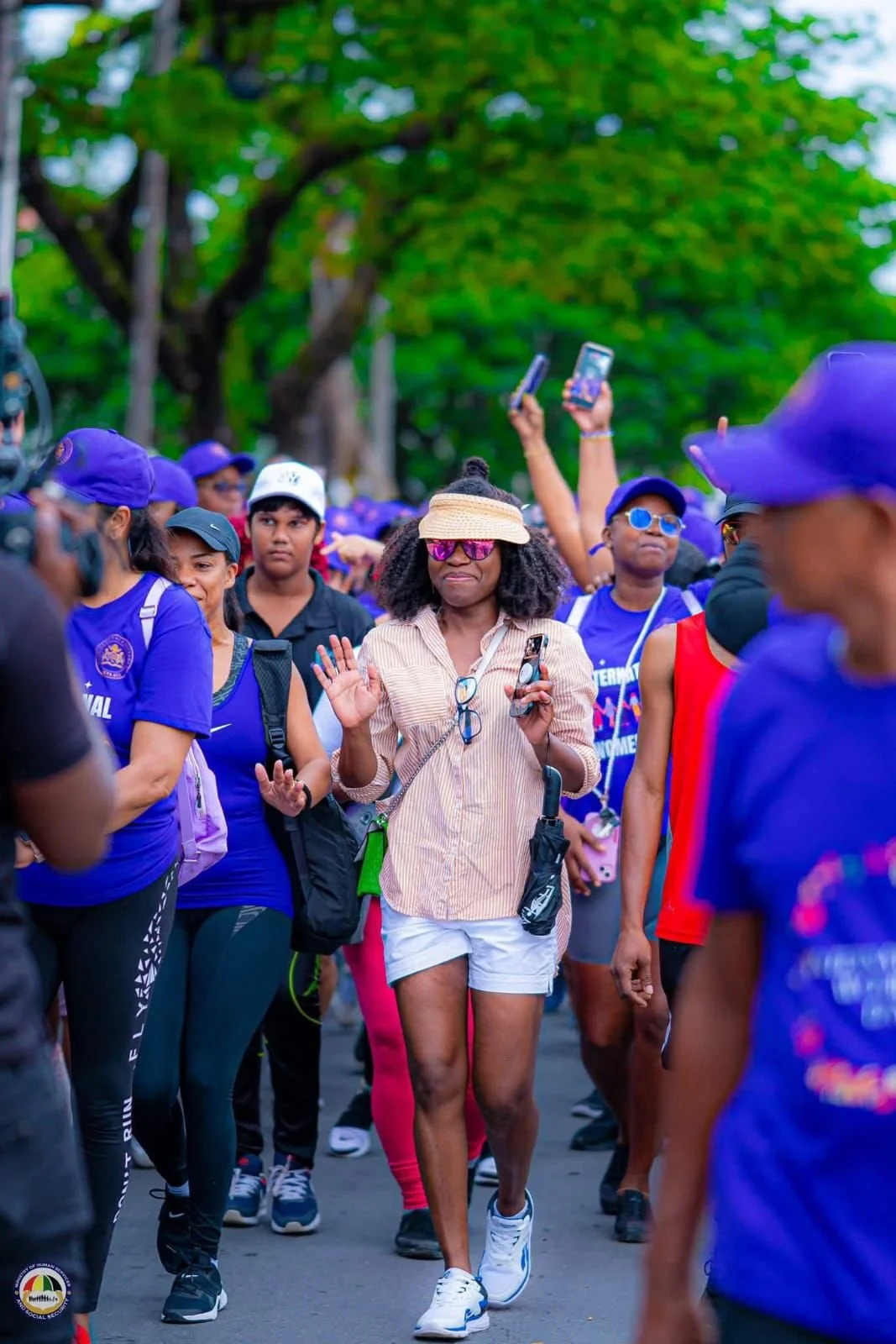
The work of health equity is often described in terms of systems, policies, and outcomes. But in Guyana, I was reminded that it is first and foremost about people – and women, in particular – who carry the weight of those systems while quietly reshaping them.
By Dr. Odessa Lacsina, Executive Director, The State of Women Institute
I arrived in Guyana's capital of Georgetown just as International Women's Day was being celebrated around the world. The timing felt symbolic, but what unfolded over the following days offered an instructive view of how women lead — not in ideal conditions, but within the real constraints of geography, resources, and history. I traveled as a health equity advocate, hoping to better understand how women navigate these constraints. What I found, consistently, were resilient women leaders taking action to build systems of care where gaps still exist, and doing so with clear focus on what their communities need most.
Leadership at Every Level
My meeting with Guyana's First Lady, Arya Ali, took place on a Friday evening during a Ramadan festival near Georgetown's historic sea walls. I brought my daughter with me, wanting her to witness the importance of cultural respect and global connection. As the First Lady and I spoke about women's health, policy, and prevention, one idea she shared stood out:
“Health doesn’t wait for perfect systems. Our women can’t wait for perfect systems either — they are creating solutions now.”
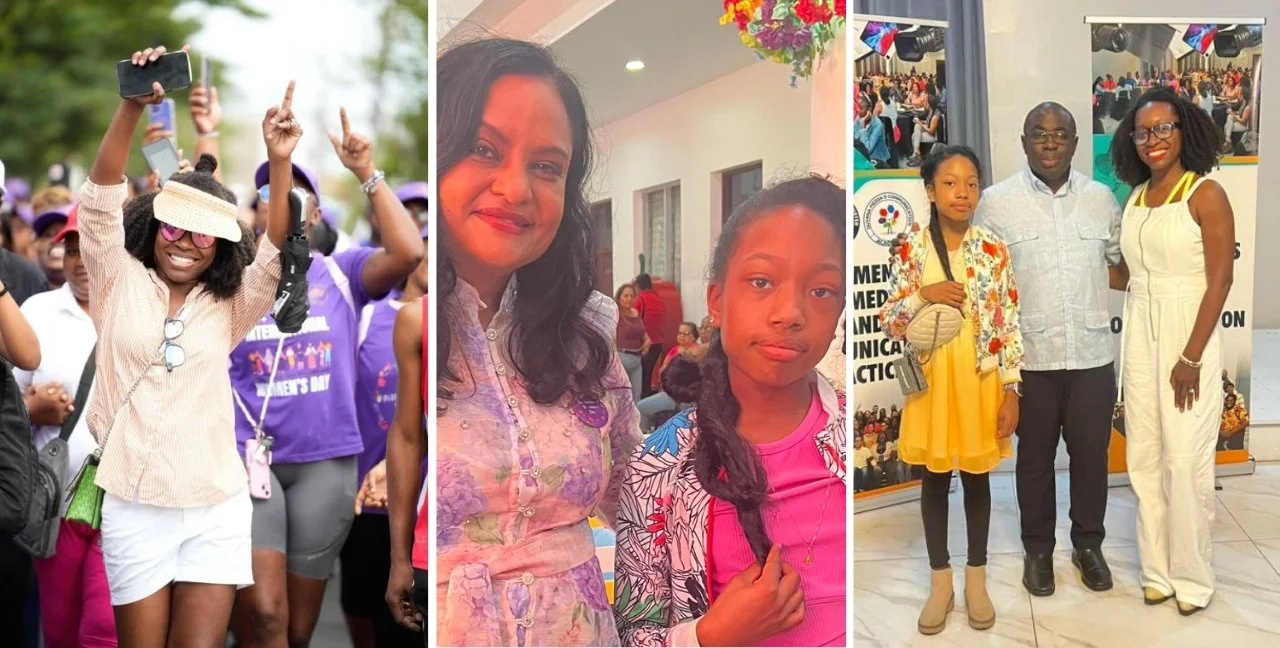
L to R: Dr. Odessa Lacina at the First Lady of Guyana (Her Excellency Arya Ali ) International Women’s Day March: Empowering and celebrating women everywhere. / Hon. Minister Vindhya Persaud with Ishara Lacsina at WeLife6 Expo, an entrepreneurship conference for women and girls. Minister Persaud is responsible for policy health equity government infrastructure and economic empowerment for women. / Ishara and Dr. Odessa Lacsina with Hon. Kwame W.E. McCoy, the Minister within the Office of the Prime Minister in Guyana.
That theme surfaced again and again throughout the trip. It was present in conversations with Ministry of Health officials designing preventive care strategies, and in discussions with women leading community-based initiatives. Across these settings, there was a consistent understanding: progress depends not only on formal systems, but on the women who navigate and strengthen them every day.
Where Policy Meets Practice
In meetings with the Ministry of Health, I saw what effective policy looks like when it is informed by lived experience and led by women focused on designing health interventions that account for the realities of distance, access, culture, and daily life. This kind of leadership is often overlooked because it does not always fit neatly into traditional measures of impact. Yet it is precisely this integration of clinical knowledge with community understanding that makes health systems more responsive and durable.
These partnerships also reflect the approach that guides our work at The State of Women Institute. Health challenges do not exist in isolation, and solutions cannot either. They must reflect the full context of women's lives.
The Wisdom of Communities
The clearest lessons came during my visits to community health sites. In one community, I met a woman who had lost her sister to preventable complications during childbirth. She now leads maternal health education efforts in her region, ensuring that other families have access to information and care that her own family did not. In another, a grandmother described how she teaches traditional healing practices while encouraging younger women to seek preventive health services. Her approach was not about choosing between health systems, but about bridging them.
These are not isolated stories. They reflect a broader pattern: women translating personal experience into collective action. Their leadership operates across multiple levels — within families, across communities, and alongside formal health institutions. This is how health systems evolve in practice — beyond policy directives and through the daily work of people who understand both the gaps and the possibilities.
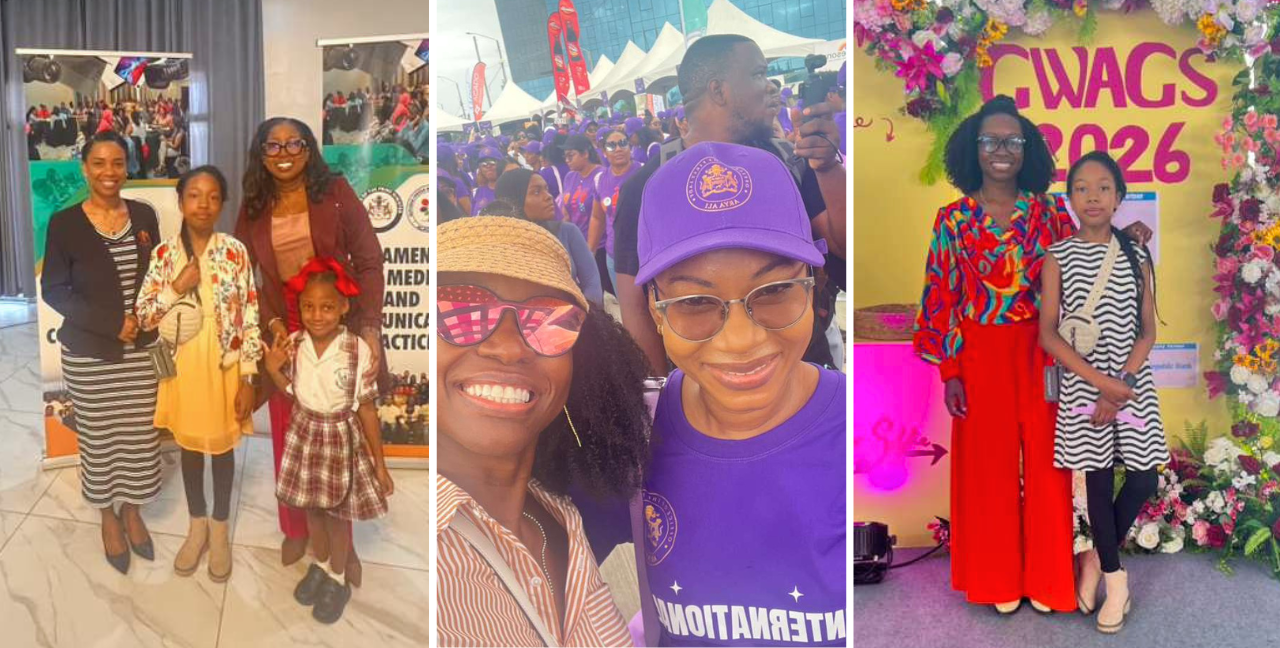
Left: L-R: Martina McDonald-Johnson, Managing Director, Integrated Marketing Communications; Isahra Lacsina; Dr. Alista Bishop, finance executive and author of the recently published “The Journey of Alista Bishop,” McDonald-Johnson’s daughter. Middle: Dr. Odessa Lacsina with Hon. Oneidge Walrond, Minister of Home Affairs. Right: Dr. Odessa and Ishara Lacsina as guests at the 6th Annual Guyana Women & Girls Summit.
Shared Health Challenges: Local and Global
Traveling during International Women's Day underscored something that extends beyond any one country. The barriers women face in accessing care — whether shaped by distance, cost, or system navigation — are not unique. The conversations I had in Guyana about cervical cancer prevention, maternal health, and access to health screening echoed concerns I have heard in cities across the United States. The contexts differ, but the underlying challenge is the same: how to ensure that prevention, early detection, and care are truly accessible.
It is the specificity of local solutions that allows us to see connections between different health settings and to build strategies that are both locally grounded and globally informed. Meaningful progress depends on true partnership. The leaders I met in Guyana are not waiting for external solutions — they are already advancing them. What they seek are partners who will listen, support, and help extend the reach of what is already working. Their leadership makes clear what is required next: investment, infrastructure, and sustained partnership.
This is the role The State of Women Institute is committed to playing.
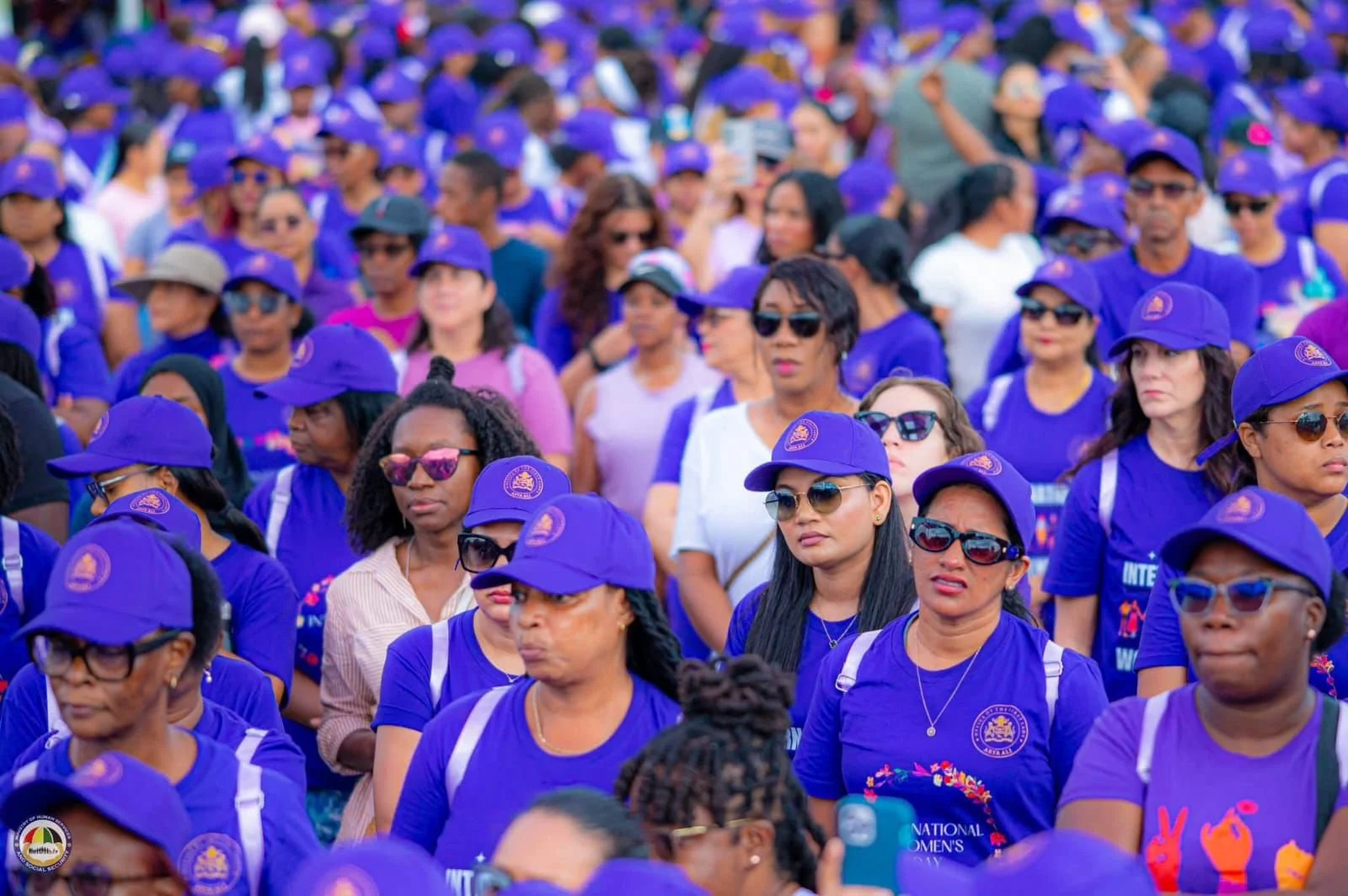
Participants join First Lady Arya Ali, Minister of Human Services and Social Security Dr. Vindhya Persaud, and other Cabinet members for a vibrant walk through Georgetown in celebration of International Women’s Day. The event, which began at the Bank of Guyana and concluded at the Kingston Seawall Esplanade, symbolized unity, empowerment, and collective commitment to advancing the rights and wellbeing of women across Guyana.
Photo courtesy of the Ministry of Human Services and Social Security.
Our partnership with Guyanese health leaders will focus on amplifying existing efforts while contributing resources, platforms, and connections. The Healing Roots initiative will incorporate insights from culturally responsive prevention strategies. Our podcast network will create space for Guyanese leaders in women's health to share their work with global audiences. Our research translation efforts will highlight community-based models that can inform broader approaches to care in similar settings. The State of Women Institute's goal is to shine a spotlight where health innovation already exists — and to ensure it is supported and sustained.
Moving Health Equity Forward
As I departed Guyana, I reflected on the determined, transformative work I had witnessed. There was no sense of pause. The same women I had met would return the next day to their responsibilities — coordinating care, educating families, shaping programs, and advocating for improvements. Their efforts are already transforming health outcomes in ways that may not always be visible at scale, but are deeply felt within their communities.
The lesson from Guyana for International Women's Day is straightforward: when women lead, health systems become more responsive. When their leadership is supported, those systems become stronger. And when their insights are shared across contexts, the impact extends far beyond any single setting.
This is the kind of progress The State of Women Institute champions — not only on International Women's Day and during Women’s History Month, but on every day that follows.
Dr. Odessa Lacsina is the Executive Director of The State of Women Institute, a 501(c)(3) nonprofit working across three health equity pillars: Mental Health & Wellness, Maternal Health Equity, and Preventive Wellness. The State of Women Institute's work spans from Baltimore to international partnerships, always centered on amplifying women's voices and building the infrastructure to support community-led health solutions.
To learn more or support women's health leadership globally, visit thestateofwomen.org or follow @thestateofwomen.