


Gloria Feldt ‘Takes the Lead’—and Stage—at Upcoming Conference To Empower Women
Gloria Feldt has seen a lot of change during her life when it comes to gains and losses for women. And while not all change has helped women inch closer to true parity and equal rights, Feldt and her organization Take The Lead are determined to help women see—and more importantly, use—the power they have.
Feldt is the co-founder and president of Take The Lead, an organization she started with Amy Litzenberger to connect, educate, and empower women across the nation. Take The Lead will celebrate its eighth birthday—and Feldt’s 80th—this Thursday and Friday, August 25-26, at The Power Up Concert and Conference, 2400 East Missouri Ave., in Phoenix, Arizona and globally online.
The concert will feature performances from award-winning musicians including pianist Marina Arsenijevic, feminist trio BETTY, Jazz Con Alma, and Dierks Bentley. The conference the next day features a lineup of feminist thought leaders, entrepreneurs, activists, and more.
Feldt; who is also the former president of Planned Parenthood and speaker, teacher, and bestselling author; laughed about holding the conference in Phoenix in August. But she’s not sweating it (metaphorically, anyway): August 26 is Women’s Equality Day, and Arizona is where she grew much of her network during pivotal years in the fight for women’s rights.
Claiming our power, even as we recognize inequality
A teenage mother who initially saw few options for a rewarding career, Feldt first became involved with Planned Parenthood in Texas but soon rose to lead the Central Northern Arizona. From 1996 to 2005, she served as the president of Planned Parenthood Federation of America, helping to secure insurance coverage of contraceptive care.
“The work I did with Planned Parenthood really led me directly [to founding Take The Lead], because I could see that until women have equal pay, power, and positions; we’re going to keep fighting the same battles over and over and over again,” she said. “So I researched why we were so far from parity, and I was shocked to find that a lot of it was in our own heads, and that we have to deal with that.”
Feldt recognized persisting inequalities, but felt that power is “never relinquished willingly” and that women must play a more concrete role in their own empowerment.
Power has been used against women for so long that it’s natural to have a negative relationship with it, Feldt says. Still, the only way is through. A hammer can be used to destroy or build, but women can’t create opportunities “without using your power,” Feldt said. “You have to use your hammer.
She combined her talents for teaching and leadership to create a curriculum to help women “redefine power in our own minds.”
That doesn’t mean denying inequalities. Rather, Feldt says, adjusting how we relate to power in our own minds—and becoming prepared with the skills, tools, and connections to embrace the power we’re fighting for—will help women reach gender parity.
“That’s where Take The Lead comes in,” she said. “I did the research. I wrote the book.”
The power of knowing your power
She’s referring to No Excuses: 9 Ways Women Can Change How We Think About Power. Feldt rose to national prominence during her time at Planned Parenthood, but she wanted to continue the conversation by looking at underlying power structures impeding gender parity and the potential for women to take more control.
“I didn’t realize it was a leadership book; I thought it was a social commentary,” she said. It wasn’t until Valley Leadership in Arizona asked her to turn the book into a workshop that she realized she might have a curriculum—and a growing movement—on her hands.
The workshop covered nine “Leadership Power Tools” from the book, from No. 1 (Know your history) to No. 9 (Tell your story), which are also featured in an online course for those who want to “dive deeper” with professional advice and individualized action plans.
It’s the combination of inspiration with strategy and action that makes the difference, Feldt says.
“It was so extraordinary to see the incredible shift that women had by simply reframing how they were thinking about power, and then giving them some very concrete skills,” she said of the first workshop. “That’s the core of what we do at Take The Lead: Help women with that mind shift, give them the tools, and help them make their own strategic plans based on what they decide they want their intentions to be.”
Inspired to act
The balance of feeling fired up to embrace one’s power (or outraged at injustice) and how to turn that motivation into real action has been a throughline in Feldt’s career since her early days in the Civil Rights Movement and her time at Planned Parenthood.
“Believe me, I think there’s a time to march,” she said. However, she cautioned against centering rage without action, which she said can turn self-righteous and unhealthy.
“The real effectiveness is in turning that anger and fear into positive action,” she said. “You will not always succeed, but better to try, better to be on the right side of history, better to do the part that you can do.”
She pointed to several organizations to join to have an impact: NARAL excels in political grassroots, district-by-district political organizing, Planned Parenthood is first and foremost a care provider, and organizations like When We All Vote and Civic Alliance provide crucial nonpartisan voter support.
Just as society benefits from each person identifying and using their particular skills and power, each organization provides specific essential services, she said.
For Take The Lead’s part, “We help women get their head in the right place, know what their intention is, and have a plan for reaching it, and the tools they need to do it.”
Connecting the dots
Feldt’s own past work and current role isn’t the only important connection in her mission. She said she hopes everyone understands the connections between various societal injustices—and the ways we affect society and one another. We all thrive when we all thrive.
“There is a direct connection between the attempts to make voting more difficult, and the attempts to roll back reproductive rights, and the reason we don’t have the Equal Rights Amendment … It’s important to connect those dots,” she said.
And although our culture was created by and for—and is still often dominated by—white men, Feldt says including men in the conversation is still important.
“It’s important to create a society in which everyone in it sees themselves in the picture,” she said.
One part of that picture includes a new view of power that doesn’t frame it as a finite resource.
“I teach women … If I help you and you help me we both have more. The male narrative of culture has been that resources are scarce and we have to fight for our little piece of the pie,” she said. “But there’s no limit to our ability to create new technologies; there’s no limit to how we can innovate and create and solve problems.”
She believes it’s one way gender parity can help everyone, regardless of gender: “Having more women in leadership can help to dislodge some of that thinking about resources being inherently scarce and really [help everyone understand] that you can make more pies; you can always make more pies.”
Examples of equality, embracing our power
Feldt is optimistic about younger generations of girls and young women, who have grown up seeing a wider range of options for women professionally and personally. Younger women, she said, seem less likely to assume they must adopt traditionally “masculine” traits if they want to enter the C-suite.
Her journey—from limited options, to fighting inequality, to embracing and finally using and sharing her power—is a relatable one; and it’s echoed in the mission, events, and course materials of Take The Lead.
In addition to the self-directed online 9 Leadership Power Tools course, Take The Lead has designed 50 Women Can Change the World, a program that expands the curriculum and forms cohorts of 50 emerging industry leaders (sectors so far have included health care, media, and finance), who then learn together and form lasting supportive connections.
“Guys have always had the ol’ boys’ network, so we’re hoping as they’re learning about these power tools, creating these plans for themselves, women are also creating their network,” Feldt said.
The future for women and Take The Lead
Feldt’s latest book, Intentioning, follows her and other professional women on the next step. Speaking to women approaching or in leadership positions, the book asks, “Now that you have the power, the power to what?”
“The power TO” is central as well to the Power Up Conference. On a personal level: Now that you have power (or if you are looking to change your power or relationship to it), what do you want to do with it? On a larger, societal level: How can we focus on the progress we’ve made and make the most of it so we can keep making progress—for women currently in power and for the most vulnerable among us?
“I just think that especially at a time like now, it’s important to invest in yourself. It’s important to invest in your own skill-building,” Feldt said. Still, she hopes to keep the movement going long after the party is over.
“Translating that inspiration into what you’re actually going to do is what it’s all about,” she said. “That’s the hard work of life.”
The Power Up Concert and Conference is August 25 and August 26. Virtual concert tickets are free for all, in-person concert tickets are free with paid conference admission.
Gloria Feldt will be developing a unique course based on the lessons in Intentioning this fall.
Follow Take The Lead on their website and on Instagram, Facebook, LinkedIn, Twitter, and YouTube.

14-year-old author on writing, positivity, and ‘the power of youth’
By Kimberly Hosey
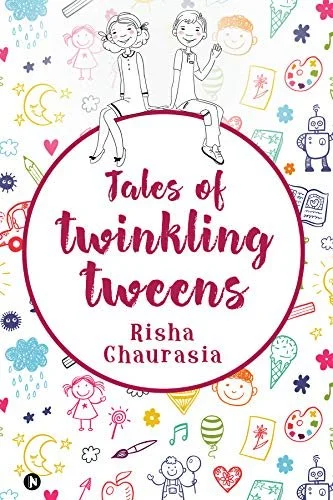
Risha Chaurasia began writing when she was 8, starting with plays that would go on to be performed in her school. Soon, she knew she wanted to do something bigger—and by the time she was 11 she had published her first novel, Tales of Twinkling Tweens.

By Kimberly Hosey
Risha Chaurasia began writing when she was 8, starting with plays that would go on to be performed in her school. Soon, she knew she wanted to do something bigger—and by the time she was 11 she had published her first novel, Tales of Twinkling Tweens.
She was hooked: not only on writing, but on the power of her stories to reflect the conflicts, victories, relationships, and challenges faced by her peers—and the potential she saw in her stories to frame everyday trials, emotions, and life choices in an uplifting way.
“[A] fascination for the publishing business and love for books motivated me,” the Indian author said. Chaurasia aims to leave readers “hopeful and better about themselves,” she said. “I want to make them believe that they are not alone and even if I’m able to impact my readers’ lives slightly for the better, I’d consider myself successful.”
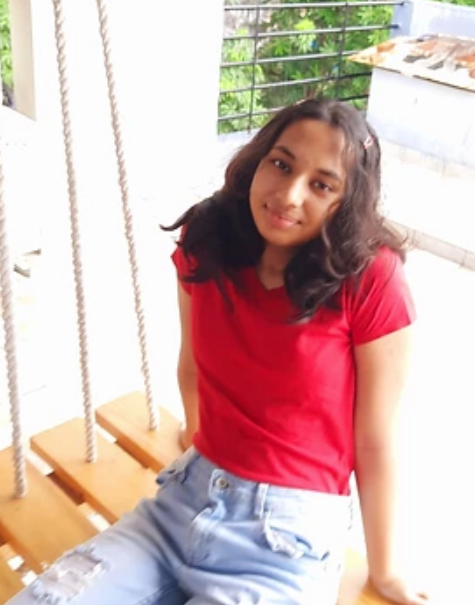
She’s focusing on a real need. A global pandemic, the spread of online hate and abuse, mental health challenges, escalating concerns around climate change and inequality, and even rising suicide rates in India and worldwide all contribute to what is a complicated and often grim time to be a teenager or young adult. Psychologists highlight the importance of greater understanding of emotional distress and pressures faced by adolescents, and their focus often includes the importance of effective support and of nurturing meaningful hope in the face of challenges. Chaurasia believes she can add to that positivity.
A growing body of work
Tales of Twinkling Tweens, which came out in May 2019, focuses on the turbulent life of a tween. It opens with a lament that a “long time ago, people who sacrificed their sleep, fun, laughter, were called saints” but “in the millennial times they are called students.” It’s a down-to-earth, casual collection of anecdotes combining childlike playfulness with the candid peer observations and commentary expected of teens. In other words: A book by a tween for tweens (and their parents).
Her next novel, TRUCE, examines “the themes of friendship, love and self-discovery” through a group of five college-age protagonists and was published in January 2021. Although her characters were older, Chaurasia turned to a cousin in college—and research—to fill in the details.
“No matter what age we have the same emotions, and I tried to target the emotions,” she said.
To My Homies, released this March, is based on Chaurasia’s own life and friends and explores confidence, friendship, and self-discovery.
Chaurasia, who says she’s enjoyed the full support of family and friends but has faced bullies and criticism, believes she can serve as an inspiration both through down-to-earth stories and in her “real” life as she grows as a writer.
“I think experience is the best teacher and from constantly writing, I grow. I make a point to write every day, even if it’s just a few sentences,” she said. She’s currently working on “a high school drama based on friendship and betrayal.”
If her peers connect with her stories, it’s because she approaches them from a personal perspective.
“Writing is therapy for me. It’s like taking a piece of my heart and putting it out on paper for the world to read,” she said, adding that her stories give the inside story “on teenage life, our struggles and our happiness.”
A positive impact through words
Chaurasia said her favorite authors are Sudeep Nagarkar and John Green, whose writing she likened to “meeting a new friend who changes the way you think.” She isn’t too interested in grimness and negativity. Her Instagram page, straight.from.my.pen, regularly highlights “what went right this week.”
“Young people need someone to tell them and it’ll be alright,” she said. She added that “with the increase in conversations about mental health and finding happiness,” stories revealing a “light at the end of the tunnel” are the most engaging for her to read or write, though she stressed she strives to be realistic.

“Relatable and honest stories speak to me the most: stories that show you how things are and not how we want them to be,” she said.
Support from family and fans
Chaurasia acknowledges not everyone has had the advantages she enjoys—which motivates her to make the most of her skill, passion, and the support of others.
“My family has played a gigantic role in my writing career,” she said. “It isn’t easy being a teen author and there have been several times when I’ve wanted to give up. In these times my mom got me going.”
It’s not all praise and doting: Chaurasia said her mother is her “biggest critic,” but added that “every piece of feedback she’s given me has helped me grow.”
The best reactions, though, come from fans. From phone calls to fan mail, she says connecting with grateful fans has been inspiring.
“My favorite feedback was when a reader told me that he saw reflections of himself in TRUCE,” she said.
Chaurasia has spoken at several public events and last month was the youngest speaker at the Young Eager Writers Conference (YEWCon), discussing the changing world and writing industry in the panel “The Next Generation of Writers.”
She said attending the Indore Literature Festival was a “surreal” experience, from connecting with a fan to signing her first autograph.
“It opened my eyes to the wide world of literature as I was surrounded by book lovers,” she said, adding that taking photos with the young fan is now her “most cherished memory.”
It hasn’t all been fans and photos: When Chaurasia published her first book, not all of her peers were kind. (It’s not easy being a first-time author at any age, let alone 11.)
“At 11, this broke me,” she admitted, but said she would rather focus on “the bright side.”

The power of youth
She might be younger than most authors, but Chaurasia expects adults to take her—and other young people—seriously.
“It is imperative for the world to believe in the power of the youth,” she said, both because young people deserve support and because they have real talents and insights to offer.
“You don’t have to do much,” she said. “We’re unsure and unconfident. Just a few words of encouragement, a mere interest in our work can go a long way.”
Chaurasia said she hopes to explore important issues while setting an example, especially as a girl with ambition and drive. She said that although she hasn’t faced much gender discrimination and has been thoroughly supported by those close to her, she knows that’s not the case for everyone—including many girls she knows.
“I try my best to be a role model and an inspiration,” she said. “I want young girls to believe in themselves and in the power they hold within.”
Connect with Risha Chaurasia, learn more, or buy her books here. She posts regularly on Instagram at straight.from.my.pen.

Thought for Food: Chef Michellee Fox on Difficulty, Slowing Down, and Hope for the Future
By Kimberly Hosey
World Food Day was last weekend, so we naturally thought of turning to world-renowned chef (and member of The State of Women Podcast Network) Michellee Fox for some food for thought.
By Kimberly Hosey
World Food Day was last weekend, so we naturally thought of turning to world-renowned chef (and member of The State of Women Podcast Network) Michellee Fox for some food for thought.
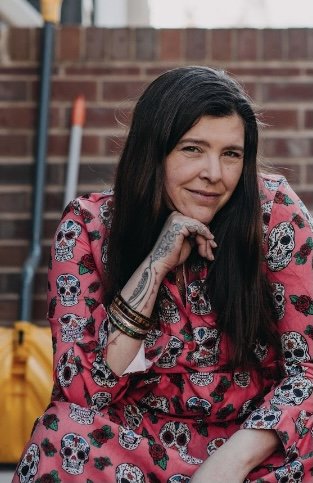
The Washington-based Brazilian chef has been discouraged by personal loss as well as the state of nutrition in the United States and elsewhere but remains confident and optimistic, a perspective she attributes to decades of work and the potential she sees for the future.
It’s an outlook we felt resonated with sentiments often expressed by the United Nations as they observe World Food Day each year to mark the founding of the UN Food and Agriculture Organization: “Our actions are our future.”
Fox is a slow-food chef, advocate for minority and women farmers, and leading voice in a revolution to recognize and address shortcomings in food production and nutrition. Her earliest years were shaped by loss no child should endure, but they would begin to forge her passions, values, and the communities she would embrace and nurture.
Early hardships
Fox’s mother, a single parent since a year after her 1979 birth, died in a car accident when Fox was 4 years old. She lived with her maternal grandmother, where she learned a love of cooking: taught, Fox said, “to start my training to become a good wife.”
The death of her grandfather at 11 devastated Fox and brought more upheaval. Still, she found a sense of belonging soon after, living with her maternal aunt and cousins.
“I felt like a part of a family in the ‘90s,” she said. But the turmoil of her early years left a mark.

“The uncertainty of my young life has … made me prepared to face anything in life, head always above water,” she said of the attitude she adopted. “The feeling that ‘That is not so bad’ and also that I always need to please people so they will ‘like’ me.”
Fox’s childhood loss informed her determination and motivation, but she had additional factors bolstering her: her own resilience and an openness to new experiences, among others. She also had that early and growing knowledge of the importance of nutrition—shown by a growing body of evidence to play a large role in mental as well as physical health.
Fortitude, family, finding focus
From an early fascination with English—translating Bob Marley songs at 8—to an exchange program at 16, Fox nurtured a love for new experiences and a certain gritty, outspoken moxie. Her role as an early girl skateboarder in Brazil, combined with English proficiency, led Fox to an association with World Cup Skateboarding as an event translator. She would go on to co-found Violet Flame Skateboarding Events with a friend and create two major festivals.
Within a few years, she moved to the United States, had a son, and began her culinary career—returning to her roots even as she planted new ones.
“I worked my way up and used my grandmother’s teachings to shape my career,” she said.
Knowledge and dedication helped, but they didn’t make her job or career advancement easy.
“Long work days, no insurance, working weekends and being a single mother was extremely difficult,” Fox said.
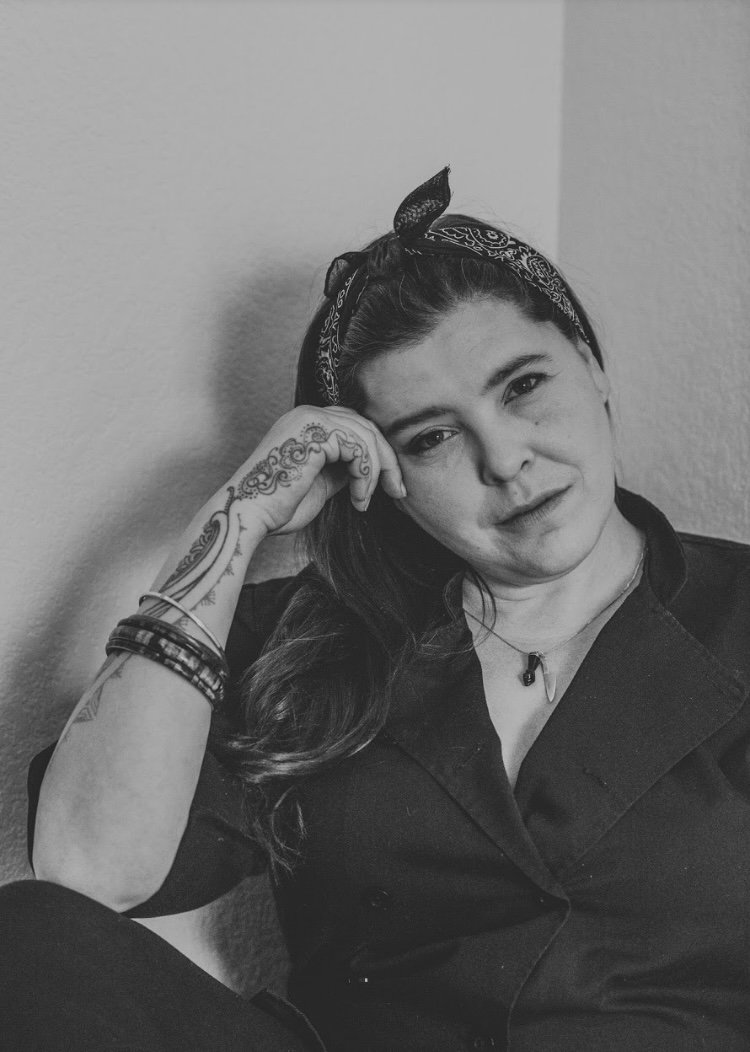
She also had to deal with sexism in a career that places a higher “likability” requirement on women than men in and out of the kitchen.
“The male-dominated industry and the verbal abuse in the kitchen was something I fought from the beginning,” she said. It led to many lost jobs, but Fox said she “kept my head above water and always had the next job to try on.”
As her son started attending school—and eating the often-notorious school lunches—she found herself compelled to speak out and to act once again. After a brief stint as a “lunch lady,” Fox left the San Francisco area after six years and jobs at top restaurants for the more secluded forests of Humboldt County, where she became “a cannabis farmer and a chef on the side.”
It was during this time, Fox said, that she discovered the amount of plastic and unsustainable or potentially harmful materials used in typical farming. The revelation would crystallize her focus, which continues today.
Slowing down, branching out, and looking forward
Now Fox lives with her husband on “a 90-acre farm in the middle of nowhere, Washington.”
“Here I met a community that lives … from things they grow, preserve, and hunt,” she said.

The community and lifestyle were a perfect match for the chef’s own focus on slow food—a movement with heavy emphasis on sustainability, locally grown food, and local food cultures and traditions. The approach focuses on the importance of slowing down, to savor food (and life). Bulk production and “fast” food (that may nevertheless have traveled thousands of miles to be available in a snap) is out; low-impact farming and fresh ingredients are in.
The idea, Fox said, is to focus on how the ingredients from the land nurture us and our responsibility to nurture the earth in return. She continues to teach and learn—about slow food, regenerative farming, and more—and feels optimistic about the future.
“I really am [optimistic],” she said “I think the ‘foodie revolutions’ and now the ‘COVID revolutions’ have shown people that our systems are fragile, that we depend on others to eat, and that we need to start figuring out how to contribute and be more self-sustainable.”
It’s a long journey from the small child who didn’t understand what had just happened to her—or the life she would go on to build.
“I don’t remember much of my childhood, but every day I try to honor that little girl: confused, grieving, left in the corner of the love others could spare.”

To learn more about Michellee Fox, find her on Twitter and check out the CraftFood Podcast.
To learn more about slow food, visit Slow Food International.
Images provided by Michellee Fox.

Celebrating Women and Girls on National STEM Day
By Kimberly Hosey
This National STEM Day, we decided to highlight just a few women and girls who have made amazing strides in science, technology, engineering, and mathematics. From historical firsts to current trailblazers, women and girls make extraordinary contributions to science. Read on to learn about just a few!
By Kimberly Hosey
This National STEM Day, we decided to highlight just a few women and girls who have made amazing strides in science, technology, engineering, and mathematics. From historical firsts to current trailblazers, women and girls make extraordinary contributions to science. Read on to learn about just a few!



Who are some women and girls in STEM who inspire you? We know we barely scratched the surface! Join us regularly, and add your voices to the conversation as we honor and amplify girls and women around the world, in all the ways they make a difference. We're inspired by you all.
Subscribe to The State of Women newsletter, check out The State of Women Institute and Podcast Network hosted on SHEQONOMI; and follow us on Instagram, Facebook, Twitter, and LinkedIn for more.

Women Take the Field: Polo Poised to be More Gender-Equal
By Kimberly Hosey
Interviewed by Anu Bhardwaj
AlUla, Saudi Arabia—The second Richard Mille AlUla Desert Polo Tournament opened Friday, Feb. 11, to an audience including celebrities, royals, and special guests watching competitors including the world’s top polo players. But some spectators and participants were paying attention to more than the action of the game or the scores at the return of the world’s first desert polo event (the tournament took a hiatus during the pandemic, after debuting in 2020).
By Kimberly Hosey
Interviewed by Anu Bhardwaj

Melissa Ganzi, widely recognized as one of the top women polo players in the world, also took home the overall MVP award after the Richard Mille AlUla Desert Polo tournament. She hopes to inspire more girls and women to take up the sport. Image: Richard Mille AlUla Desert Polo
AlUla, Saudi Arabia—The second Richard Mille AlUla Desert Polo Tournament opened Friday, Feb. 11, to an audience including celebrities, royals, and special guests watching competitors including the world’s top polo players. But some spectators and participants were paying attention to more than the action of the game or the scores at the return of the world’s first desert polo event (the tournament took a hiatus during the pandemic, after debuting in 2020).
The “sport of kings” is starting to welcome queens.
Coinciding with the most gender-balanced Olympic games in history, the sport of polo is becoming more inclusive. For the first time, a polo match in Saudi Arabia welcomed an international player who is a woman.
Melissa Ganzi, the American polo player who made headlines as well as the president and co-owner of Grand Champions Polo Club in Florida, has a reputation for rising to meet challenges.
One of her biggest challenges came during the pandemic and between the two polo tournaments—and though it didn’t have anything to do with COVID-19 or polo, it affected her outlook on everything.
“My biggest challenge was overcoming breast cancer,” Ganzi told The State of Women. “I’m a breast cancer survivor.”
Diagnosed with Stage 2 breast cancer in October of 2020, Ganzi underwent radiation treatments and is now cancer-free.
“I think going through something like that makes you stronger,” she said.
It’s a strength she tries to channel into her work on the field—and as a role model for girls and women. Ganzi is no stranger to “firsts” in the world of polo. She was the first woman to play snow polo in the United States, Austria, and St. Moritz, Switzerland. In 2019 she became the first woman to win the Snow Polo World Cup at St. Moritz.

Star Melissa Ganzi—as well as her horse, Mecca—were recognized at the tournament’s closing ceremonies. Image: Richard Mille AlUla Desert Polo
“I’ve always been an equestrian, and I played lots of team sports as a youth, so polo was sort of a natural fit,” she said.
The milestones and victories are amazing, Ganzi said, but more gratifying are those who follow her lead.
“After I did those things and I won all those tournaments: After doing that, there was another woman that played in St. Moritz. … And there’s other women who have played in Kitzbühel. And this December in Aspen, we had six teams [at the World Snow Polo Championship]—and four were captained by women,” Ganzi said.
The influence of a role model to not only set a new standard for what success looks like but to inspire others to follow their example can be powerful, and Ganzi takes the responsibility seriously.
“To me, that was a huge difference, because [that level of women’s involvement in polo] didn’t happen before. And a little piece, hopefully a little bit of that was because they saw me and they wanted to do it. And I think that that’s important,” she said.
Supporting women and girls in sport uplifts everyone

Unique challenges to playing in the desert, like an inflatable ball, added uniqueness to the tournament, which is the first world desert polo tournament. Image: Richard Mille AlUla Desert Polo
Women’s rising involvement in polo is an inspiration to all women, said Saudi Prince Salman bin Mansour Al Saud, who competed in the tournament for Team Saudia.
The young polo enthusiast, who took leave from his university studies to play, admires players like Ganzi and said he had practiced in training sessions with her as well as Sheikha Alia Al Maktoum of the United Arab Emirates.
“This is an inspiration and a motivation for all young women—at ages, all levels. You can start from zero and reach your potential,” he said.
He added that the inclusion of women matches the overall goals of Vision 2030, a blueprint for taking Saudi Arabia in an updated and more sustainable direction.
As he sees it, women and girls can be just as skilled—or more so—than their male counterparts, and the future will be better with them on the field.
“My only advice is work hard, chase your dreams, and be addicted to polo like me,” he said, laughing.
Prince Salman went on to be honored as the most promising player of the tournament on Saturday.
Changing mindsets can get more girls on the field

The local Team AlUla beat Team Richard Mille to win the second Richard Mille AlUla Desert Polo tournament—and Richard Mille star Melissa Ganza won Most Valuable Player. Image: Richard Mille AlUla Desert Polo
Ganzi agrees. While she plays polo with men and women more often than she plays ladies’ polo, she said she finds both rewarding and treasures the opportunities to be the point of contact and inspiration for girls to enter the sport—even those whose families have men who play.
“At home in Wellington, Florida, we’re starting our season, and all of the girls of the 10-goalers only play polo with me,” she said of the daughters of prominent Argentinian polo players.
Seeing someone they can relate to can be the encouragement they need, Ganzi said.
“They had a whole season in Argentina and they didn’t play,” she said. “And then they came back to Florida, and they saw me and then they wanted to play polo. So to me that means something … I can help them play polo.”
Ganzi, dubbed the “star of Team Richard Mille” and praised for her control, knowledge of the game, multiple goals and as a “supporter of polo the world over,” earned the award for the most valuable player of the tournament.