

Kiko Davis, Only Black Female Bank Owner in US, Says Her Superpower Is Courage
Rolling Out interviews Kiko Davis, the only Black woman to own and operate a bank in the United States. Covering her achievements and leadership roles, the interview goes on to discuss the crucial role of Black women in leadership roles, the importance of empathy and awareness of the needs of underrepresented groups, the Black woman history maker she would personally thank, collaboration, and more.
Kiko Davis is the trustee of the Donald Davis Living Trust, the majority stockholder of First Independence Bank, the 10th largest African-American owned bank in the United States and she is the only African American, female bank owner in the United States. She’s also the founder and president of the Don Davis Legacy Foundation, established in 2016 to perpetuate the legacy building efforts and initiatives envisioned and developed by her late husband, Donald Davis. And Davis (Kiko) is also the managing director of Groovesville Productions & Publishing LLC, which controls the Grammy Award winning music catalog of her late husband..
Davis takes pride in her philanthropic efforts and extends her support to great causes and organizations such as the Ronald McDonald House, the Charles H. Wright Museum of African American History and many other organizations that serve the community. She also served for three years on the Lawrence P. Doss Scholarship Foundation as a nonprofit board member.
Rolling out spoke with the bank owner on the importance Black female leaders, who she would like to mentor her and her superpower of courage.
Want to receive early-bird invitations to our global events, custom-tailored content we think you'll love, and exclusive access to "The World Women Report"?
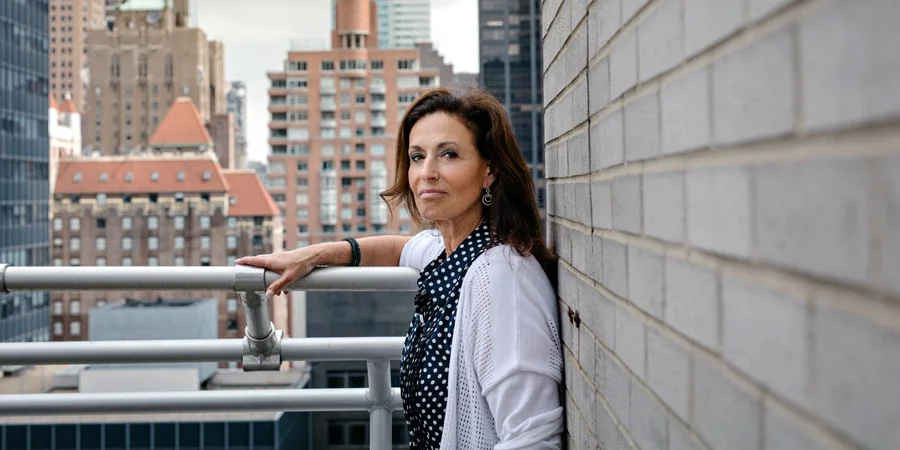
Image by Breann White via Rolling Out

4 Female Leaders Pioneering Fintech and Crypto
Women have long been making strides in the banking world, and now they're playing pivotal roles in the future of fiance as well. This article from Forbes highlights some female powerhouses in financial technology and cryptocurrency, looking at four women who were already powerhouses in their own rights—and their contributions to this growing industry. Click through to read more!
Women have secured some of the top European posts in traditional banking: Christine Lagarde heads the International monetary fund, Ana Botin is Executive Chair of Santander Group. Now Europe’s leading women in tech are pioneering startups focused on the future of finance too.
In London, the financial capital of Europe, Anne Boden left a string of top finance positions including Head of EMEA at RBS and Chief Operating Officer at Allied Irish Bank to become the first woman to found a UK bank. Boden has a bachelor's degree in Computer Science and Chemistry and an MBA. She has raised more than $190 million at the helm of Starling, an app-based bank used by 100,000 British customers. “I understand how to build technology, how to deliver technology and how to manage technologists. That gives you an awful lot of credibility, whether that's with the industry as a whole or with investors,” she tells Forbes.
Despite her background, convincing the industry she knows best hasn’t always been easy. Boden spent much of 2015 explaining to non-believers that, yes, in just a few years we would all want to bank on our phones not just our laptops. If the environments she worked in weren’t 80 percent male they’d be “far more cooperative” in general, the founder adds. “Women have had to work twice as hard for twice as long,” she says.
Photo courtesy: Starling
Want to receive early-bird invitations to our global events, custom-tailored content we think you'll love, and exclusive access to "The World Women Report"?

5 Things You Need to Know About Women in Finance
When it comes to finances, women’s contributions are still under-recognized—especially when it comes to those at the top. This interview with seven women from the Forbes Finance Council shows that women are powerhouses in finance, and sheds light on many issues in the industry, from challenges and opportunities when it comes to gender representation, learning, and unleashing your potential to working in finance to make a difference, forging new paths and being unapologetic in your aspirations and accomplishments.
According to the 2017 World Economic Forum’s Global Gender Gap Report, “Female talent remains one of the most underutilized business resources.” In some industries, like finance, this is especially clear.
In finance, as career level rises, female representation declines. Although 46 percent of financial services employees are women, at the executive level, it’s only 15 percent.
We interviewed seven members of Forbes Finance Council who, as female finance executives, are breaking those barriers. They offered an inside look into their experiences and advice for others who want to make it to the top. Here are their insights — the five things you need to know about women in finance.
Image courtesy Forbes Finance Council members
Want to receive early-bird invitations to our global events, custom-tailored content we think you'll love, and exclusive access to "The World Women Report"?

Bustle and Visa Kick Off Conversation About Women and Money
Bustle and Visa are harnessing the power of conversation to talk about money and women in a new—and more serious—way. The partnership, “Money is Changing,” is an initiative to promote more depth in financial discussions centered on women, eschewing the well-worn focus on things like household decision making and saving for personal items. That’s because Visa found that despite women’s numerous advances in investing, business and other areas; a stigma can remain when it comes to talking about money when it comes to raises, discussing finances with friends, and more. The initiative aims to change that through deeper conversation—sharing experiences and taking women’s experiences and insights on money seriously.
Visa researched women’s thoughts on a wide variety of financial topics—including women’s relationship to money and discussing it—and both Bustle and Visa feel that honesty and openness among women can help us reach milestones and empower one another.
Click through to read the whole report and learn more about “Money is Changing.” Women’s conversations with one another about money should be just as robust, serious, and beneficial. And starting these conversations in our own circles as well as on a larger scale, as Bustle notes, is “how we're all really going to make change happen.”
If the first half of 2018 has proven anything, it's that there's power in conversation. Especially in recent months, women have rallied together in ongoing quests to put an end to things like sexual harassment, outdated beauty standards, and gender inequality in politics, but there's one taboo surrounding women that's still very much intact — so let's talk about it.
A recent survey conducted by Visa found that even though 54 percent of millennial women will discuss their sex lives with one another, a mere 16 percent are willing to tell their friends how much money they make. Not only that, more than one in two women believe that discussing money with each other isn't valuable. While these findings are striking, they're also not totally surprising.
That's because for decades, the media has used tired clichés to approach conversations surrounding women and money. Time and time again, we've been given tips and tricks for scoring that designer bag on sale, or we're being encouraged to spend our hard-earned cash on trendy workout classes that come with a colossal price tag. And while there's a lot of positive to be said around the confidence that comes with looking and feeling your best, doesn't it feel a bit off that the discussion around women's finances has historically been so... skin-deep?
That's exactly why Bustle has joined forces with Visa to help launch the "Money Is Changing" initiative, which is all about encouraging an open and honest conversation surrounding women and money. As a worldwide leader in payments, Visa led the charge to work closely with researchers, designing a study aimed at more clearly understanding women's unfiltered thoughts around money. The overall goal of the study was to explore the topic of money in a way that hasn't been done — diving deeper than often-reported topics of spending power, decision making, and financial education. As a result, Visa has uncovered women's true feelings around the subject of money, and some of their key findings are incredibly telling.
Image credit: Han Burton/Bustle
Want to receive early-bird invitations to our global events, custom-tailored content we think you'll love, and exclusive access to "The World Women Report"?

Finances push half of women out of college
biz journals.com - Unexpected college expenses have an impact on where students choose to go to school and if they graduate, according to a new study.
Charles Schwab and 1,000 Dreams Fund, a scholarship program for young women, surveyed 1,092 men and women between the ages of 18 and 25 about how their financial knowledge affected their college experience.
Young women were more likely than young men to feel they weren't prepared to manage their money while in college – 51 percent versus 39 percent – and 52 percent of young women said they had to drop out because of finances, per the study. The majority of female students – 68 percent – said their financial standing also impacted their school choice.
About 74 percent of students said they couldn't afford extra college activities like study abroad programs and unpaid internships, even though the same percentage of students believe those are important to reaching professional goals.
A recent study from Thrivent Student Loan Resources found that 68 percent of college students believe they should be paying for all or most of their college education.
(Photo: zimmytws)

Why aren't there more women fund managers?
But the inroads that women have made in money market funds show that there is a path to greater representation in the industry.
Morningstar Inc., the investment tracker, says only 8.69% of U.S. open-ended stock funds with named managers are run by women. The statistics in bonds are somewhat better: 9.37% of bond-fund managers are women. But that's still well below the percentage of women in the overall population.
The data aren't entirely bleak. If you define “fixed income” to include money market funds, the power of women portfolio managers increases vastly. Patricia Larkin, for example, runs more than $179 billion for Dreyfus. Federated Investors' Deborah Cunningham manages $260 billion in money market fund assets. And Charles Schwab's Linda Klingman handles about $619 billion in money funds.
In taxable money market funds, about 36% are run by women, according to data from Money Fund Intelligence. “Women have a long history in the money fund business and, anecdotally, it has always seemed one of the areas of the investment business that isn't dominated by men,” said Peter Crane, CEO of Crane Data, which publishes Money Fund Intelligence.
Want to receive earlybird invitations to our global events, custom-tailored content we think you'll love, and get exclusive access to "The World Women Report"?

Women in Banking: Bro Talk Must Go; Wells Fargo's Tolstedt to Retire

Bro's Club? What Bro's Club?: Bank of America has responded to a gender-bias suit filed by managing director Megan Messina, who claims her male supervisor made it clear she wasn't welcome in his bro's club and consistently excluded her from e-mails and meetings with the 10 men he oversaw. B of A said that no bro's club exists and that this inflammatory term was never used by Messina's supervisor or other managers.
Come Back: Barclays is offering a paid internship for once-high-performing midcareer bankers who left the industry for whatever reason, but want to return. The program helps participants brush up on their skills and re-establish their networks. Barbara Byrne, vice chairman of investment banking, says the program helps solve one of the industry's biggest problems: how to recruit the best bankers — particularly women — for an executive career track. "If you come here and you join with us after taking some time off, you're going to stay," says Byrne, who is in our "Most Powerful Women" ranking. "We want people who you can invest in and stay with us, who form relationships."
Want to receive earlybird invitations to our global events, custom-tailored content we think you'll love, and get exclusive access to "The World Women Report"?

New Website Helps Advisers Connect With Women

Want to receive earlybird invitations to our global events, custom-tailored content we think you'll love, and get exclusive access to "The World Women Report"?

Opportunity Knocking For Women Advisers

Amid a growing awareness of the “female market” for financial advice -- some data show women now controlling 51% of America’s personal wealth -- and the aftermath of some bias lawsuits, evidently more financial advisory firms are inviting women to be advisers as well as clients.
“It’s a big deal,” said Michelle Lynch, vice president of Raymond James Financial’s (RJF) Network for Women Advisors. She added, “All the firms have some initiative now around women.”
To be sure, female advisors are still comparatively few. Although women comprise more than half the population, they account for only 31% of financial advisors and 23% of certified financial planners (CFPs), according to a 2014 CFP Board report. And experts say that many women still aren’t even aware of the profession.
Reflecting The Marketplace
But these days, programs in colleges, professional groups and company recruitment aim to boost the ranks of women advisers. Indeed, at Prudential Advisers, “our goal is to reflect the marketplace,” said Catalina Camoscio, the firm’s vice president of recruiting and development. Reflecting the marketplace would eventually mean “50% of (our) advisers” would be women.
Want to receive earlybird invitations to our global events, custom-tailored content we think you'll love, and get exclusive access to "The World Women Report"?