

Be a Part of the Smartest New Book Club, #WLClub

A movement that began on Twitter and has since expanded to Google groups, Instagram, and posts all over social media; writer Rachel Syme's book club promoting books about women, by women has taken off, spreading around the Internet and world. Read about the club and movement in this article by Amy Poehler's Smart Girls. Which biography of an extraordinary woman would you like to add to the list? amysmartgirls.com - Lately in my Twitter feed I keep seeing the hashtag #wlclub and after a few days of dismissing it, curiosity finally won out and I clicked. What does it stand for? Women’s Lives Club—a virtual book club with participants all from all over the world. February’s book is Janet Malcolm’s The Silent Woman, a biography of Sylvia Plath.
It’s the brainchild of prolific writer Rachel Syme, where anyone interested in participating can partake in reading a biography of a notable woman each month. I tracked Smart Girl Rachel Syme down via Twitter and asked her all about how this club came to be.
“The funny thing was, I was just on Twitter and I was wasting time as one tends to do. I was writing about paying attention to women’s lives in general, and really casually in a tweet storm, I asked if I were to start a monthly book club about women’s lives, would anyone do it.”
That tweet launched a thousand readers. Or at the very least just over four hundred (the group’s total at last count), but it’s still growing every day. Rachel started a Google group, asking for interested people to email her to be added. And how do the books get chosen? Everyone makes suggestions and Rachel puts the ones that are repeatedly named up to a vote. Next month’s pick, Wrapped in Rainbows: The Life of Zora Neale Thurston by Valerie Boyd, won by a landslide.
Read the rest here.

28 Queens Of Black History Who Deserve Much More Glory

You've probably heard the names Maya Angelou, Rosa Parks and Harriet Tubman—all women greatly deserving of the recognition they receive. However, this Black History Month, we were excited to see this piece from The Huffington Post celebrating some names you might not have heard. There are countless ways, big and small, that women continue to fight both sexism and racism every day. Millions of women deserve recognition, but you're sure to find a few on this list that you should get to know better.
Black history lessons in classrooms shouldn't be limited to the names of men and only a few women. Especially when there are countless women who've made enormous strides for the black community, too.
The revolutionary words Angela Davis spoke, the record-breaking feats of Wilma Rudolph and the glass ceiling-shattering efforts of Shirley Chisolm paved the way for black women and girls across the country to dream big and act courageously.
Here are 28 phenomenal women everyone should acquaint themselves with this black history month.
Shirley Chisolm (1924–2005)
Chisolm broke major barriers when she became the first black congresswoman in 1968. She continued on her political track when she ran for president four years later, making her the first major-party black candidate to run.
Claudette Colvin (1939-)
Several months before Rosa Parks' refusal to give up her seat on a bus, Colvin was the FIRST person arrested for resisting bus segregation in Montgomery, Alabama, at the age of 15. She also served as one of four plaintiffs in the case of Browder v. Gayle, which ruled that Montgomery's segregated bus system was unconstitutional.
Click through for the full list from The Huffington Post, and keep learning about ways to fight for equality for all women!

Emma Watson will take year-long break from acting to focus on feminism

Actress Emma Watson recently announced she is taking a break from acting to read, reach out to help others, and to learn more about herself and issues surrounding feminism and women's rights. One of our favorite things about Watson, after her obvious compassion and curiosity, is her willingness to keep learning and reevaluating her ideas. Getting to come along as someone honestly makes this intellectual journey and talks about it will allow so many others to make similar journeys--and learn more and help one another in the process.
Click through to learn more about Watson's interview for Paper magazine, ideas she's excited about, how she hopes to help others and more in this article from Daily Life.
dailylife.com.au - Emma Watson is taking a year-long hiatus from acting in order to focus on philanthropy and her "own personal development".
The 25 year old made her professional acting debut in the first Harry Potter film in 2001, but now she's ready to step out of the spotlight to focus on other endeavours that aren't related to the entertainment industry.
"I'm taking a year away from acting to focus on two things, really. My own personal development is one," she tells author bell hooks in an interview for Paper magazine.
"My own personal task is to read a book a week, and also to read a book a month as part of my book club. I'm doing a huge amount of reading and study just on my own.
"I almost thought about going and doing a year of gender studies, then I realised that I was learning so much by being on the ground and just speaking with people and doing my reading. That I was learning so much on my own. I actually wanted to keep on the path that I'm on. I'm reading a lot this year, and I want to do a lot of listening."
Read the rest here.

Women in the Armed Forces: Where Can We Go from Here?
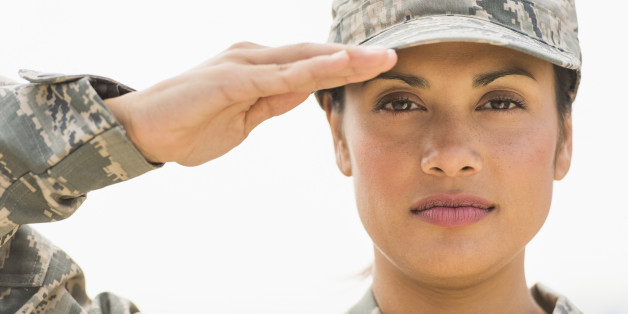
Women have joined men in the Armed Forces in increasing numbers in recent years, and even most combat positions are now open to men and women. Military service, long thought of as a men-focused issue, is now bolstered by—and seeking to accommodate—women. Veteran Dustin DeMoss writes on Huffpost Women about issues including increasing numbers of women veterans, higher risk of suicide among women veterans than among women in general, and recent studies and efforts to help work toward a brighter future for women in the Armed Forces. Read an excerpt below, and click through for the full column. huffingtonpost.com - While women in the armed forces aren’t necessarily a new concept, there is no denying that the ranks of female soldiers are growing at a rapid pace. Their increased presence and demand is reflected in some of the more recent announcements coming out of the Department of Defense. Most notably, Ash Carter, Defense Secretary, announced on December 3, 2015, that all positions and occupations within the military are now open to women.
You might be a bit confused by that announcement - after all, women were already serving in the military, right? Defense Secretary Carter’s announcement is significant because it officially “opens” up the nearly 220,000 positions in the military that were previously closed to women. These include positions like reconnaissance, special operations units, and infantry. According to the announcement, women are no longer to be pushed back from the front lines - not to say that plenty of women haven’t served on them, of course, but rather that the knee-jerk reaction seemed to favor keeping them away persistent and close combat situations.
Today, women have the same shot at high-ranking and heavily specialized positions as their male counterparts.
Read the rest here.

16 Female Curators Shaking Things Up In 2016

Curators; who help build collections, organize events and exhibits, discover new art and more; help shape the art world--and many influential curators are women. Artnet News brings us 16 women curators to watch in 2016. Check out an excerpt and the list below, and read the full article at the link. There's no shortage of female curators making their mark on the art world.
Here's a small sample of just a few women to keep your eye on this year, as we look forward to exhibitions such as "Unfinished: Thoughts Left Visible" at the new Met Breuer in New York, the Beatriz Santiago Muñoz show at the New Museum, "Women of Abstract Expressionism" at the Denver Art Museum, and more.
1. Kelly Baum, Metropolitan Museum of Art, New York
When Baum joined the Metropolitan Musem of Art as curator of postwar and contemporary art in the museum's department of modern and contemporary art in June 2015, her timing couldn't have been better.
Baum has become a key player as the museum prepares to unveil the new Met Breuer space (aka, the old Whitney Museum), curating "Unfinished: Thoughts Left Visible" with her predecessor, Nicholas Cullinan, and the Met's European painting curator, Andrea Bayer. Baum comes to New York from Princeton University Art Museum, where she was the curator of modern and contemporary art.
The 16 female curators profiled are:
1. Kelly Baum, Metropolitan Museum of Art, New York
2. Johanna Burton, New Museum, New York
3. Kalia Brooks, independent curator, New York
4. Gwen Chanzit, Denver Art Museum, Denver
5. Federica Chiocchetti, the Victoria and Albert Museum, London
6. Lauren Cornell, New Museum, New York
7. Astrid de Maismont, Gertrude and ArtList, New York
8. Amanda Hunt, Studio Museum in Harlem
9. Clara M. Kim, the Tate Modern, London
10. Koyo Kouoh, RAW Material Company, Dakar
11. Christine Macel, Centre Pompidou, Paris
12. Piper Marshall, Mary Boone Gallery, New York
13. Ceci Moss, Yerba Buena Center for the Arts, San Francisco
14. Selene Preciado, the Getty Foundation, Los Angeles
15. Lauren Ross, Virginia Commonwealth University Institute for Contemporary Art, Richmond, Virginia
16. Jennifer Scanlan, Oklahoma Contemporary, Oklahoma City
Read about each curator in detail in the full article on Artnet.

To defeat ISIS, listen to the women

Far from just being victims of ISIS, Syrian women have risen as some of the biggest agents of change and relief in the area—and an invaluable source of wisdom when it comes to defeating ISIS. Fatima Sadiqi, who founded the Centre for Studies and Research in Morocco, notes how the use by ISIS of enslavement and sexual violence has awakened in many a keen awareness for the need to fight for women's rights—which may be the key to defeating ISIS: "Looking at the big picture, advancing women's rights appears to constitute the first nail in the coffin for the jihadi ideology. Indeed, using the lens of women's rights is the only way to break the jihadi ideology."
The Hill covers a panel discussion, personal stories and more to show how women are driving change in the fight against the terror and extremism in a recent story excerpted below.
thehill.com - In a world inundated with news, information and entertainment, it is easy to miss something important or to forget about it. We hear about the Islamic State in Iraq and Syria (ISIS) on a near-daily basis because its media operation is sophisticated and omnipresent. We see the terror organization's soldiers, guns, bullets, bombs and beheadings. We see its victims.
But a new, positive trend is on the horizon: the role of women, not just as victims of ISIS, but as powerful change agents to reverse the tide of terrorism.
Instead of fixating on the warriors and the wounded, let's listen more often to the strong women on the ground in places where ISIS and other extremists have ripped apart lives, literally and figuratively — lives of innocent people, especially women and girls. Those are the sounds we need to hear.
Last month, Nadia Murad Basee Taha bravely told her story to the United Nations. Her experiences in Iraq at the hands of ISIS should make your blood boil. Like many Yazidi women in the region, she was kidnapped, beaten and raped by members of ISIS, who sold and bought her as a human sex slave over a three-month period. She did not mince words. "Rape was used to destroy women and girls and to guarantee that these women could never lead a normal life again. ... [The] Islamic State has made Yazidi women into flesh to be trafficked in," she said, adding that the group uses women as "war booty."
Read the whole story here.

Enough is enough: India women fight to enter temples
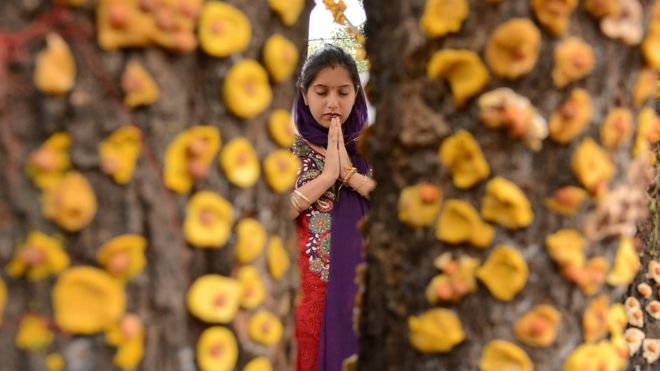
Women have the right to be full participants of every part of society and life--professionally, with family, as well as spiritually--so we were heartened to hear of the recent push by Indian women to have the right to worship and pray in areas that use tradition to shut women out. Last month several hundred tried to enter the main shrine at the Shani Shingnapur temple in the state of Maharashtra, and though their effort was stopped that day, the movement has gained publicity and momentum. Read here and click through to learn much more about women worshipers in India and their efforts to be included in all areas of temple life, as well to fight stigma against things like menstruation. bbc.co.uk - For centuries, temples and shrines in India have used "tradition" to keep women out, but now women are increasingly fighting for their right to worship, writes the BBC's Geeta Pandey in Delhi.
In recent weeks, the patriarchal managements of shrines that bar women devotees, have been facing unprecedented challenge.
Last month, several hundred women took part in a march from the western city of Pune towards the Shani Shingnapur temple in Ahmednagar district in the state of Maharashtra.
"Our aim was to enter the sanctum sanctorum of the 350-year-old temple which is forbidden to women," Trupti Desai, leader of the protesters and member of a local women's rights group, the Bhumata Brigade, (Women Warriors of Mother Earth) told the BBC.
Though they were stopped and detained en route, their spirited attempt succeeded in lodging their protest in the national consciousness.
Ms Desai decided to storm the temple after media reports in November said the temple trust had carried out a "purification ritual" because a woman had climbed the prayer platform and touched the deity.
Read the rest here.

Women’s Rights First—African Summit

Africa faces numerous challenges to the well-being of the more than 1.2 billion people who live there. The African Union has named 2016 the "African Year of Human Rights, with particular focus on the Rights of Women." Countless issues face Africa that need support, careful discussion, and action. But during the 2016 AU Summit held in Addis Ababa, Ethopia from January 21 to 31, women's issues were front and center.
Mahawa Kaba Wheeler; Director of Women, Gender and Development at the African Union Commission; gave an interview to IPS News detailing compelling reasons for emphasizing women's rights in the overall fight to promote human rights in Africa. She discusses economic disenfranchisement, lack of education, gender-based violence and more. Working to protect women and achieve gender equality, she argues, will help society as a whole thrive.
Women's disproportionate share of the adversity and barriers—combined with their immeasurable contributions to their communities—means that focusing on women is focusing on the community.
Read Kaba Wheeler's full interview at the link below. You can listen to a review of the summit here.
ipsnews.net - CAIRO, Feb 1 2016 (IPS) - Despite the enormous challenges facing Africa now, the leaders of its 1.2 billion plus inhabitants have decided to spotlight the issue of Human Rights With a Particular Focus on the Rights of Women in their 26th summit held in Addis Ababa on 21-31 January this year. Why?
In an interview to IPS, Mahawa Kaba Wheeler, Director of Women, Gender and Development at the African Union Commission (AUC), explains that time has come to act to alleviate the multitude of barriers to gender equality: “These include, among others, economic exclusion and financial systems that perpetuate the discrimination of women; limited participation in political and public life; lack of access to education and retention of girls in schools; gender-based violence, harmful cultural practices, and exclusion of women from peace tables either as lead mediators or part of negotiating teams of conflicting parties,” she argued.
Read the full interview here.

Pakistani women risking all to fight for their rights

The attack Kainat Soomro suffered is more than any 13-year-old should endure, but sadly, her victimization didn't end there—and she's not the only one to suffer sexual violence followed by victim blaming, in a troubling trend that makes victims afraid to come forward. Read an excerpt below, and click through to read more about the bravery Soomro and her family have shown in the face of stigma and tragedy; as well as the stories of other women who survived their attacks, even saw their attackers sent to jail, only to be treated as outcasts themselves. tampabay.com - KARACHI, Pakistan — Kainat Soomro was 13 years old and on her way to buy a toy for her newborn niece when three men kidnapped her, held her for several days and repeatedly raped her.
Eight years later, she is still battling for justice. She sits on a steel-framed bed in her parents' three-bedroom home and holds her blue shawl tight around her body. When she describes the horror of her captivity, her voice is barely a whisper, but it gains strength when she talks of the fight she has been waging: going to Pakistan's courts, holding protests, rejecting the rulings of the traditional Jirga council, taking on the powerful landlord and politician who she says are protecting her attackers.
The Associated Press does not usually identify victims of sexual abuse, but Kainat has gone public with her case. Her battle for justice has inspired an award-winning 2013 movie, Outlawed in Pakistan. Malala Yousafzai, the Pakistani teenage Nobel Peace Prize winner who was shot by the Taliban, invited Kainat to the Nobel award ceremony, and her fund has given Kainat financial help.
Yet Kainat's family has paid a high price for her bravery. One sister remains unmarried, and another was divorced because her in-laws were ashamed to be associated with Kainat. In 2010, her brother was killed over his sister's refusal to stay silent.
Read the rest here.

Uganda's anti-child trafficking campaign goes to schools

This story from The Christian Science Monitor, via the Thomson Reuters Foundation, follows a group of volunteers who hope to use reading and raising awareness to help provide opportunities to children and fight the demand for child trafficking. Child prostitution, which can affect girls as well as boys, is often best fought by educating the children--and their communities. Read more below and click through for the full story. csmonitor.com - KAMPALA, Uganda — In a remote corner of Uganda a team of American volunteers are distributing books to children. But this is no ordinary literacy drive; their aim is to protect children at risk of being trafficked into prostitution, forced labor, and even for use in sacrifices.
Their work is part of a project by the Interior Ministry's anti-human-trafficking task force to reach out to poor communities vulnerable to child trafficking by promoting literacy.
Children in Uganda are trafficked and forced to work in cattle herding, stone quarrying, and brick making. Girls and boys are lured from poor families in rural areas to the city and exploited in prostitution, or abducted to fight in rebel ranks, said Agnes Igoye, deputy national coordinator of the task force.
Another abuse plaguing Uganda is the trafficking of children for sacrifice in rituals some Ugandans think bring wealth and power. Children are also trafficked abroad for adoption, domestic work, or sexual exploitation.
The distribution of books, supported by the U.S.-based charity Books for Africa, is a strategy of "prevention is better than cure," she said.
Read the rest here.

Get to Know 3 Founding Female Members of the NAACP

Oppression—and fighting it—comes in many forms. For Black History Month, we're really enjoying learning more about warriors for equality and conversation, like these three women who were among the earliest founders of the NAACP. Ida B. Wells, Mary Church Terrell and Mary White Ovington are true trailblazers. Click through to read the whole article at Makers. makers.com - On February 12, 1909, a group of white liberals and African-American leaders gathered together to discuss a movement for racial justice, partly in response to horrific lynching practices and race riots.
Both men and women were seated at the discussion table creating what would become the nation's oldest, largest, and most widely recognized grassroots-based civil rights organization: The National Association for the Advancement of Colored People (NAACP).
Today, it boasts more than half a million members and supporters throughout the U.S. and the world, who are committed to ending racial injustice.
Here are three of the earliest founding members of the NAACP, including two of the only black women. Get to know their stories below.
1. Ida B. Wells
Wells was born in 1862 in Holly Springs, Miss., and held prominent roles as an African-American journalist, newspaper editor, suffragist, sociologist, and an early leader in the Civil Rights Movement. One of her most formative experiences in racial injustice happened while she was riding the railroad. Wells confronted the train conductor after he ordered her to sit in the black section under the racist Jim Crow laws.
Read the rest here.
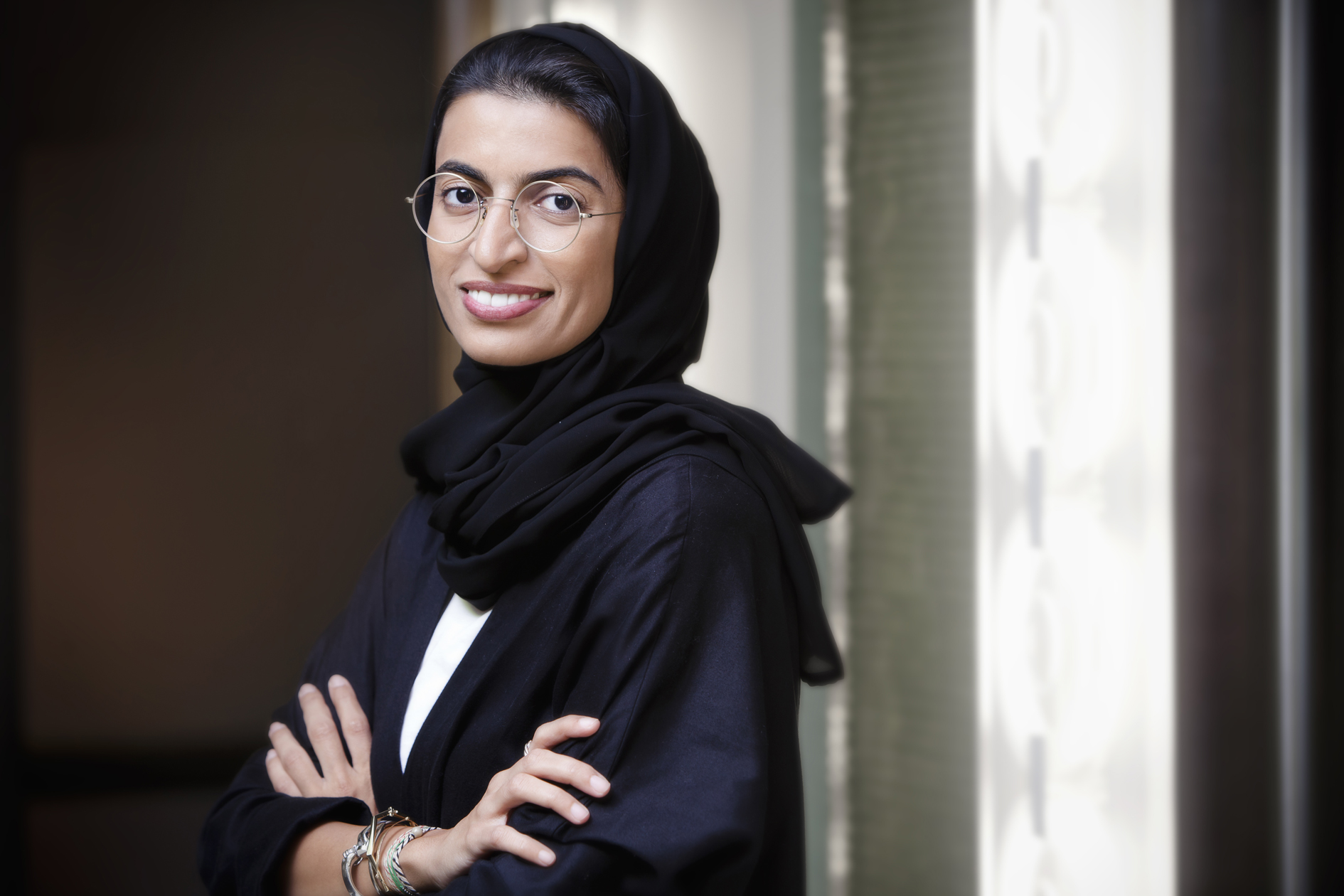
UAE Appoints Women Ministers of Happiness, Tolerance, Youth

The United Arab Emirates is looking to focus on progress and happiness--and it's including many female voices in its cabinet to help accomplish that goal. Ohood Al Roumi was recently named the first minister of happiness, along with a new minister for tolerance, Sheikha Lubna bint Khaled al Qasimi, who was previously the minister of foreign trade.
Shamma AlMazrui, a 22-year-old woman with a master's degree from Oxford, was also appointed the new minister of youth affairs.
"The new cabinet focuses on the future, youth, happiness, developing education, and combating climate change," the Prime Minister added on Twitter earlier this month.
We're excited to see so many intelligent and inspiring women lending their wisdom and leadership to UAE's Cabinet.
yourmiddleeast.com - Women's rights The United Arab Emirates on Wednesday appointed women to the newly created posts of state ministers for happiness and tolerance, and a 22-year-old female for youth affairs.
Prime Minister Sheikh Mohammed bin Rashid al-Maktoum named eight women as he revealed his latest cabinet line-up of 29 ministers in a series of tweets.
Ohoud al-Roumi, who serves as director of the council of ministers' office, was appointed "minister of state for happiness". She will also keep her former post.
"Happiness is not just a wish in our country. There will be plans, projects, programmes and indices. It will be part of the job of all ministries," tweeted Sheikh Mohammed, who is also the ruler of Dubai.
The new post "will align and drive government policy to create social good and satisfaction," he said earlier.
Shamma al-Mazroui, 22, was appointed state minister for youth, while Lubna al-Qassimi, a veteran minister of international cooperation and development, was handed the new post of state minister for tolerance.
Read the rest here.

Study of 91 countries: Businesses thrive when women lead

Gender diversity benefits more than just the women who are hired and promoted: Women leading companies has been tied to stronger profits, according to a study of almost 22,000 publicly traded companies in 91 countries. Perhaps more importantly, the study found that it's not as simple as board quotas or installing a woman CEO: Businesses and culture in general need to be less discriminatory, more inclusive and more focused on education that empowers women to lead in order to reap the benefits.
Read more below and click through for the full story.
in.finance.yahoo.com - NEW YORK (Thomson Reuters Foundation) - Companies with 30 percent female executives rake in as much as six percentage points more in profits, according to a study on Monday, feeding into a global debate over the scarcity of women in decision-making business roles.
The conclusion stems from a study of about 22,000 publicly-traded companies in 91 countries ranging from Mexico to Norway and Italy conducted by researchers at The Peterson Institute for International Economics, a Washington, DC-based think tank.
"If you're a firm and you're discriminating against potential female leaders, that means you're essentially doing a bad job of picking the best leader for your firm," said Tyler Moran, one of the study's three co-authors, in an interview.
The results indicate the presence of women in corporate leadership positions can boost a firm's performance, suggesting a reward for policies that facilitate women rising through corporate ranks.
But the study found while having women in executive ranks resulted in better profitability, female CEOs or board members did not have a statistically-significant impact on the bottom line.
Read the full story here.
Creative Agency Campaigns Against Objectifying Women In Media With #WomenNotObjects

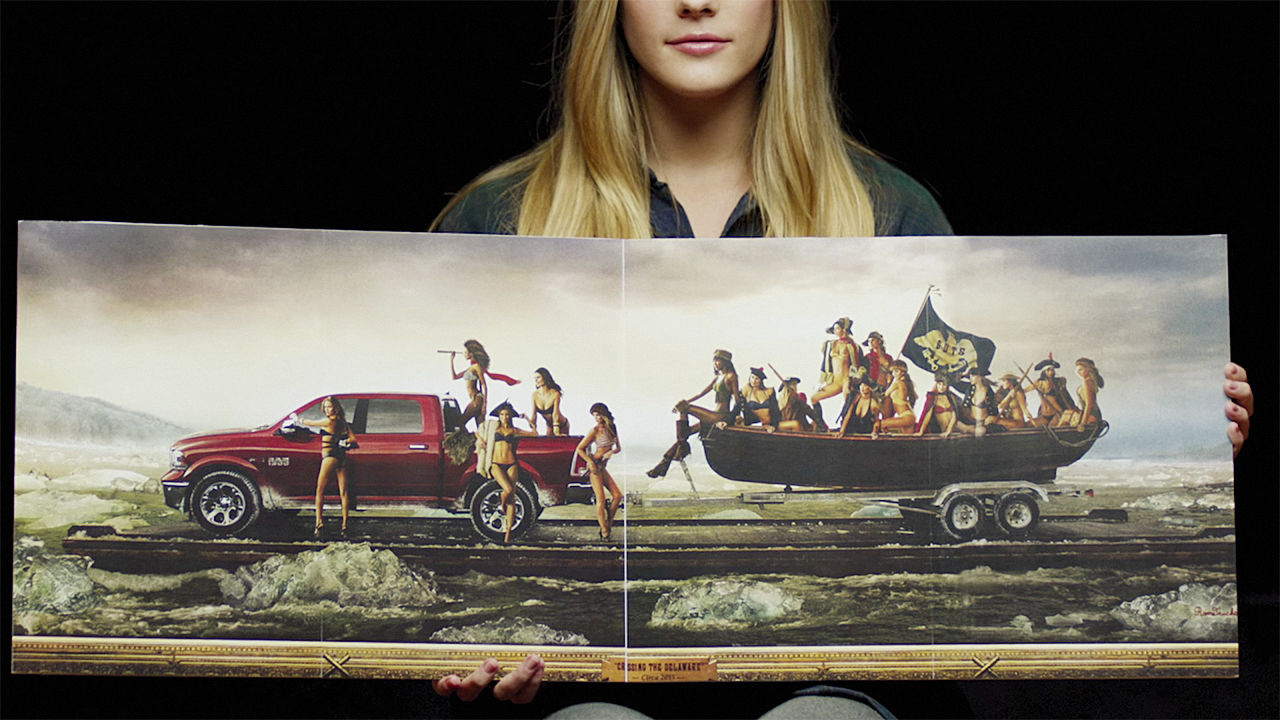
We love the bold stance taken by the ad agency Badger and Winters: "to never objectify women in our work." In case you need to be reminded why that's an important pledge, check out the post from Fast Company highlighting their commitment, as well as their video demonstrating the objectification of women in advertising, #WomenNotObjects, which went viral last month. fastcocreate.com - An advertising agency CCO is spearheading a campaign to fight the objectification of women in ads and other media.
Madonna Badger, founder and CCO of Manhattan-based Badger and Winters Group, anonymously launched a video, "We are #WomenNotObjects" in mid-January. The two-and-a-half-minute-long film contains a montage of ads and branded social media posts, which were returned in response to a Google image search for "objectification of women."
[embed]https://www.youtube.com/watch?v=5J31AT7viqo#action=share[/embed]
Some of these ads are reproduced in placard form and a series of women each hold an image, whilst delivering a sarcastic observation. For example, a highly suggestive image from Burger King is accompanied by the line, "I love giving blow-jobs to sandwiches."
The campaign hopes to spark a wider conversation and drive change. Badger says: "The campaign is aimed at everyone who needs to think about what we are doing and how we can change the way we portray women in advertising and media."
When viewing the images in the video, Badger’s message is one with which it is hard to disagree. It’s also fair to say that, while some brands appear to have been singled out, this really could have included ads from hundreds of brands, not just those featured. (Although, that Tom Ford Men’s cologne ad...)
Read the rest, including more on what drives Badger and her vision for her own female-lead creative agency, here.

6 Reasons women support Justin Trudeau

From his push for greater diversity, to his advocacy for First Nations citizens, to his support of clean technologies; Prime Minister Justin Trudeau of Canada has made waves and won supporters since before his election. So it should come as no surprise that the leader of the Liberal Party supports—and is supported by—women. Check out this article from SheKnows listing just a few of the reasons women support Justin Trudeau.
sheknows.com - Image: Chesnot/Getty Images
If you can say anything about Canada's new PM, he certainly has made an impression on women voters. A new survey of over 8,000 Quebecers proves this, as it found that women and young people (aged 18 – 24) were among the biggest fans of Justin Trudeau.
More: Trudeau's response to the question of gender-balance is perfect
The poll found that while 55 percent of Quebecers approved of Trudeau's work so far, that number was higher among women than men — with 58 percent of women reporting that they felt "satisfied" with what Trudeau has accomplished in his first 100 days in office.
And why is Trudeau popular with women? Because he's done the following things:
1. Trudeau is proud to call himself a feminist
I am a feminist. I’m proud to be a feminist. #upfordebate
— Justin Trudeau (@JustinTrudeau) September 21, 2015
Trudeau isn't afraid of the F-word, which no politician should be in 2016. He's called himself a feminist many times, crediting his mother for his feminist education: “My mom raised me to be a feminist," explained Trudeau this fall at an Up For Debate event. "My father raised me — he was a different generation — but he raised me to respect and defend everyone’s rights, and I deeply grounded my own identity in that, and I am proud to say that I am a feminist.”
Read the rest of the article here. Also check out the SheKnows slideshow introducing the 15 women appointed to Canada's new cabinet. We'll leave you with a video Trudeau posted to Twitter late last month, commemorating the 100-year anniversary of Manitoba women getting the right to vote:
100 years ago today, Manitoba women won the right to vote – the first victory for women’s suffrage in this country.https://t.co/HgCybKY3hX
— Justin Trudeau (@JustinTrudeau) January 28, 2016

Why We Need to Keep Talking About Feminism

Please enjoy an excerpt from Huffington Post, where Sheila Moeschen; senior editor for I AM THAT GIRL; writes on feminism, conversations, and how a book can make us nervous—or serve as an opening for a conversation that is still vital and ongoing.
huffingtonpost.com - I had just been to one of the nearby bookstores where I had bought Gloria Steinem's recent memoir My Life On the Road and was looking forward to pausing over some coffee to dig in and read for a while. Now I felt supremely self-conscious about breaking it out in front of this person. Would he try to engage me in a debate on feminism? Would he take it as an invitation to assume I was a Hillary supporter and pontificate on the laundry list of reasons why Hillary was bad for the country and even worse for women? Would he get angry?
In the zillion years I spent as an undergrad and graduate student studying literature, a book has never made me nervous. But here I was weirdly worried. I felt very much what it means to be an educated white woman during a time in our country's history where the focus on women—on our bodies, our access to health care, our politics and our relationship with feminism—is like a powder keg rigged up to a hair trigger. Women are in a perpetual state of vigilance it seems, on guard against physical and verbal assault, crouched in a defensive pose in anticipation of backlash. No wonder women are confused and cagey about feminism. It's risky and messy. It's a lot of work. Isn't there an app for this?
Read the rest here, and follow Sheila Moeschen on Twitter.

Landless women farmers receive land tenancy for the first time in Pakistan

asiapacific.unwomen.org - Durdana is a young widower from Pakistan’s Dadu District in Sindh Province. She is one of 1,214 landless women farmers and sharecroppers who have received land tenancy rights for the first time in their life. Speaking of her new status, Durdana shares that farming is her life: “I do not know anything else but working in the fields. Who could think a poor female widower like me would be given land! For the first time in my life I can say something is mine. This land, as far as the eye can see is mine - this paper says so. This is my land and I am its queen,” she says beamingly.
UN Women Pakistan in collaboration with local partners, Baanhn Beli and Gorakh Foundation, in Mirpur Khas and Dadu Districts, respectively, is working with 1,214 vulnerable rural women farmers, like Durdana, to acquire land tenancy rights from their feudal and tribal landholders. These landless women farmers were trained and mentored to prepare tenancy agreements and landholding maps with their male landlords.
In the process, they have been provided with a viable livelihood option that could take them out of poverty and enable their upward social mobility.

International Day of Rural Women

“Collectively, rural women are a force that can drive global progress.”—Secretary-General Ban Ki-moon
Rural women—their contributions, families, struggles and communities worldwide and how we can all honor, support and recognize them—were the focus of International Day of Rural Women, Oct. 15.
Rural women are often acutely in need of support, but they’re not the only ones who benefit from their empowerment. The key roles they play in their communities position rural women uniquely well to benefit those around them as they thrive. Yet even as the world has seen many advances in medicine, economics, production and more; the number of rural women living in poverty has risen.
Rural women make up about a quarter of the world’s population and produce about half of the world’s food, yet they own only 1 percent of the land. They are resilient, strong, hard workers—from the women who provide for their families each morning only to go out and work 12-hour days fishing or harvesting to the women in sub-Saharan Africa who, collectively, spend about 40 billion hours hauling water each year—yet they are undereducated and often receive little access to training or essential tools for their work.
Women also play pivotal, and sometimes desperately difficult, roles in their families. They are the most likely to be caregivers both for young and old family members, usually on top of their daily responsibilities. When food resources run scares, it is most often women in poor rural families who go hungry, giving food instead to their children and husbands.
International Day of Rural Women was established by the UN in 2007 and first observed in 2008. The observance raises awareness of the crucial role rural women play in the welfare of societies worldwide, and invites governments and organizations to pledge their support for these women, their families and their communities.
Simple measures can often go a long way. Providing women and girls with greater access to education can help for a lifetime. Less than half of school-aged girls in many rural communities attend school, and when family resources suffer, they may be pulled from school to help support the family. Women often have no chance to continue their education, but studies have shown that women with secondary educations tend to marry later, have fewer children and be less susceptible to domestic violence. When women are given access to skills-based training and agricultural resources it can greatly increase the productivity of their farms, helping to feed hundreds of millions worldwide.
When rural women win, everyone wins.
Through concerted and cooperative efforts to empower rural women; governments have begun to fight hunger, bolster economies, deal with natural disasters and rising food prices, support families and transform societies.
We would like to express our support of and admiration for the strides made and awareness raised through International Rural Women’s Day. It’s second only to our admiration for the women themselves. You are superheroes.
Learn more about International Day of Rural Women.

The Fight for Women's Rights Continues Worldwide

“If there is one message that echoes forth from this conference, let it be that human rights are women’s rights and women’s rights are human rights once and for all. Let us not forget that among those rights are the right to speak freely—and the right to be heard.” Those words first entered the international conscience 20 years ago, as Hillary Clinton, then First Lady of the United States, spoke at the fourth annual United Nations World Conference on Women in Beijing. The issues of that conference, the progress made since then and the road we still must travel have been the focus of this year’s International Women’s Day March 8, Women’s History Month and the 59th session of the Commission on the Status of Women. Efforts, events and initiatives will continue throughout 2015.
Observations like these commemorate women’s achievements throughout history and the ongoing struggle for gender equality. They also serve each year to shine a spotlight on women’s accomplishments and reflect on the progress women worldwide have made—and still must make. As the United Nations observes Beijing Declaration and Platform for Action (also known as Beijing+20), this year’s International Women’s Day theme is #MakeItHappen. Make what happen? Aren’t women equal?
Not quite.
The Global Gender Gap Report, an index last released in November 2014, tracks gender inequalities in economics, politics, education and health in 142 countries. While inequalities in health and education are shrinking dramatically worldwide and eliminated in many countries, there is still work to be done—and economic participation and political empowerment are still dramatically unequal worldwide and in most countries. Some countries have made great strides in recent decades toward gender equality—a move that helps not only women, but the country as a whole, as countries with empowered women who are able to realize their full potential are most successful on the international stage.
It’s also worth noting that, despite recent advancements, not one country has reached total gender equality.
Sometimes, it’s even worse. Women and girls around the world continue to face threats including domestic partner violence, female genital mutilation, sex trafficking, barriers to education and lack of health care or birth control.
In spite of performing about 60 percent of the labor worldwide, women often receive a fraction of the wages that men do—not nearly enough to support families.
One in three women will be physically or sexually assaulted in her lifetime.
Even as the United States celebrated Women’s Equality Day Aug. 26, marking 95 years since women in the country won the right to vote, women in the country still make up only 20 to 25 percent of elected officials at the state and federal level—despite turning out to vote at rates much higher than men. The U.S. Supreme Court, at its highest female representation ever, still only boasts three women to six men.
It’s not all bad. Women are, and always have been, crucial players in developement of societies and economies. Women are starting businesses at greater rates than men in recent years, often funded by other women investors. Women are holding political office more than ever before. The number of women in the United States Congress has nearly tripled in that time, though they still make up only 20 percent.
Perhaps most encouragingly, more people are getting on board. Women and men around the world are realizing that the struggle for equality is a cause that helps us all.
Feminism and women’s issues overlap other serious concerns like labor organization, education, environmental conservation, world hunger and poverty.
President Barack Obama said, in his 2014 State of the Union Address, “Of course, nothing helps families make ends meet like higher wages. That’s why this Congress still needs to pass a law that makes sure a woman is paid the same as a man for doing the same work. Really. It’s 2015. It’s time.”
Leaders, activists and citizens from around the world can make it happen—from petitioning world leaders to take action on women’s issues, to starting and investing in women’s business, to taking a critical look at gender relations and the way they talk in their everyday lives—through steps big and small, political and personal, familial and financial.
Whether you’re leading an event or march, joining one of the hundreds of celebrations around the world or fighting for equality in your community and home, we can do this. It’s 2015. It’s time. Get out there and make it happen. ----- International Women’s Day: The discussion and movement continues! Learn more about 2015 initiatives and events around the world. Facebook Twitter Use the hashtag #MakeItHappen

3rd Annual WIIW Summit hits Phoenix

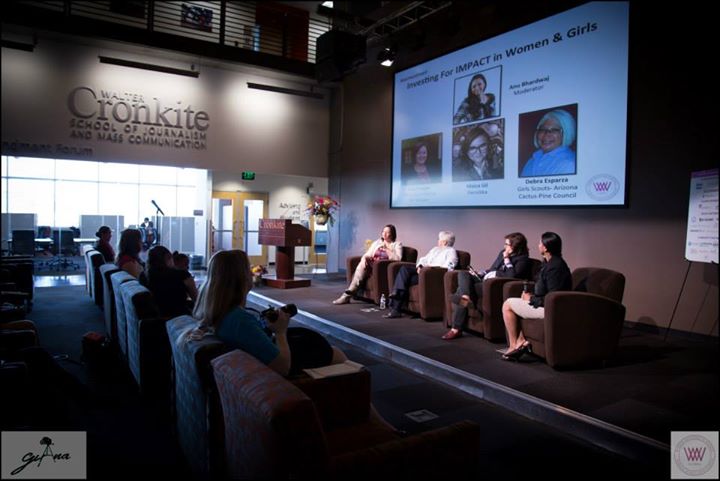
Entrepreneurs, business professionals and students met at Arizona State University’s Walter Cronkite School of Journalism and Mass Communication Feb. 20 and 21 to learn from a power-packed lineup of business and media experts, to network with leading executive men and women and to become part of a global economic revolution geared toward women and girls at the Third Annual Phoenix Women Investing in Women Summit. Our founder, Anu Bhardwaj, noted that it was “the largest Women Investing in Women Summit after having expanding our Global WIIW Summit Series across North America, Asia, Europe and Africa over the past 12 months. In the true spirit of Women Investing in Women, we are extremely thrilled that a large portion of our revenues will be supporting the official launch of The State of Women Radio Network, the “Women Investing in Women and Girls” radio show, and the Girls Rule Foundation.
A large portion of the summit's revenues went toward supporting WIIW's “Women Investing in Women and Girls” radio show, as well as the Girls Rule Foundation, an Arizona-based nonprofit organization dedicated to educating and empowering girls ages 12 to 18.
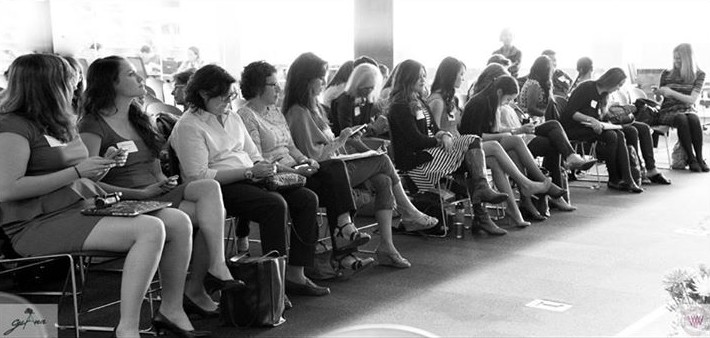
Aspiring and established entrepreneurs alike learned from business, technology and media experts; who spoke on topics including crowdfunding, negotiating, managing finances as a small business, educating girls in STEM fields, the Girl Scouts' amazing business model, international business and philanthropy, the LGBT community and more. Through talks, presentations, breakout sessions and networking; entrepreneurs and professional women of all interests and experience levels came out of the summit enriched and invigorated with new contacts, expertise and inspiration.

Seed Spot, a nonprofit incubator focused on social entrepreneurship, hosted a pitching session at the summit. Founder Courtney Klein discussed pitching and the importance of building a community of mutually supportive entrepreneurs. With hundreds of alumni who have raised $1.7 million in capital and created 160 new jobs, she made a strong case. The incubator and office space boasts a network of over 350 mentors and runs a four-month program twice a year to assist new entrepreneurs.
We were especially excited to feature our inaugural WIIW Phoenix Private Equity Roundtable, especially focused on helping local women investors understand due-diligence as it pertains to making angel, venture capital, and private equity investments. As a women-focused private equity roundtable it offered a unique and often unexplored perspective.
Guests were also able to treat themselves. Mini-headshot sessions hosted by Get Image Ready helped interested attendees add professional and eye-catching flair to their professional profiles on social media and other business networking channels. Guests received tips on putting a good face forward in business and beauty, as well as hair and makeup touchup and a finished digital image.

The summit also hosted a “Pink Carpet Reception” sponsored by Get Image Ready to celebrate the launch of international bestselling book “Success in Beauty.” as part of a launch party to benefit the Girls Rule Foundation. The party featured a panel discussion and book signing by six local co-authors; event photography by Style Image Studios’ Stella Crowl, voted Best of Our Valley by Arizona Foothills Magazine and swag by local dessert and beauty vendors. Special presenters included:
- The “Women Investing in Women and Girls” radio show; a show produced and broadcasted by teenage girls in the Valley engaging listeners on global women’s issues, entrepreneurship and investing; that is produced locally in Phoenix by the Kidstar Corporation for Voice America Kids with an estimated reach of 5.6M worldwide.
- Lisa Stone, SheKnows Chief Community Officer and Co-Founder of BlogHer
- Douglas Ellenoff, from Ellenoff Grossman & Schole, a leading law firm who was involved in the inception of the crowdfunding Industry
- Barbara McAllister, Director of Global Strategic Initiatives, from Intel Girls and Women
- Anu Bhardwaj, Founder of Women Investing in Women Digital
- Courtney Klein, Co-Founder, Seed Spot
- Kate Darling, Senior Digital Advertising Manager, American City Business Journals
- Gloria Feldt, Founder, Take the Lead
- Heidi Jannenga, Co-Founder, WebPT
- Aly Saxe, Founder and CEO, Iris Software
- Dr. Ann-Christine Langselius, Founder, Maya Global Invest
- Candace Klein, Chief Strategy Officer, Dealstruck
- Cindy Christi, Founder and CEO, CXI Media
- Jennifer Mannino, EVP, Director of Investigations at Subrosa Investigations, LLC
- Poonam Ahluwalia, Founder, Youth, Entrepreneurship and Sustainability
- Anila Arthanari, Director of Development, Infusionsoft
- Angela Hughey, Founder, ONE Community Media
- Kathy Sacks, Founder, Fearless Ventures
- Kathy Bass, Founder, Ladies Who Brand