

Blind Bias: Why More Women Suffer From Preventable Vision Disabilities

This article originally appeared on the Women & Girls Hub of News Deeply, and you can find the original here. For important news about issues that affect women and girls in the developing world, you can sign up to the Women & Girls Hub email list. By Christine Chung
As the health community marks World Sight Day, women from low- or middle-income countries still make up two-thirds of blind people around the globe – and most of them have a condition that can be cured or prevented.
There are 39 million blind people across the world, and a further 246 million suffering from low vision, according to the World Health Organization (WHO). Almost two-thirds are women, the vast majority of them living in low- or middle-income countries.
The WHO says 80 percent of all visual impairment can be prevented or cured with solutions that are relatively easy and low-cost. For example, cataracts, which account for more than half of all cases of blindness, can usually be treated with a 15-minute operation to insert a $2 intraocular lens. But for many blind women, cost is only one of several barriers to diagnosis and treatment.
There is no biological reason for the increased prevalence of vision impairment in women, according to research by the Seva Foundation, a nongovernmental organization that provides eye-care services in over 20 countries. But access to eye healthcare is a major factor.
“In many cultures and regions, within families and the context of communities, blind and vision-impaired women are not considered as important as men to get services,” says Johannes Trimmel, advocacy director of the International Agency for the Prevention of Blindness (IAPB). “It’s a question of financing and cost recovery where investment in families is rather going to men and to the younger generation than to women and the older generation.”
Even where surgery is offered for free, getting to the clinics is often a challenge for many vision-impaired women, as is having the information to know that services are available and that their disability is treatable. The Gender and Blindness Initiative, launched in 1983 by the Canadian Global Health Research Initiative, found that the utilization of eye-care services is strongly associated with the socioeconomic status of women and female literacy – an indicator of educational attainment. Highlighting examples from southern India, the Seva Foundation report Gender and Blindness shows that investment in female education improves all aspects of public health, including eye care, and often without having to add to existing health services.
In low-income settings, blindness or low vision can be a disability with severe consequences. In many parts of the world, people who become blind experience a diminishing quality of life, with the loss of independence, mobility and productivity as well as social status and self-esteem. And their families are likewise negatively affected. According to a Nepali proverb, a blind person is a mouth with no hands – someone who needs so much help in their daily lives that their sighted caregiver loses education and employment opportunities.
Despite the potentially massive economic, psychological and social costs of blindness, all eye-care services are reaching only 10 percent of people who need them, says Suzanne Gilbert, Seva Foundation’s cofounder and senior director of Innovations and Sight.
“If you design programs that are inclusive of women, it’s likely to serve everyone who needs them,” she says. “Figuring out how to reach women requires attention to location, affordability – often meaning it has to be free – and quality of care, not just the outcome but also during the process. Are the patients being rushed? Ignored? Or are they being listened to?”
Compounding the impact of gender prejudice in access to healthcare is age discrimination. Over 80 percent of blind people are aged 50 and above. Vision impairment often appears later in life, and in many contexts is accepted as an inevitable part of aging, even when there are solutions. And that discrimination isn’t just about cultural attitudes and the allocation of health resources, it’s present even in the process of data collection. Organizations tracking women’s health stop when the women reach the end of their fertility: Women over 49 years old are ignored in the Demographic and Health Survey and UNICEF’s Multiple Indicator Cluster Survey.
“Not being counted in statistics and survey means a denial of and exclusion from information, and prevention and support services,” said Justin Derbyshire, CEO of HelpAge International, a network of organizations working with and for older people, in a recent speech to the WHO.
And then there is the fact that, in many countries, funding is often directed toward health issues that are considered more urgent than loss of vision. As far back as the 1980s, the World Bank identified cataract surgery as one of the most cost-effective interventions that can be offered in low- and middle-income countries. But it also notes that these countries face competing health demands like maternal and child care.
With global demographic trends pointing to progressive and rapid population aging, preventable and treatable blindness will only grow as a pressing health and human rights concern. “We have been working on establishing community-based eye care that can reach all who need it,” says Gilbert. “The key factor is not to approach this as a charity, but to provide quality eye-care services for those who are able to pay, and subsidize those who can’t.”
Later this month, IAPB will hold its general assembly, which takes place every four years. Trimmel hopes it will provide an opportunity to address head-on the barriers that women face. “It’s not just the ophthalmologists, it’s not just the service centers, the community health workers, the people working on education or equality generally,” he says. “It needs structures and people to work well together for women to have equal access to eye care.”

Forced Marriage and Rape: The Legacy of the Khmer Rouge on Trial

This article originally appeared on the Women & Girls Hub of News Deeply, and you can find the original here. For important news about issues that affect women and girls in the developing world, you can sign up to the Women & Girls Hub email list. By Nina Teggarty
In Cambodia, the U.N.-backed Khmer Rouge tribunal hears from survivors of forced marriage, but critics say the court should also cover other acts of gender-based violence.
“I just couldn’t understand why falling in love was a crime,” says Youk Chhang, executive director of the Documentation Center of Cambodia, an organization that records atrocities that took place under the Khmer Rouge. From 1975–79, Pol Pot’s brutal regime devastated Cambodia, and an estimated 1.7 million people died from starvation or disease, or were executed.
The Khmer Rouge, known as the Communist Party of Kampuchea (CPK), controlled every part of people’s lives, even love and sexuality. Chhang was only 15 when he witnessed the Khmer Rouge killing a couple because “they fell in love without permission.” To make sure Cambodians married the “right” people, namely those who were loyal to the party, the CPK forced men and women to marry each other.
Survivors of forced marriage are currently giving testimony in Case 002/02, the latest trial to take place at the Khmer Rouge tribunal in Phnom Penh, otherwise known as the Extraordinary Chambers in the Court of Cambodia (ECCC). Evidence of forced marriage will be used to determine if senior leaders of the regime committed crimes against humanity.
The Khmer Rouge used forced marriage to exact ultimate control over relationships, as couples were expected to procreate and produce the next generation of party adherents. No one knows how many people were forcibly married by “Angkar” (the communist party), but mass wedding ceremonies, some consisting of more than 100 couples, took place across Cambodia.
Survivors appearing before the court have described how the regime pressured them to marry. “I refused [to marry] several times, but finally the sector committee said I was a stubborn person,” Sa Lay Hieng said in court. Scared of being killed, Hieng was coerced into marrying a man she did not like. Another witness, who was granted anonymity, said she was made to marry a Khmer Rouge officer in a collective ceremony; when she refused his advances on their wedding night, her new spouse complained to his commander, who then raped her. “I had to bite my lip and shed my tears, but I didn’t dare to make any noise, because I was afraid I would be killed,” she said. She was eventually led back to her husband.
The final testimonies relating to forced marriage will be heard in the coming weeks. But some experts argue that other heinous sexual crimes committed during the Khmer Rouge era, such as rape outside of forced marriage, have been overlooked by the court.
In a study by the Transcultural Psychosocial Organization, an NGO that provides counseling to victims appearing before the court, a third of female interviewees witnessed rape outside forced marriage. This finding is echoed by the Documentation Center of Cambodia, which has collected a “significant number of documents” detailing at least 156 cases of rape by Khmer Rouge comrades in cooperatives and detention centers. “The women who were raped were accused of having served in the CIA, KGB or other enemies of Angkar, and taken to be smashed [killed],” said Youk Chhang of the Documentation Center.
Farina So, an expert in gender-based violence perpetrated by the Communist Party of Kampuchea, says that “hundreds and hundreds” of rapes occurred, adding that cadres “used it as a tool to victimize women, to silence them.” In the course of her research, So has interviewed numerous survivors of sexual assault; one of these women, Tang Kim, was considered “an enemy of Angkar” and in 1976 was rounded up – along with eight other women – and readied for execution in Kampong Chhnang province, central Cambodia. While Kim awaited her fate, she could hear the other women being raped and then murdered – “I was terrified to see people being killed off and buried one by one” – recalls Kim in a film made by the Cambodian Documentation Center. She continues, “I saw a Khmer Rouge soldier slashing a woman’s abdomen; they cut it open and took out the fetus.” After being gang-raped by the soldiers, Kim managed to escape and went into hiding.
According to So, Kim tried to submit her civil party application to the Khmer Rouge tribunal, but it was rejected because prosecutors are addressing only sexual abuse within forced marriage. It was, says So, a decision that “really disappointed” Kim and other rape survivors, many of whom have spent decades summoning up the courage to speak about their ordeal.
When Women & Girls Hub approached the Khmer Rouge tribunal to ask why the current trial is focusing exclusively on forced marriage, the court’s spokesperson, Lars Olsen, said co-investigating judges had concluded that rape outside forced marriage was not an official policy of the Khmer Rouge. He pointed to this statement from the tribunal: “Those who were accused of ‘immoral’ behavior, including rape, were often re-educated or killed [so] it cannot be considered that rape was one of the crimes used by CPK leaders to implement the common purpose.”
The survivors and their lawyers, who campaigned for years to have forced marriage added to the list of crimes prosecuted in court, are waiting for the expected judgment in late 2017.

Girls Take a Place at the Table to Discuss U.N.’s 2030 Agenda

This article originally appeared Oct. 12 on the Women & Girls Hub of News Deeply, and you can find the original here. For important news about issues that affect women and girls in the developing world, you can sign up to the Women & Girls Hub email list. By Christine Chung
The U.N.'s Sustainable Development Goals promise gender equality, but a panel marking the International Day of the Girl agreed that achieving the goals requires monitoring and active participation by girls to make sure governments deliver.
In Geneva, there was no missing the fact that yesterday was International Day of the Girl. Various U.N. offices usually reserved for dignitaries, like those of the director-general and the UNICEF Geneva liaison, were taken over by girls, while a flash mob of young women and their supporters gathered at the Place des Nations in front of the square’s iconic statue of a giant three-legged chair.
To mark the day, Plan International organized a panel featuring young activists from Zambia and Germany, U.N. officials, and Colombia’s ambassador, to discuss how girls fit into the U.N.’s 2030 agenda.
The 2030 Agenda for Sustainable Development, adopted in September 2015, comprises 17 Sustainable Development Goals (SDGs) and 169 associated targets for people, planet and prosperity. According to Alfonso Barragues, director of the U.N. Population Fund in Geneva, the main difference between the SDGs and the Millennium Development Goals, which were set out in 2000 with a 2015 deadline, is “a paradigm change.”
“The MDGs were an aid contract between developed and developing countries,” Barragues told the panel. “The SDGs are a social contract, so it’s an agenda for girls and their generation.” Panel members agreed that a key tool in carrying out that agenda is data.
The fifth SDG specifically aims to achieve gender equality and empower all women and girls. Speaking on the panel, Ngandu, a young woman from Zambia, laid out the prejudices she faces every day. “To be a girl in Zambia is to be a second-class citizen,” she said. “People believe that boys are more knowledgeable than girls.”
“Girls face human rights challenges that are enormous, massive, but their situation is essentially invisible,” Barragues told Women & Girls Hub. “This is an invisibility that takes place in front of our eyes.”
As part of the panel, Anne-Birgitte Albrectsen, CEO of Plan International, said that “the invisible girl is the first barrier to be broken.” Plan International’s new report, “Counting the Invisible,” shows how data not only reflects gender differences and inequalities, but also provides girls and those advocating for their rights a useful tool to demand accountability. “The SDGs are not a framework but a promise,” said Albrectsen. “Promises need to be monitored. Everyone needs to hold their governments to account.”
Barragues referred to data as a fundamental tool, saying, “Emphasis on data would kill several birds with one stone: for planning, evidence-based advocacy and ultimately strengthening the social movements of girls.”
After an audience member commented on the difficulties in addressing the needs of sex-trafficking victims, the panel moderator, U.N. Deputy High Commissioner for Human Rights Kate Gilmore, noted the challenge of giving attention to both data and the voices of those whose experiences it aims to quantify.
“We can’t measure everything. At the end of the day, we have to address the root causes, not just the symptoms, which are easier to measure,” said Barragues. “Social norms and attitudes that come from patriarchal views that women are inferior, these create the power imbalances that put girls at a disadvantage.”
Gender bias is ingrained in the measurement process, resulting not only in the lack of data but even in “bad” data, write contributors Mayra Buvinic and Ruth Levine in “Counting the Invisible.” One consequence is that data can misrepresent reality so that women appear more dependent and less productive than they actually are, which in turn influences policy decisions.
In addition to the importance of gathering better data, the panel also discussed investing in quality education and facilitating active participation by girls in policy discussions as keys to empowerment. Speakers both on the panel and in the audience noted that a solution to gender inequity can only be achieved with the participation of boys and men.
“We should empower women, but we can’t leave men behind,” said Luca, a young woman from Germany on the panel. “We rise, and we take them with us.”
Barragues said there are promising efforts to involve men in the process of empowering women and girls. He points to the International Geneva Gender Champions, an initiative launched by the U.N. Office at Geneva and the United States Mission to the U.N.
“These are heads of agencies and organizations and ambassadors committing to advancing gender equality in the work of the international community in Geneva,” he said. “For example, the initiative promotes panel parity at those events organized by the U.N. There are over 150 champions already mobilized, including the high commissioner for human rights. In fact, the majority are men, which is helpful to promote men’s engagement on gender equality, but is also telling in terms of who holds rank. Ultimately, we are striving to see parity in all areas.”

Carolyn Miles: Without a Gender Equity Shift We Won’t Reach SDGs

This article originally appeared on the Women & Girls Hub of News Deeply, and you can find the original here. For important news about issues that affect women and girls in the developing world, you can sign up to the Women & Girls Hub email list. By Flora Bagenal
On International Day of the Girl, Save the Children has released a report detailing the five worst parts of the world to be young and female. Carolyn Miles, CEO of the organization, reveals their plans to ensure a brighter future for young girls in the developing world.
One girl under the age of 15 is married every seven seconds, according to a report published today by Save the Children. Based on indicators such as rates of child marriage, teen pregnancy and the likelihood of dropping out of school, the report also outlines the best and worst places in the world to be a girl. Niger sits at the bottom of the list, closely followed by Chad, Central African Republic, Mali and Somalia. The best place in the world to be a girl? Sweden.
The study, released to coincide with the International Day of the Girl, takes a closer look at the impact of early marriage and early pregnancy on the outcomes of girls’ lives, and calls on the international community to do more to ensure girls in developing countries have the chance to enjoy a childhood.
While the findings of the report once again highlight slow progress on girls’ rights globally, Carolyn Miles, president and CEO of Save the Children, says there is still reason to be optimistic. Real change, she says, is happening in areas where it once seemed impossible. Women & Girls Hub spoke to Miles about setting tough targets for tackling these issues over the next 15 years.
Women & Girls Hub: What has changed for girls’ rights since you started working in this field?
Carolyn Miles: I’ve been working on these issues for a really long time and I think the good thing is that you do see real progress in some countries in terms of the equity for girls. I’ll give you an example. I was in Mali about 18 months ago and I visited a school there. First of all, they had a headmistress not a headmaster, which is fantastic because these girls really need role models. Then when I asked her who the stars of the school were, she said we could go and meet them, and they were three girls. Ten years ago, that would not have been the case in the sixth grade. We would be lucky if there were girls in the sixth grade let alone the star students. So you do see progress and you do see change, but the disparities are still really great, which is what this report is all about.
Women & Girls Hub: What do you find most frustrating about the lack of progress for young girls?
Miles: I guess what’s disappointing is that a lot of it is not about policy. I was just in Bangladesh. Bangladesh has a policy that no girls get married under the age of 18, and yet a third of girls get married before they are 18. So obviously this isn’t about policies.
A lot of the time it is about changing behavior and it’s about convincing families to value girls as highly as they value boys. That’s why one of the things we looked at in this study is women in the highest level of government. Women in those position are more likely to change policy, but they are also role models, so families see women can be leaders, and that starts to change the way people value girls.
We’re not just trying to name and shame countries for this report – we show the report to the countries in the worst position in advance of publishing it. But what we want is to work with these countries to change the situation.
Women & Girls Hub: What can Save the Children and other international organizations do to improve things for the girls featured in this report?
Miles: We have set our sights really high for children by 2030. We want no child under five to die of preventable disease. Every child should be in school and get a basic education, and we want to change the way the world thinks about violence against children. If you look at those goals, the only way we are going to get there is if we look at the children who are worst off in all those places. The children who are worst off in health, in education and in protection. Girls are at the end of the line on most of those issues.
Women & Girls Hub: Do you think global attitudes toward girls are changing?
Miles: I do. I think a big turning point, if you look at the SDGs (Sustainable Development Goals), the issue of equity is a huge part of it, specifically about gender. Not only is there a specific goal about gender, but in all those 17 goals there is a huge amount of work around equity and a big recognition that, if we don’t get a gender equity shift, we will never reach any of those goals.
Women & Girls Hub: Can it get depressing when you find yourself facing such hugely ambitious targets?
Miles: I think the only way you can approach this job is looking at the glass as if it is half full. If you look at child survival, to me that is one of the most exciting pieces of progress we have made. In 1990, you had 12 million kids who died of preventable diseases and now you have under 6 million. That’s 25 years; that’s in our lifetime.
So why not be ambitious and say, if we can do that in 25 years then we can save the last 6 million in 15 years? We know exactly where those kids live, we know what they are dying of. It’s not about not knowing; it is about changing behavior. [Changing attitudes toward girls] is really hard because it is getting to the core of people’s beliefs and changing the way people think. It’s not easy to do and it will take some time, but things are changing and we have to hold on to that.
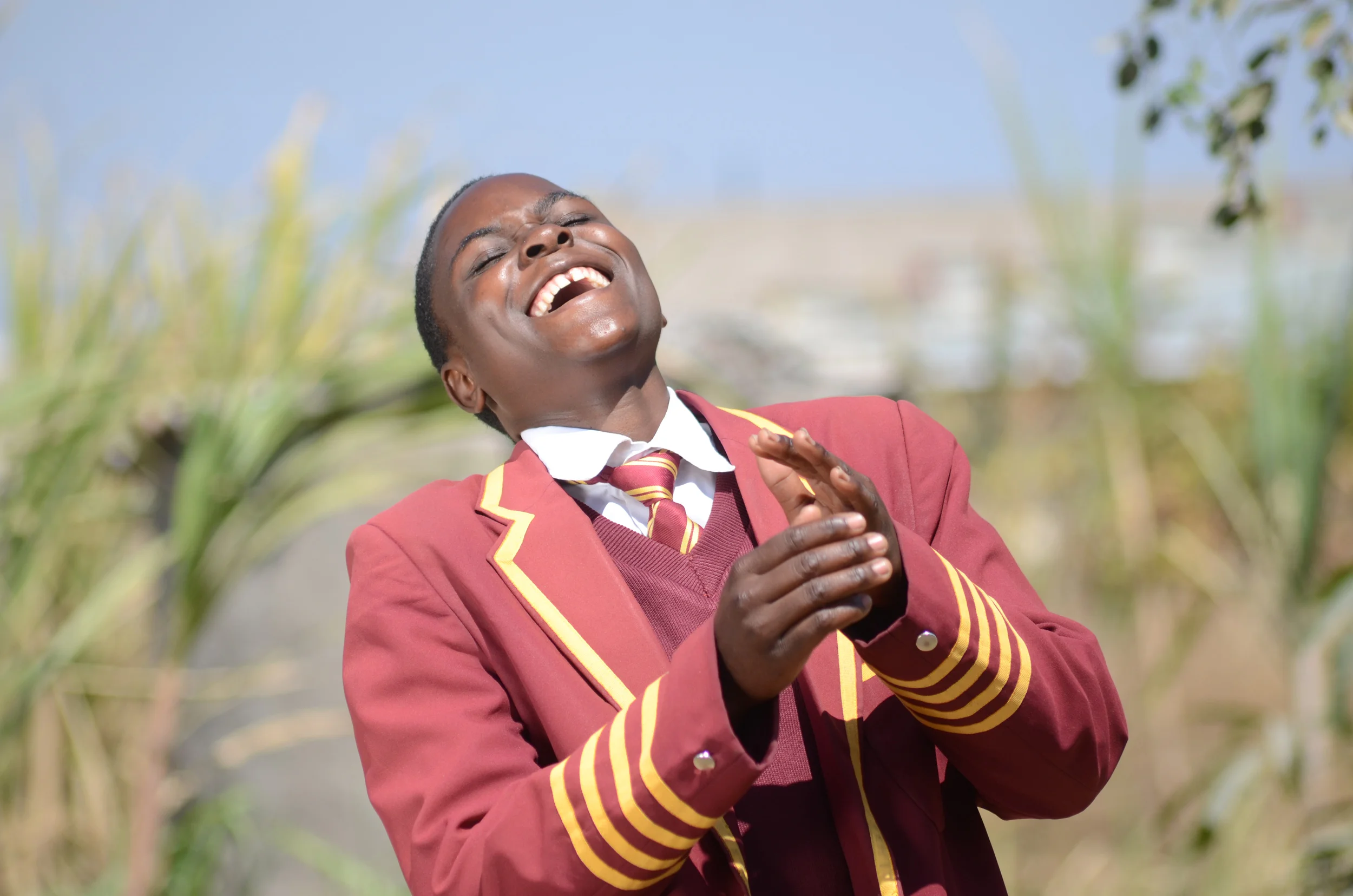
The names of the girls in the photos have been changed to protect their identities.
This conversation has been edited for length and clarity.
Shining a Light on Invisible Girls and Women: Why Gender Data Matters

This article originally appeared on the Women & Girls Hub of News Deeply, and you can find the original here. For important news about issues that affect women and girls in the developing world, you can sign up to the Women & Girls Hub email list.
By Zahra Sethna
On International Day of the Girl, girls are demonstrating their ability to change the world. Yet more needs to be done to make all girls visible, including gathering meaningful data about their lives, writes Plan International’s Zahra Sethna.
It’s hard to ignore a girl like Masline. An 18-year-old student at a school just outside of Harare, Zimbabwe’s capital, she is smart, confident and determined. Talking about her hobbies makes her smile. She loves to write poetry and is especially inspired by Shakespeare’s Othello.
Masline is a great example of what happens when girls are empowered to reach their potential. She sailed through her secondary school exams with top marks, and once she finishes her current course of study she would like to become a teacher and act as a role model for other girls.
The sad truth, however, is that around the world there are millions of girls who don’t have the opportunity to fulfill their dreams like Masline.
In a recent qualitative research study of vulnerable girls in Zimbabwe, 81 percent of the 121 girls Plan International spoke to said that at one point or another they had to drop out of school, either temporarily or permanently. Most of the time this was because they couldn’t afford tuition and school fees. Once out of school, they said it was hard to go back and doubly hard to fight off the pressure they faced to get married and lessen the financial strain on their families.
When girls drop out of school and get married as children, they often become invisible to governments and policymakers because their realities are not being captured in official data and statistics. They become much easier to overlook and more vulnerable to abuse, exploitation and violence.
The plight of invisible girls is the focus of our new report, “Counting the Invisible,” which makes the case that improved data on the barriers facing girls and women is essential to achieve true equality.
How Data Can Help
Just having more data will not make all the difference to these girls. Data alone can’t change the world, but when data is collected and analyzed in the right way, they certainly can help make change possible. The insights it reveals can help inform policy and program choices. It can identify needs and challenges and help lead us to the groups of people who face the biggest barriers to realizing their rights, such as rural communities, ethnic minorities and people with disabilities. It can provide the evidence advocates need to press for change. And it can show us what works and what does not, so we can be sure to invest in the solutions that really transform lives.
Here’s an example: Let’s say a municipality wants to address the barriers girls face in getting to school. The municipality puts public transportation options in place so girls don’t have to walk long distances, and then it measures how many girls have access to that public transportation. Still, the problem persists – many girls still walk long distances or fail to attend school.
What this municipality failed to do was talk to the girls themselves to fully understand the challenges they face. If they had done some qualitative research, they might have learned that many girls are afraid for their safety in public. In Nicaragua, 65 percent of the girls we spoke to said they do not feel safe on public transportation and 59 percent do not feel safe walking on their own in public places. If girls don’t feel safe riding the bus or walking by themselves in public, having access to public transportation has little meaning in their lives.
When data reveals the scope and scale of an issue, it becomes harder for policymakers to avoid taking action.
That much-needed context is one part of the problem. Sparse data is another. For example, a lack of data on how much time women spend on unpaid household work has led to a misguided impression that women in developing countries have free time to spend on training programs or other well-intentioned community development interventions. When built on an inaccurate assumption of how much time women can afford to spend participating, these interventions often see high dropout rates and low returns on investment.
When data reveals the scope and scale of an issue, it becomes harder for policymakers to avoid taking action. Advocacy efforts in Kiribati, a small island nation in the Pacific Ocean, led the government to conduct its first study on violence against women and children in 2008. Until then, gender-based violence was considered an issue to be dealt with in private. There were no policies or laws in place and little clarity as to how police were expected to respond.
When the results of the study were released in 2010, the nation was shocked to learn that nearly 70 percent of women who had ever been partnered said they had experienced physical and/or sexual violence by an intimate partner. On the back of these findings, some significant legal and social changes were made. This included a new national law, training for police and healthcare providers, changes to school curricula to teach children about respectful relationships and gender equality, services for survivors of violence, and special police units trained to deal with domestic violence. Data can, as this example shows, be a powerful force for change.
That’s why Plan International has joined with a group of like-minded partners to develop an independent measure to track progress for girls and women from now until 2030. This new initiative will produce an assessment that aims to become the leading source of information for advocates, activists, governments, civil society partners and others working to achieve gender equality.
By measuring and monitoring progress and gaps for girls and women, partners will hold governments and other stakeholders accountable for delivering on the commitments they have made. Partners will also complement existing data with original qualitative and perceptions data that more fully reflects girls’ and women’s realities and highlights their right to influence decisions affecting their lives.
The partnership has a simple vision: a world in which every girl and woman counts and is counted. A world in which every girl can, like Masline, learn, lead their own lives, make decisions about their future and, ultimately, thrive.
The views expressed in this article belong to the author and do not necessarily reflect those of Women & Girls Hub.

Anjali Sarker: Girls Have to ‘Break the Barriers in Ourselves’

This article originally appeared on the Women & Girls Hub of News Deeply, and you can find the original here. For important news about issues that affect women and girls in the developing world, you can sign up to the Women & Girls Hub email list. By Hannah McNeish
From cultural curse to social entrepreneur, Bangladeshi innovator Anjali Sarker is determined to cut through caste and gender to allow people at “the bottom of the pyramid” to rise to their potential.
Anjali Sarker remembers her seventh birthday well, because it was the day her parents brought home the best present possible – a baby sister who she decided was “a little angel.” But Sarker’s delight soon turned to distress when she overheard an uncle giving his condolences to her father about the birth of this “curse” – another girl instead of a treasured boy.
As she got older, Sarker used her uncle’s comment to drive her determination to enter the male-dominated world of business. She lobbied her parents to let her attend Bangladesh’s top business school, despite their pleas for her to follow the path most parents wanted for their girls, becoming a nurse or primary-school teacher.
But Sarker persisted and by the age of 20, she had been featured in Forbes magazine for one of her innovations: Toilet+, a startup that installs eco toilets in the homes of the rural poor and pays people for the solid waste they collect. In a country where many children die of diarrheal diseases, Sarker knew that encouraging more hygienic toilet habits could save lives.
Since then, she’s been collecting accolades and awards for her work with social businesses and she’s currently a Global Shaper at the World Economic Forum. She has channeled her dislike of hierarchies into a youth news network, Campus2Career, aimed at students who struggle to find business news and career advice beyond the civil service. And for her day job, she is team leader at BRAC, managing other young innovators.
Women & Girls Hub caught up with Sarker in Nairobi, where she was speaking as an Aspen Institute New Voices Fellow, to ask her about breaking down prejudices and breaking up all-male panels at conferences.
Women & Girls Hub: What were some of the challenges you faced getting to where you are today?
Anjali Sarker: When I was working in my enterprise, I had to tell my parents, “I’m not working on anything, it’s just my university assignments,” when in reality I had to go to places.
When I was meeting the investors, they asked me the same questions, in a very derogatory manner. They were like, “You are 20 and you are asking for money – do you even have a bank account?” If you want to discriminate [against] a woman, you can find a hundred reasons to stop her from doing what she’s doing.
Women & Girls Hub: How did you overcome the prejudices you mentioned in Bangladeshi society, such as people judging you by your age, gender and social status?
Sarker: You need to have a strategy. From a very young age, my father taught me how to play chase and even though I’m a grown-up and I don’t play chase anymore, I really cherish the idea that it’s a game. If somehow plan A fails, you have plan B and you execute that. That’s how I save myself from frustrations.
Women & Girls Hub: Do you get a lot of emails or calls from girls wanting to know how you cracked the business world?
Sarker: It’s a super-funny question because I get more messages from men, who say, “I‘m very inspired and you’re so articulate. How can I be like you?” And I say: I wish more girls said this!
When you speak at conferences, you see only 20 percent of the audience are girls and the rest are men. No wonder I’m getting more messages from the men. The girls are still inside their houses. So it’s the boys who do the projects, who go outside, who take part in different things.
It’s not in our blood that we have to stay inside the house, but it’s the culture. It’s very linear: You be a good girl. You get married. You have a family. Those are the success metrics for women. I haven’t seen anyone telling a girl child, “You have to earn money, you have to be independent.” Rather, the mother tells the girl, “Buy this dress, make sure your makeup is perfect.” No one is telling that to a boy, so a boy is thinking of how to progress in his career.
Women & Girls Hub: How do you see things changing for the younger generation?
Sarker: If I think about my mother, she never traveled abroad. She just stayed in the same job. I will not do that. It’s changing gradually. Now girls and women have a lot more options. They’re doing more. They’re coming out of their houses. Progress is slow but it’s happening.
Women & Girls Hub: And you’re breaking up “manels”?
Sarker: Yes, I hate those! I organize a conference on innovation every year, and this is my biggest pain and my biggest pleasure – that I ensure there will be no panel without a woman. I try to ensure that it’s 50/50, if not 60/40, but at least one woman.
Women & Girls Hub: What is the idea behind Campus2Career?
Sarker: It’s a new portal for the youth across the country, but it’s not for the elite universities. It talks about a lot of different youth news issues and helps young people make the smooth transition from student life to career opportunities. We are trying to promote non-traditional professions to them, telling them they don’t have to only run after government jobs. They can do entrepreneurship; they can be a sportsperson if they want to. They don’t have to study economics or business or the most sought-after subjects, but they can study literature and be a journalist.
These people feel they don’t have options, because no one has ever told them they do. People who are studying in top universities; they know how to find information from Harvard Business Review. A person hundreds of miles from the capital doesn’t know enough English to use Google and find that. So we are really making things simple for them, in our native Bangla – we don’t use English. We are really focusing on the bottom of the pyramid and seeing how we can give them the most useful information possible.
Women & Girls Hub: What do you say to other girls who want to get into business and are being told they can’t?
Sarker: Don’t be afraid. Once we get the courage to do it, we can do it all. My organs have nothing to do with business, so whatever a man can do, I can do that, too. But all the difference is in our mindset: that I think a man will do better than me, so I stand back. I think before breaking the other barriers, the institutional ones, and talking to other people, we have to break the barriers in ourselves.
This conversation has been edited for length and clarity.

In bid to aid homeless women, New York passes bill requiring shelters to provide tampons

Now, we need to work together to support these homeless women. We need local, state and federal law to recognize the risks and shame that homeless women face and to take measurable steps to aid their health. Stand with me and stand up for them.
-Victoria Mendoza
nytlive.nytimes.com - For the 50,000 homeless women living in the U.S., having their period is more than an inconvenience. Lacking access to sanitary pads or even a place to shower, homeless women are often forced to improvise by using socks, paper towels, plastic bags, or even their limited clothing items.
“Not only is it terrible, but it’s also embarrassing,” admitted Kailah Willcuts, 27, who said she had been homeless for more than eight years. “Not to mention that now you have this stain on your pants. I only have the clothes that I’m wearing, so I’m standing there half naked, bloodied, you know, washing my clothes out.”
As far as dealing with her period goes, things might be getting easier for Willcuts. New York City, where Willcuts currently resides, recently became the first city in the country to require public schools, jails, and homeless shelters to provide free pads and tampons.
“You shouldn’t have to decide between a pad and having lunch,” said Council Member Julissa Ferreras-Copeland, who helped champion the legislation. “It’s about dignity and women understanding that there is absolutely nothing wrong with this process. Once we take the taboo away from this product, then we are really empowering women.”

In Jordan, Women More Vulnerable to Effects of Extremism, Says Report

This article originally appeared on the Women & Girls Hub of News Deeply, and you can find the original here. For important news about issues that affect women and girls in the developing world, you can sign up to the Women & Girls Hub email list. By Flora Bagenal
As Jordan struggles with rising extremism, a new U.N. report suggests women are much more vulnerable than men to the effects of radicalization, such as an increase in domestic violence and being blamed if their children join an extremist group.
Since the war started in Syria in 2011, neighboring Jordan has shouldered the burden that comes with being one of the countries closest to the crisis. Over 635,000 Syrian refugees have settled in Jordan since the conflict started, putting enormous strain on its resources and infrastructure.
Jordan is also the third-largest contributor of fighters to ISIS, the so-called Islamic State in Iraq and Syria, after Tunisia and Saudi Arabia, and the country has seen a significant rise in support for the group back home. In early 2015, researchers estimated ISIS and other jihadi groups had about 9,000 to 10,000 Jordanian supporters.
As in many other countries facing the threat of radicalization, Jordan’s government has announced plans to tackle violent ideology, putting in place increased security measures and launching a nationwide counter-extremism project that targets radical preachers and young men thought to be at risk of indoctrination.
But research published by U.N. Women in July suggests women could be equally or even more affected by radicalization than men in Jordan, both as victims and perpetrators. The report, based on 47 interviews and focus-group discussions with a cross-section of Jordanian society, calls for more research into the role of women in radicalization. It says much more needs to be done to include them in counter-extremism work.
“People of all different beliefs overwhelmingly said that while men get radicalized, women are more at risk of the effects of radicalization,” says Rachel Dore-Weeks, a peacebuilding expert for U.N. Women in Jordan who coordinated the research. The effects include a rise in violence at home, increased restrictions on women’s movements and a greater risk of being coerced into sharing or spreading radicalized views.
Dore-Weeks says 87 percent of those surveyed said women are at risk of suffering the effects of radicalization, with 71 percent saying women face a bigger risk than men. Until now radicalization has been framed much more in terms of the security implications and the risk it poses to young men, rather than the wider effect it can have on communities in general.
“People said when they had experienced living in communities where there was a rise in radicalization, either via people in Jordan or people going to fight in Syria and Iraq and coming home, they saw those communities getting much more conservative and much more insular,” says Dore-Weeks. “As a result, where women had been eking out freedoms and breaking gender norms little by little, they were really pushed back.”
In cases where fighters have returned from the front line, respondents reported a rise in incidents of domestic abuse at home and said women could be banned from leaving the house, taking public transport or voicing opinions in public.
It was also reported that when young men or women become radicalized, their mothers are often blamed by society and feel more responsible for their children’s behavior, putting them under more pressure from their communities.
Several women interviewed for the report admitted they feared they could be unwittingly pushing their children to become radicalized. “I always encourage my son to pray, because I believe … religion makes you able to differentiate right from wrong,” one unnamed woman said. “However, even though I respect being religiously committed, lately my son has been taking things a bit too far.” The woman told researchers she saw changes in her son’s behavior, including a new, more extremist attitude toward his sisters, that made her think he might be joining ISIS.
While researchers for the report were unable to speak to women who had been radicalized themselves, several respondents reported knowing women who had been radicalized or targeted by extremists. Often, they said, women were recruited because of their role as “influencers” in the home. While some reported women being targeted online, others said women could be targeted at female-only religious study groups.
The reasons respondents gave for women potentially becoming radicalized were similar to those for men, including financial pressures, lack of prospects, and religious conviction. It was also said women could be persuaded to join ISIS or other radical groups as a way to escape domestic abuse or because of a divorce or other difficult situation at home.
Nikita Malik, head of research at the U.K.-based counter-extremism think tank the Quilliam Foundation, (which was not involved in the report) says counter-radicalization experts have in the past overlooked how important women are to groups like ISIS, reducing their role to that of wife or mother when, in fact, they are highly valuable to recruiters.
“Islamic extremist groups like ISIS are effective because they are made up of a web of networks and women play a key role in that network,” she says, adding that women are needed to bring up children already indoctrinated into the group, to communicate messages within the community, and to uphold a sense of sisterhood, adding legitimacy to the idea of an Islamic caliphate.
Malik says understanding this is key to involving women in de-radicalization work. “In Jordan, we need to see women deployed more as agents of change,” she says. “When a young person is at risk of being radicalized, they won’t turn to an M.P. or an academic – they will turn to a neighbor or a mother or a friend.
“We have to train this level of potentially powerful women to enact de-radicalization.”
Some of that work is already underway, triggered by the U.N. Women report, including a pilot project in universities to create safe spaces for young men and women to talk about radicalization and voice concerns about people they know.
U.N. Women is also in talks with the Jordanian government about approaching female imams to work with the community on countering violent extremism.
And Dore-Weeks says the organization hopes to carry out more detailed research on what drives both men and women into the arms of extremists.
“It’s much more complex than saying it is angry young men who don’t have jobs,” she says. “For the most part it appears to be middle-class people who are being targeted or traveling to [Syria and Iraq] to fight. For them, it is about ideology, it is about fighting a sense of injustice.”

Childcare Crisis for Mothers in Nairobi Slums

This article originally appeared on the Women & Girls Hub of News Deeply, and you can find the original here. For important news about issues that affect women and girls in the developing world, you can sign up to the Women & Girls Hub email list. By William Davies
For women living in Kenya’s slums, lack of access to childcare can make going to work impossible. Those who can afford daycare struggle to find a place in overcrowded rooms packed with babies, while other mothers are forced to leave their children home alone.
NAIROBI – The fried potatoes that Linet Njeri sells on a rubbish-strewn street in Mathare, a slum in Nairobi, are delicious. She’s been selling bags of potatoes – lightly salted, warm and crisp – to passersby for 15 years. Crawling around Njeri’s feet, occasionally perilously close to the wood-burning stove that heats the frying oil, is her 16-month-old daughter, Rosemary. Njeri also has four other children. The oldest is manning a shop behind her, one is at school, and the other two she has left at home, alone.
“I’d like to expand my business, but I can’t because I can’t afford childcare,” says Njeri, who is a single mother. She says she feels lucky because she has her own business, and that means she can bring her youngest with her. “If I was employed, I don’t know what I would do.”
Most days Njeri makes around 600 shillings ($6), but from that she has to pay for the potatoes, wood and oil. “It is a struggle,” she says. “I have to keep Rosemary here with me. Daycare charges 100 shillings a day. It is too much.”
For mothers in Mathare and other slums across the Kenyan capital, lack of access to childcare is a major barrier to work – and to the path out of poverty. Nearly half of all Kenyan women aged 15 to 49 have a child under the age of five.
But because there are so few childcare options, especially in the slums, women face an almost impossible decision on a daily basis. Leave their babies home alone and go look for work, or stay with their children, but fail to earn enough money to feed them.
Kenyan women make up just under half of the workforce, but less than one in five of them have permanent jobs; the rest are casual workers. There are very few jobs that provide childcare, so women in the slums are forced to take on casual work, with the result being they never know if they’ll find work or not.
Walking through Mathare, home to some 300,000 people, a visitor can see several women with their babies tied to their backs as they bend over doing laundry. Other children, seemingly unaccompanied, play alone in the street.
Tucked down one alley, in a tin-roofed shack measuring about 3m (9.8ft) squared, 23 children are being looked after by three women. There are no windows, and the room is crammed with kids aged between six months and three years.
“This is one of the best daycare centers in Mathare,” says Judy Analo, 41, who brings her two grandchildren here every day. Before finding the center, she could only work alternate days with her daughter, as someone had to stay at home to look after two-year-old Tracy and 14-month-old Constantine. “It was so hard to find this place. I saw lots of other places, but this place is much better, as when you pick your children up they will be clean.”
The daycare, which doesn’t have an official name, is open six days a week, from 6 a.m. to 6 p.m., but is oversubscribed. They regularly turn mothers away, as they can’t fit any more children into the room.
“Things are really bad,” says the owner, Veronica Ngesa. “Some people leave their children in the streets alone when they are just eight months old.” Others, she says, lock their babies and children in the house all day as they go to work. “There are so many children, so there is a real need for places like this.”
Ngesa’s daycare is supported by the British charity Tushinde, whose name means “Let’s succeed.” The funding pays for two meals a day for the children, many of whom arrive on their first day severely malnourished. The mothers, many of whom are single parents, each pay 30 shillings a day, which is still a struggle for some who might only earn a few hundred shillings a week.
“Many women are casual workers, so if they don’t go to work they don’t get paid,” says Sally Nduta, a social worker and development manager at Tushinde.
But for many women living in Kenya’s slums, even having the option to work is a luxury. “There is a great need for daycare. Forty-six percent of women who want daycare are not able to get good daycare for their children, so they can’t go to work,” says Nduta. “What we do is a drop in the ocean.” She wants the government to enact new laws to make companies provide childcare for those who need it.
Lucy Inziani does whatever work she can – laundry, cleaning, even manual labor – if it means she can provide for her children. Before finding the Tushinde daycare, she couldn’t work, and her family struggled to survive. “Other places are dirty,” she says. “Sometimes the rooms are very small and they are really congested.” It’s hard to imagine a more congested room than the one we are standing in, but all the women here say it’s spacious compared to others.
Even with the dire conditions, mothers who are able to access any daycare at all are the lucky ones. For thousands of others in the slum, earning enough money to survive means risking the health and well-being of their children on a daily basis.

7 ‘Nasty’ Women Who Changed the World

"Well-behaved women rarely make history." - Laurel Thatcher Ulrich
I want to be a 'nasty woman' when I grow up. If groundbreaking, inspiring, passionate women are nasty, then that's exactly what I want to be! For a brief moment, I ask you to place your political viewpoints aside and simply appreciate the many women who worked for a brighter future. They faced opposition. They were ridiculed, discouraged and often disowned by those close to them. Yet they fought for their 'nasty' unconventional ideas and went against the grain for something they believed in. No matter where you stand in politics, shouldn't we all stand with those who wish to change the world?
Click through to read the full list of "nasty" women who made a difference.
-Victoria Mendoza
viralwomen.com - Whatever their chosen field – from politics and popstardom to fashion and feminism – women have been leaving their mark on the world since time began.
The Merriam-Webster Dictionary defines the world “nasty” as “indecent and offensive.” And women like Clinton — independent, driven, and hell-bent on changing history — have been defined as such for decades. It seems that men decide women who want to make a different are just plain nasty.
This is a list of strong women who did their part, both big and small, to make the world a better place.
Susan B. Anthony was raised in a Quaker family with deep roots in activism and social justice and became an advocate for women’s suffrage, women’s property rights and the abolition of slavery. In 1872, to challenge suffrage, Anthony tried to vote in the 1872 Presidential election. While Anthony was never able to legally vote, the 19th amendment, ratified in 1920, was named the “Susan B. Anthony Amendment.”

Kudos and a Curse: Meet the Savior of Girls in Samburu

This article originally appeared on the Women & Girls Hub of News Deeply, and you can find the original here. For important news about issues that affect women and girls in the developing world, you can sign up to the Women & Girls Hub email list. By Hannah McNeish
Josephine Kulea has saved over 1,000 girls in Kenya from forced marriage and the female genital mutilation that usually precedes it. Her work has earned praise from Barack Obama, but she says politicians back home won't support her work in case it loses them votes.
NAIROBI, Kenya – Her face has been plastered across billboards in New York and London and she was lauded by U.S. President Barack Obama on his visit to Kenya. But Josephine Kulea sees herself as still very much a grassroots activist. She works with communities in the area where she grew up, saving girls as young as seven from forced marriage, female genital mutilation (FGM) and either being pulled out of school or never getting the chance to go. Despite national laws banning child marriage and FGM, in Samburu culture, girls can be matched to men old enough to be their grandparents, and polygamy is common.
Once cursed to death by her family for breaking up a marriage between her uncle and a seven-year-old cousin, Kulea, 30, now runs the charity The Samburu Girls Foundation, which, to date, has stopped over 1,000 girls across four counties from marrying young and missing their education. Women & Girls Hub spoke to her about how it all started with her mother and why she became the target of a death curse.
Women & Girls Hub: How did you start helping girls?
Josephine Kulea: I was following in my mom’s footsteps. My mom also fights for girls to go to school within my community because she was taken out of high school to become my dad’s third wife.
Women & Girls Hub: What about your childhood?
Kulea: I finished school but every holiday when I came home there was a new [potential] husband who wanted to marry me. My uncles wanted to marry me off because my dad passed away when I was young. Everyone was over 45 or in their 50s. I was 12, 13, 14, 15. But my mom fought for me.
After I finished school I went to nursing college and came back to work in my village. The first two girls I rescued were my own cousins. The first was a 10-year-old who was supposed to be getting married. Then two days later I got a call to say the same man, my uncle, was going to marry the youngest girl in the family who was just seven years old. She had to go through FGM on the day of the wedding. She got married and two days later we went to get her and arrest my uncle, and that became history in my village. They even had a big meeting to curse me [to death] because it was considered a very bad thing to do.
Women & Girls Hub: How did you feel when you heard about the curse?
Kulea: I knew I was not in the wrong because I was just protecting child rights. I continued getting calls from women from the same village to rescue more girls. I paid their fees with my nursing salary. It was less than $200 a month. I spent almost everything [on the girls’ education] because you have to buy uniforms and books and pens.
Women & Girls Hub: How did the Samburu Girls Foundation come about?
Kulea: In 2012 we started the organization, registering it and making it official like an NGO, so now we can ask people for money. We are now reaching out to four counties – Samburu, Marsabit, Isiolo and Laikipia. The community has donated 15 acres of land. That’s where our girls stay, we have a dormitory and dining room. Safaricom [Kenya’s largest mobile phone company] is coming to build us classrooms soon and we hope to eventually have a fully fledged school because we’re spending a lot of money on taking these girls to schools across the country.
Women & Girls Hub: How many girls have you helped?
Kulea: We’ve rescued over 1,000 girls. We have 300 girls who are directly under our organizational support. When we rescue these girls, the families normally are bitter because they are missing out on the dowry. It is sometimes up to one year until the girls are accepted back [by their families]. We talk to the parents and counsel them and the girls. Eventually we reunite them. Some parents lie to us. They really want to marry them off again, so we tell the girls that they can always come back to us, they can call us and also they become our eyes in the village and they make sure their own sisters, cousins and neighbors are not going through the same thing.
Women & Girls Hub: Is there any sign parents are starting to value educating girls?
Kulea: The problem we have is the villages in these areas have been marginalized for so long. The illiteracy levels are so high: In Samburu county it’s 80 percent. Such communities have yet to understand the value of educating girls.
Women & Girls Hub: The culture of ‘beading’ – when men give young girls beads to “book” them for sex – is this changing?
Kulea: It is dying out around the cities because more people there have embraced education. But there are a few other areas where it is still very common and as much as we try to spread awareness that it’s wrong, people feel it’s still part of our culture. Some girls feel it makes them beautiful because someone has given them these beads.
Women & Girls Hub: What was it like getting mentioned by Obama?
Kulea: It was awesome! It felt nice because sometimes you work so hard, do a lot of work and you think you’re hidden in the bush and no one notices. We are yet to get those shout-outs from the local or county government.

Pushing to Put Women and Girls at the Center of Development

This article originally appeared on the Women & Girls Hub of News Deeply, and you can find the original here. For important news about issues that affect women and girls in the developing world, you can sign up to the Women & Girls Hub email list. By Eline Gordts
As world leaders gather in New York for the U.N. General Assembly, Katja Iversen, president and CEO of Women Deliver, says that gender should be at the forefront of the development conversation.
One year ago, during the 2015 U.N. General Assembly, world leaders adopted the Sustainable Development Goals: 17 targets to help end poverty, fight inequality and injustice, and tackle climate change by 2030. This year, as global leaders meet to debate how to make that ambitious agenda a reality, Women Deliver argues that gender should be at the forefront of the conversation.
On Wednesday, the international advocacy organization officially kicked off Deliver for Good, its campaign to transform the way the development community looks at women and girls – from powerless victims to agents for change – and to push stakeholders to apply a gender lens to the Sustainable Development Goals. Nine organizations, including Business for Social Responsibility, Landesa and Plan International, have signed on to the campaign.
Women & Girls Hub spoke with Katja Iversen, president and CEO of Women Deliver, about Deliver for Good’s approach and goals on the sidelines of a panel discussion hosted by the organization in New York.
Women & Girls Hub: Why is putting women and girls at the center of the Sustainable Development Goals so important?
Katja Iversen: The philosophy of the campaign is that we need to invest in women and girls if we want to see positive change happen in the world. While some people may find that obvious, apparently it’s not.
We need to focus on them, their needs and their opportunities. The Sustainable Development Goals are a fabulous opportunity. Every single country in the world has to make national plans, so why not use this opportunity to really place women and girls at the center of them. They should be a focus in health, education and economic development plans.
We do anything we can to put girls and women in the driver’s seat and also showcase, with evidence, how they are the change agents. That evidence is rolling in. Studies by McKinsey & Company explained during the panel have shown that it economically pays off to invest in women and girls.
Women & Girls Hub: The Deliver for Good campaign cuts across sectors and focuses on “the whole woman.” Please expand on those ideas.
Iversen: It’s important because it’s the most efficient. We’re not a body part. I’m not identified by a sickness or by my age. We’re whole people. Why build a clinic for nutrition advice, a separate clinic for HIV and one for family planning? It’s a holistic approach that looks at people as whole people and not as however an organization wants to define them.
It’s also efficient funding-wise. It’s not as if we live in an abundant world, so why not do it the best way? Let’s come up with some smart solutions that bring it together.
Women & Girls Hub: Peder Michael Pruzan-Jorgensen, the senior vice president of Business for Social Responsibility, explained during the panel discussion that in many parts of the private sector, the development of women and girls is still a foreign language. What are some of the crucial things that can be done to make it part of their language?
Iversen: Make it easy, and make it economically viable and desirable.
Showcase the evidence that proves that investing in women and girls will lead to growth for the company. I met with the CEO of Sony yesterday, and he said that investing in women, whether at the assembly line or in boardrooms, has paid off. He said that with the evidence there is now, he wouldn’t be a responsible manager if he didn’t invest in women.
It’s also important for us to get into the fora where people like him are. Make the communities come together. At the Women Deliver conference, we brought together 65 business leaders. We also worked with BSR to develop a book – a toolkit, basically – that explains how to approach this, whether you’re a small, medium or multinational company.
Women & Girls Hub: That ties into an interesting insight Peder brought up – that just targeting the multinationals is not enough, because those big companies are not the main employers that women and girls in the developing world interact with.
Iversen: Exactly. The biggest growth in employment is in small- and middle-sized companies. If those companies apply a gender lens and break down some of the gender barriers and prejudices, that’s where the growth in the female workforce will come from.
Women & Girls Hub: Plan International CEO Anne-Birgitte Albrectsen noted today that in the areas where her organization works, the needle hasn’t moved much when it comes to the lived reality for women and girls. How can we speed up actual change in women and girls’ lives? How can we go from amazing goals to implementation?
Iversen: I’m a pragmatist. Let’s look at who’s out on the front line, the organizations that are working in the field. We need to push so that those people and organizations deciding the reality put gender central, do more and get the opportunity to do more by receiving funding for what they do well.
The U.N. works with governments, that’s their job, but we want to push in the same direction across sectors, with everyone who touches upon the lives of girls and women.
This conversation was edited for length and clarity.

Women’s Refugee Commission: Protecting Female Refugees Is Essential

This article originally appeared on Refugees Deeply and the Women & Girls Hub of News Deeply, and you can find the original here. For important news about the global migration crisis and issues affecting women and girls, you can sign up to the Women & Girls Hub email list as well as the Refugees Deeply email list. By Preethi Nallu
Speaking at the opening of the United Nations Refugee Summit on September 19, Women’s Refugee Commission members reiterated their calls for a “complete rethink of traditional humanitarian response.” This conversation is part of our “Voices from the Summit” coverage.
NEW YORK – Addressing world leaders at the first roundtable of the U.N. Summit for Refugees and Migrants on Monday was a defining event for Foni Joyce from South Sudan. A 24-year-old woman who was displaced from her home due to conflict, she opened the conversation at the morning session, as an individual representative of displaced women and girls across the world whose specific needs deserve closer attention amid the accelerating migration influxes.
“The solutions are right in front of you. We can contribute,” said Joyce, speaking on behalf of the Women’s Refugee Commission (WRC). Joyce had to defy odds to be able to graduate from university, but she would like to see education and employment become more accessible to female refugees in their transition towards stability. Indeed, it is not often that women are leading voices at the podium, whether with international policies or community-level decisions within displaced communities. The WRC has been working on rectifying this dearth of female voices that has become abundantly clear over the Mediterranean migration crises.
Given that a majority of women like Joyce increasingly end up in urban centers of the world, while seeking asylum, WRC has been documenting this growing trend and its impact on female refugees over the past several years.
In February of this year David Miliband, the president of the International Rescue Committee, announced a statistic at the U.N. that rang alarm bells for mayors of cities and municipalities across the globe.
“At least 60 percent of refugees are now living in urban areas,” Miliband said during his briefing.
This never-before-witnessed level of urban displacement is being investigated by field research that calls for a more “nuanced” understanding of the hurdles that female refugees, in particular, face in urban contexts.
Earlier this year, WRC published a report called “Mean Streets,” based on conversations with diverse refugee populations in Quito, Ecuador; Beirut, Lebanon; Kampala, Uganda; and Delhi, India. Over this summer, they further identified the risks that female refugees in Greece and Turkey, especially those stranded in urban centers, encounter due to an “ineffective” deal between the European Union and Ankara.
Reiterating their “Call to Action on Protection Against Gender-based Violence in Emergencies” at the U.N. summit in New York, the WRC’s researchers explain that policy initiatives do exist to protect female refugees in transition and once they reach their destination. What WRC researchers would like to see is an explicit commitment from governments and acceptance of a concrete action plan that they, together with 50 other groups, have endorsed as part of a five-year road map.
The latest findings, WRC says, show that Greece is “shockingly ill-equipped” to handle basic gender-based needs. Marcy Hersh, senior advocacy officer at WRC, spoke with Refugees Deeply about how the U.N. summit can pave the way not only for protection of women and children but also for providing livelihoods and education. These crucial elements can reduce the risk of women and minors being trafficked, attacked or manipulated into harm.
Refugees Deeply: Could you spell out your main campaigning points at the U.N. Summit for Refugees and Migrants?
Marcy Hersh: The summit should advance effective asylum and legal protection mechanisms in domestic migration management policies and in international forums. It must seek to end arbitrary detention for asylum seekers and instead emphasize the lifesaving importance of access to comprehensive reproductive health services. We are looking for an explicit, detailed commitment to protect all displaced women and girls from gender-based violence while in transit and upon reaching their destinations. We are also calling for expansion of legal and safe employment opportunities that leverage the capacity of refugee women and youth to sustain and protect themselves and their families.
Refugees Deeply: Is it possible to formulate a global, binding policy to protect displaced women and girls from gender-based violence (GBV)? How would such a policy come into effect?
Hersh: I would say that that the policy initiatives needed to protect displaced women and girls from the threat of gender-based violence, in fact, already exist and it is our hope that the U.N. Summit for Refugees and Migrants is an opportunity to further the uptake of said initiatives. The “Call to Action for the Protection of GBV in Emergencies” is a commitment by all humanitarian partners to change how we work so that every humanitarian and refugee response provides safe and comprehensive services for those affected by GBV and mitigates GBV risk. A group of more than 50 governments, U.N. agencies and NGOs have developed a five-year road map that outlines concrete steps all humanitarian and refugee stakeholders can take over the next five years to build this change into the policies, systems and mechanisms we use to respond to emergencies. Each stakeholder has unique strengths and capacities, and by coordinating action and working together we can provide better protection from GBV to the people we serve. When more partners become members of this initiative, and fulfill their commitments under the road map, displaced women and girls will experience meaningful protection.
Refugees Deeply: How does the current E.U.-Turkey deal expose female refugees to gender-based violence (GBV)?
Hersh: Virtually overnight, the E.U.-Turkey agreement forced an unprepared and ill-equipped Greece to shift from being a transit country, where refugees stayed for a few days, to being a host country for 50,000 stranded refugees seeking legal protection. The consequences have been alarming. The deal has had profound and distressing ramifications for refugees, especially women and girls seeking asylum and family reunification in Europe. Refugees now endure prolonged displacement, family separation and unacceptable hurdles to accessing legal protection. Refugee women and girls face unsafe and dire living conditions, increased risk of gender-based violence and heightened fear, anxiety and uncertainty.
Refugees Deeply: How can this situation be remedied?
Hersh: In our recent report, the Women’s Refugee Commission issued a number of recommendations to the European Union, Greece and Turkey. Foremost, we urge the E.U. to review and overhaul its humanitarian and asylum policies to fairly, humanely and expeditiously respond to the needs of all refugees seeking safety, protection and relocation and adhere to international and European laws that bar the return of refugees to unsafe countries. We call on the E.U. to increase financial, material and human resources and oversight to help Greece and Turkey effectively adjudicate claims and deliver needed humanitarian services.
We call on both Greece and Turkey to establish appropriate alternatives to sheltering refugees, wherever they are. Turkey is also urged to ensure refugees have equal access to legal protection and aid regardless of nationality, and to facilitate and increase humanitarian assistance, legal counsel and psychosocial support for returned refugees.
Refugees Deeply: How can the Greek asylum system be scaled up to better protect the interests of all asylum seekers and lone women in particular?
Hersh: Greece must build the capacity and resources of the Greek Asylum Service to ensure the timely and fair review of asylum claims, as well as requests for family reunification or relocation. They must ensure that refugees have information about legal options and processes in a language they understand. Lastly, they must simplify and streamline administrative requirements and decision-making processes to reduce bureaucratic delays.
Greece should coordinate closely with international aid organizations to upgrade safety and services at all sites – increasing access to specialized medical care, psychosocial support and safe spaces for GBV survivors, and reproductive health care and mental health services.
Refugees Deeply: Is there evidence of discrimination based on nationality in terms of aid and shelter, once refugees arrive in Greece?
Hersh: Refugees’ rights and ability to access legal protection in Europe vary dramatically depending on nationality. WRC believes policies linked to nationality create an unofficial and unfair hierarchy among refugees – impacting everything from protection options to the ability to access services. Such discriminatory policies are also in contradiction of the concept and tradition of due process and individualized determinations.
Refugees Deeply: What are the conditions you discovered in Turkey that render it less than safe for mass returns?
Hersh: WRC was not granted direct access to the centers where refugees are returned. From our mission in Turkey, we learned that returned refugees arrive in Turkey most often by boat or sometimes by air and are then transported to one of two “removal centers.” Non-Syrians are largely sent to a center in the Kirklareli area near the Bulgarian border and Syrian refugees to the Düziçi center, a remote site in southern Turkey. Turkey describes removal centers as temporary accommodation while background checks and the registration process unfolds, but WRC would characterize the facilities as detention centers. Freedom of movement is limited at these sites, and individuals can’t leave the premises. Possessions were confiscated and specialized medical care, legal counsel and other needed services are reportedly not available. European MEPs who visited the sites “documented violations of fundamental rights” and cases of “inhumane and degrading treatment.”
Refugees Deeply: Given that a majority of female refugees across the globe are now in urban centers and often on streets, how should U.N. agencies and NGOs address the needs of such refugees differently? Where has UNHCR’s 2009 Urban Policy fallen short?
Hersh: Protecting urban refugees with heightened risks, including women and adolescent girls, requires innovative, tailored programming and outreach. First, recognizing that they are the chief responders in urban settings, humanitarians must systematize and broaden engagement of local actors. Next, in recognition that shelter and livelihoods are extremely fraught with risks and dangerous for urban refugee women, humanitarians must develop proactive and targeted strategies for addressing GBV risks related to shelter and livelihoods. Lastly, humanitarians in urban settings must balance programming done within refugee communities with sessions in the host community. Women refugees remarked that while GBV awareness-raising activities, for example, are beneficial to refugee communities, it is equally important – if not more important, in some locations – to conduct these activities within the host communities where they feel vulnerable and targeted.
Refugees Deeply: How can the U.N. better engage local actors and why is this key?
Hersh: Local actors are the first responders in humanitarian emergencies. They are the first on the scene, they have the best knowledge of humanitarian needs, and will stay the course, providing lifesaving support to displaced populations, long after international donor funding dries up and international partners have moved on to the next crisis. The World Humanitarian Summit included in its Grand Bargain a commitment to direct 25 percent of humanitarian funding “as directly as possible” to local and national organizations. Fulfilling this pledge would be a major milestone and would firmly recognize the essential contributions of civil society organizations in humanitarian response.
Refugees Deeply: How would you propose for “accountability mechanisms” to be put in place to assess the performances of U.N.’s implementing partners?
Hersh: There needs to be far greater accountability throughout the humanitarian system, not just from the U.N. to its implementing partners, but in fact a more robust system of mutual accountability that resonates at all levels. When donors issue funds to an implementing partner, they will include mandatory monitoring and reporting to ensure that the aims of the project are achieved and that the funds are well spent. In order to achieve thorough and meaningful change throughout the humanitarian system, accountability must go in the other direction as well, from implementing partners, up to the U.N. and donors.
The World Humanitarian Summit provides an ideal opportunity to create mechanisms of mutual accountability, where everyone’s commitments, be they from an NGO, a U.N. agency or a donor, all are monitored and publicly reported on, to ensure that all actors fulfill their pledges. It is only through collective action and collective accountability that members of the humanitarian community will meet our ambitious and essential goals.

This Teen Is Giving Tampons to Homeless Women
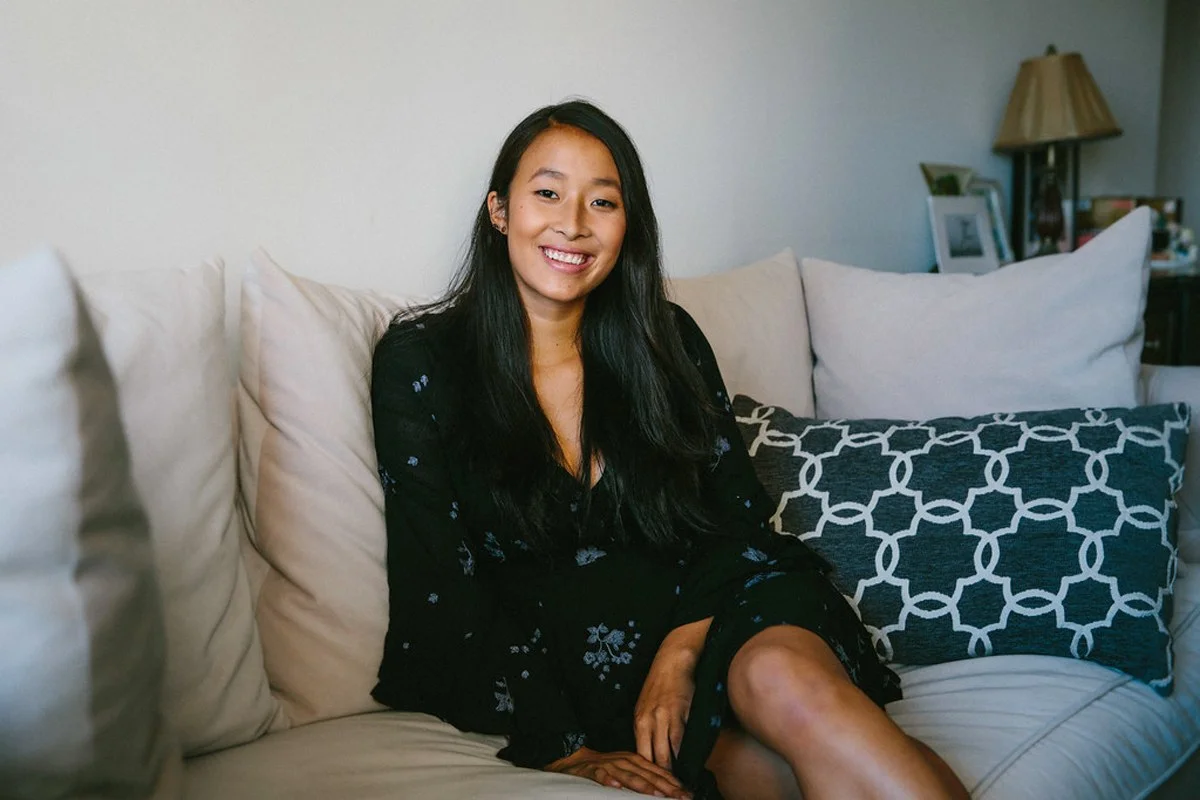
allure.com - When you get your period, you probably know where you're going to get tampons or pads. For homeless women, basic feminine-hygiene products are harder to come by. Camions of Care, a nonprofit organization founded by Nadya Okamoto, an 18-year-old from Portland, Oregon, is hoping to change that. (If you're curious, a camion is sturdy cart or wagon designed for bulky loads.) So far, Okamoto and her organization have helped deliver 27,243 period care packages to women and girls in need all over the world.
When Okamoto was 15, her family was declared legally homeless. During that time, she was living at a friend's house two hours from her school. During her commute, she tells Allure that she'd encounter underserved women who didn't have reliable access to feminine-hygiene products. Because shelters can't keep up with the demand for tampons and pads, the women would get industrious, using newspaper, socks, and brown paper grocery bags instead. "What scared me was that it made so much sense. You can find [brown paper grocery bags] anywhere around Portland," Okamoto says. "But it's so unsanitary because women were getting these bags from recycling bins or trash cans." Besides being stressful and ineffective, nonsterile alternatives could lead to dangerous infections and toxic shock syndrome .

Variety’s Power of Women Honors Entertainers, Game-Changing Philanthropists

blog.womenandhollywood.com - Variety has announced this year’s female entertainers for their annual Power of Women event: Helen Mirren, Ava DuVernay, Scarlett Johansson, Laverne Cox, and Miley Cyrus have been chosen as the five 2016 honorees.
Each year, the women selected represent “some of the most philanthropic women in Hollywood and their work with their respective causes.”
“For the past eight years, Variety has had the honor and pleasure of identifying leading women in entertainment who are dedicated to improving the community through the worthy causes they support,” said Claudia Eller, Variety co-editor-in-chief. “We are so pleased that once again our amazing partner Lifetime will join us to celebrate the achievements of our outstanding honorees.”
“It is an honor to continue this deeply meaningful partnership with Variety as we together celebrate the power of women’s collective voices dedicated to impacting the world around us in such profound ways,” added Liz Gateley, EVP and head of programming, Lifetime. “We couldn’t be more proud to use Lifetime’s global platforms to amplify the efforts of this year’s honorees and inspire others to join them.”

Why More Women Leadership In Media Would Change The Stories of The World

taketheleadwomen.com - In the 1980s I worked for a newspaper in Texas as a feature writer and columnist where staff parties of arrivals, departures and birthdays were held at the bar across the street. Often they included serving a cake decorated with a naked woman, complete with pink and black icing. I was in my 20s and not well-versed in the newsroom culture, but as soon as I saw the anatomically correct lady cake, I took three cocktail napkins and covered her sugar-coated image.
“You ruined it, “ the editor-in-chief chastised me.
It is no surprise to women journalists or women working in media-related fields that leadership in media companies is lacking women at the top ranks. Consider the debacle for many women who have worked at Fox News. And that reality shapes workplace culture, coverage of women’s issues, gender bias in commentary and placement of stories. In short, it shapes how we as consumers of media view the world.
Following the recent departure of Arianna Huffington from her namesake media empire, observers are checking in on the lack of women leaders in the media.
Want to receive earlybird invitations to our global events, custom-tailored content we think you'll love, and get exclusive access to "The World Women Report"?
Wonder Woman is The New UN Ambassador For Empowerment Of Women And Girls

- Victoria Mendoza
indiatimes.com - Wonder Woman has been appointed as the new UN ambassador for the empowerment of women and girls. She will be officially titled on October 21, the character's 75th anniversary at the UN Headquarters in New York. The event will also launch the UN's global campaign supporting the fifth goal of Sustainable Development which is "to achieve gender equality and empower all women and girls."
"Gender equality is not only a fundamental human right, but a necessary foundation for a peaceful, prosperous and sustainable world," said a UN spokesperson, adding that, "Providing women and girls with equal access to education, healthcare, decent work, and representation in political and economic decision-making processes will fuel sustainable economies and benefit societies and humanity at large."
Wonder Woman was coined during WWII, which was in itself path-breaking. Firstly. her character broke away from the damsel-in-distress characteristic attached to women in Superhero comics with male leads and saw her saving herself from bondage. And secondly the name itself Wonder Woman - not a girl - she was a woman at par with superhero men. DC is finally handing Wonder Woman her dues in 2017 by releasing their first movie on one of the first female superheroes. And she will also be making an appearance in Batman vs Superman: Dawn of Justice.

UN Women Spotlights Child Marriage on International Day of the Girl

“Without progress for girls, there can be no real progress,” says UN Women Executive Director Phumzile Mlambo-Ngcuka.
The International Day of the Girl is a day to celebrate girls -- their strength, their talents, their tenacity, their kindness, their accomplishments -- as well as to reaffirm that girls matter and how we need to do better protecting and lifting up girls everywhere. They're not property, they're not inferior to boys and men, and they have the right to determine and forge their own futures.
UN Women focuses on how an issue that often stands in the way of girls' futures: child, early and forced marriage. Presenting sobering facts and data on child marriage, the organization offers statistics, discussion, personal stories, videos and more detailing how to help, protect and empower girls around the globe. Click through to check out a thorough study into the subject, also including UN Women Goodwill Ambassador Emma Watson visiting Malawi to highlight the need to end child marriage.
Learn the facts on child marriage, share your hopes for girls around the world -- and may we all lift up and celebrate all girls, all day, every day.
unwomen.org - There are 1.1 billion girls today, a powerful constituency for shaping a sustainable world that’s better for everyone. They are brimming with talent and creativity. But their dreams and potential are often thwarted by discrimination, violence and lack of equal opportunities. There are glaring gaps in data and knowledge about the specific needs and challenges that girls face.
What gets counted, gets done. The theme for this year’s International Day of the Girl Child, on 11 October, “Girls’ Progress = Goals’ Progress: A Global Girl Data Movement,” is a call for action for increased investment in collecting and analyzing girl-focused, girl-relevant and sex-disaggregated data. One year into the 2030 Agenda for Sustainable Development, improving data on girls and addressing the issues that are holding them back is critical for fulfilling the Sustainable Development Goals
One such issue that is standing in the way of girls’ progress is child marriage. The data is daunting—one in three girls in developing countries (except China) get married before they turn 18. Girls who are child brides miss out on education, are more vulnerable to physical and sexual violence, and bear children before they are physically or emotionally prepared. The cycle of violence that begins in girlhood, carries over into womanhood and across generations. The 2030 Agenda must address their needs and unlock their potential.

UN Women works around the world to empower women and girls and raise awareness on their rights, advocate for the adoption and implementation of laws and policies that prohibit and prevent child, early and forced marriage, and mobilize communities against the practice.
On the International Day of the Girl Child, we stand with the global community to support girls’ progress everywhere. Let girls be girls.
Girl under 15 married every seven seconds, says Save the Children - BBC News

The study also studies girls' situations around the world, explores ways to empower and give voices to girls, examines the importance of sexual and reproductive health services and more.
Read more below and at the link, or read the Save the Children study.
bbc.co.uk - One girl under the age of 15 is married every seven seconds, according to a new report by Save the Children.
The study says girls as young as 10 are forced to marry much older men in countries including Afghanistan, Yemen, India and Somalia.
Save the Children says early marriage can trigger a cycle of disadvantage across every part of a girl's life.
Conflict, poverty and humanitarian crises are seen as major factors that leave girls exposed to child marriage.
"Child marriage starts a cycle of disadvantage that denies girls the most basic rights to learn, develop and be children," said Save the Children International CEO Helle Thorning-Schmidt.
"Girls who marry too early often can't attend school, and are more likely to face domestic violence, abuse and rape. They fall pregnant and are exposed to STIs (sexually transmitted infections) including HIV."
The report, called Every Last Girl, ranks countries based on the hardest place to be a girl based on schooling, child marriage, teen pregnancy, maternal deaths and the number of women in parliament.
Chad, Niger, Central African Republic, Mali and Somalia were ranked at the bottom of the index.

Women & Girls with Disabilities Need Empowerment, Not Pity, UN Experts Tell States
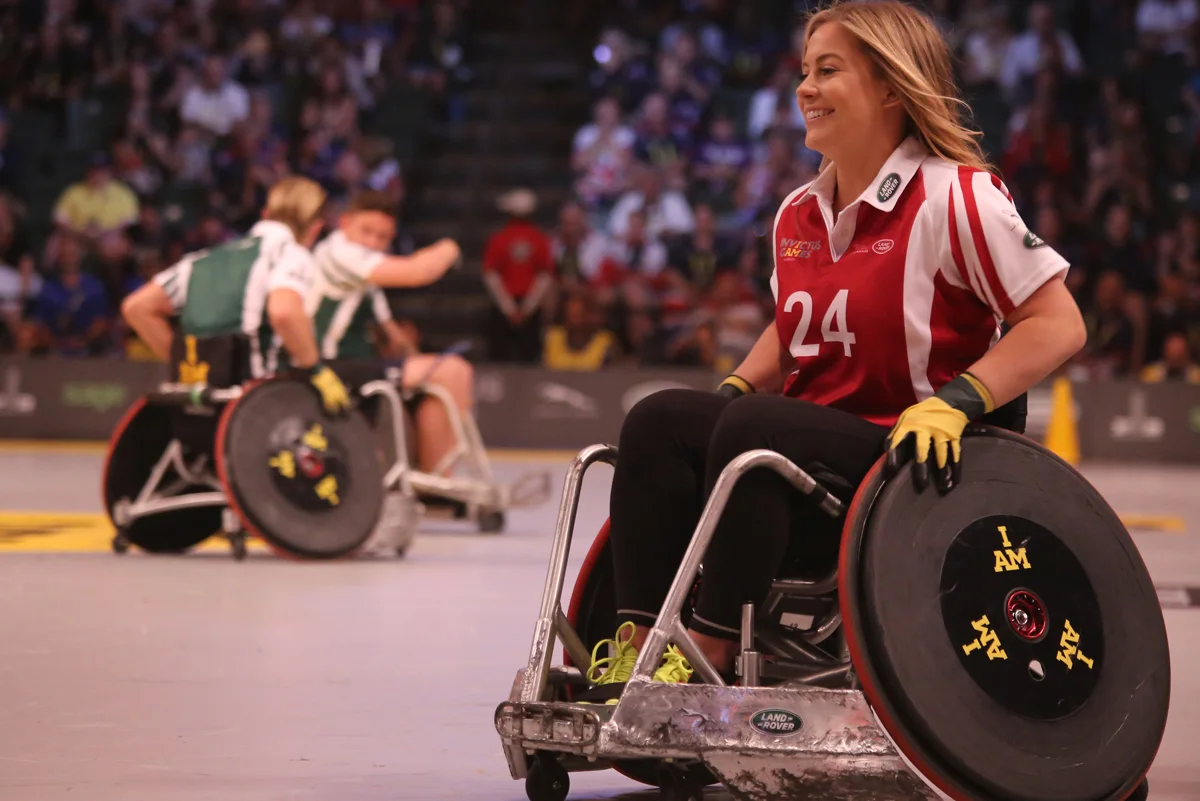
Now, the Committee on the Rights of Persons with Disabilities is helping to promote disability visibility and advocacy with a statement about the rights and needs of women with disabilities--and society's responsibilities toward them.
Click through to read an outline of the statement from the Women's UN Reporting Network, or read the full General Comment; which discusses the main areas of concern for girls and women with disabilities, recommendations for practical steps to better serve everyone in our communities, a call to repeal discriminatory legislation and more. And always remember--we're fighting for the rights and empowerment of all women.
wunrn.com - States too often fail to uphold their obligations with regard to women and girls with disabilities, treating them or allowing them to be treated as helpless objects of pity, subjected to hostility and exclusion, instead of empowering them to enjoy their fundamental human rights and freedoms, the Committee on the Rights of Persons with Disabilities (CRPD) has said.
“Policies for women have traditionally made disability invisible, and disabilities policies have overlooked gender. But if you are a woman or a girl with disabilities, you face discrimination and barriers because you are female, because you are disabled, and because you are female and disabled,” said Committee member Theresia Degener.
To help to address this, the Committee has issued guidance for the 166 States that have ratified the Convention on the Rights of Persons with Disabilities on how they can promote the empowerment of women with disabilities to enable them to participate in all spheres of life on an equal basis with others, as set out in the Convention and expressly in Article 6.
The guidance, termed a General Comment, stresses that refraining from discriminatory actions is not enough. States need to empower women by “ raising their self-confidence, guaranteeing their participation, and increasing their power and authority to take decisions in all areas affecting their lives.”