


Her Voice Belongs in the Room
Washington has a way of making any gathering sound important. Put researchers, advocates, physicians, entrepreneurs, and people who write policy in one room to talk about women's health, though, and it gets hard to dismiss how much of the problem lives outside any one of their fields.
The WHH Washington, D.C. Summit Wednesday, Oct. 7, presented by Women’s Health Horizons in partnership with the Society for Women's Health Research and Women’s Health Advocates, provided exactly this kind of room. Our executive director, Dr. Odessa Lacsina, was there to speak about The State of Women Institute and the work of moving past awareness and into action. She also brought two guests — Uschi Keszler and Dr. Vonnya Pettigrew, who may be familiar to you from earlier posts — and we were proud to have them both there.
Two Women, One Phone Call
Uschi Keszler's first career was elite sport. She competed in the Olympics, then became a six-time Olympic coach who worked with some of figure skating's most accomplished competitors. After surviving breast cancer and uterine cancer, the discipline she had spent years asking of athletes went into Pennies in Action, which she founded in 2007 to support cancer research and clinical trials that may carry promising new treatments to patients.
A few months ago, Dr. Lacsina was preparing to speak to a room of Caribbean women about cancer and, being a scientist, looked up the numbers first. Barbados, she found, has the third-highest mortality rate in the world for triple-negative breast cancer — an aggressive form of the disease with no standard targeted therapy that falls hardest on women of African descent. Dr. Lacsina is of Barbadian and Guyanese descent, and some of the women in that risk group came from her ancestral homeland. Many of them, she noted, may not even know the risk exists.
She picked up the phone and called Keszler, a close friend.
Dr. Lacsina advises Pennies in Action on science, and the organization supports Dr. Brian Czerniecki's immunotherapy research at Moffitt Cancer Center, so it turned out to be exactly the right call. It grew into a collaboration with Queen Elizabeth Hospital in Barbados, Czerniecki's team, the V Foundation, and others. They won a feasibility grant, then wrote a proposal to the Department of Defense for a larger international grant to bring DC1 immunotherapy research to Barbados.
It’s an inspiring story, but the catch also makes it concerning: The magic worked, this time, because two people already knew each other. Progress should not rest so much on who has access to whom. Plenty of people who see a number like that have no one to call.
Before the Stereotype Does
Dr. Pettigrew started in media. She founded Root Branch Media Group in 2006, and it has since grown to include a film academy for K–12 students, a marketplace for local small businesses, a job-training program called G.R.O.W., and an arts and outreach institute. The aim, she has said, is to let people tell their own stories before someone else does — or before a stereotype does.
That sounds like a media goal, and it is. It is also a health goal. What a woman knows about her own risk; whether she sees anyone like herself in the institutions meant to serve her; and whether she has somewhere to learn, work, and belong all shape how she deals with the health system. Whether a woman gets screened, or trusts the person explaining her results, can depend on whether she has ever seen anyone who looks like her in that office. It’s a crucial question to the conversation about women’s health: What does health equity look like outside the hospital?
The Numbers That Meant Nothing
Access was also the subject of Dr. Lacsina’s talk — though she came at it from a different direction. As an NIH Fogarty International Fellow, she worked at a community hospital in Kenya that had received donated equipment from well-meaning organizations — cutting-edge machines for a small rural lab. The lab ran out of the reagent needed to calibrate one of them. Staff kept running tests anyway, because patients had waited for hours and no one wanted to tell them the results meant nothing. People were making life-and-death decisions from those numbers.
Dr. Lacsina placed the responsibility on how researchers in the global north — herself included — design studies as though one size fits all. Care without infrastructure, she said, is only the appearance of care. Washington is where policy gets written and funding gets decided. Whoever does the deciding hears about a missing reagent only if someone who has stood in that lab is there to say so.
She also told a smaller story alongside it: a college classroom where a professor once asked her to count the female professors. She counted one. Her daughter is 11. Dr. Lacsina would like her to walk into a classroom someday and find women who look like her leading the room.
One Conversation
Keszler, Dr. Pettigrew, and Dr. Lacsina each address representation, advocacy, and women’s health from different angles. That’s what made Wednesday’s room so impactful, and it’s what makes the next room, and the next one and the next, so essential. Lived experiences, passions, expertise, connections. Women’s voices and stories. They belong in every room.
Dr. Lacsina closed with a reminder of why the room exists. Washington is where policy gets written, where funding gets decided, where the decisions that shape health infrastructure are made. The State of Women Institute came to support, collaborate, and amplify the work being done, and her ask was a simple one: if your work touches any of our three pillars — mental health and wellness, maternal health equity, and preventive wellness — start a conversation with her and with The State of Women Institute.
We have a couple of those conversations already underway — with Keszler and Pennies in Action around cancer research and preventive wellness, and with Dr. Pettigrew and Root Branch around health equity, media, and mentorship for women coming up in health communications — as well as with some other amazing women and organizations we’re beginning to work with, some of whom we just met at the summit.
We intend to keep going. If your work belongs in the room too — and we believe it does — you know where to find us.
The State of Women Institute is a global 501(c)(3) nonprofit advancing women's health equity through research, innovation, and community engagement across three pillars: Mental Health and Wellness, Maternal Health Equity, and Preventive Wellness. Learn more at thestateofwomen.org.

The Thermostat in the Room: How Towanda R. Livingston Turned Economic Inclusion Into a Health Movement
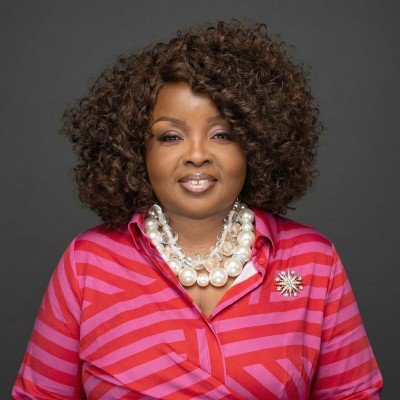
For Towanda R. Livingston, wellness is about having a choice. After more than three decades of advancing economic inclusion, she sees access to capital as a health intervention.
By Dr. Odessa Lacsina | The State of Women Institute
30+ YEARS OF ECONOMIC INCLUSION · $1+ TRILLION DIRECTED TO SMALL, LOCAL & CERTIFIED BUSINESSES · FINAL ARCHITECTS OF WELLNESS EDITION · WHH WASHINGTON, D.C. HEADLINER
She walks into a room she was never supposed to be in. Not because she wasn't invited. Because somewhere along the way, a version of her — the girl from North (“Norf”) Philadelphia, raised by a teenage mother, shadowed by a drug-addicted father, told by the world she would never be anything — that girl still lives inside her.
And every time Towanda R. Livingston picks up a microphone, steps onto a panel, or stewards hundreds of millions of dollars toward small, local and other certified businesses that the system had already written off, she is answering that girl.
She doesn't erase her. She apologizes to her. And then she walks in anyway.
This is the final installment of The State of Women Institute's Architects of Wellness series — a campaign built around a simple but radical idea: the women healing our communities don't always carry stethoscopes. Sometimes they carry spreadsheets. Sometimes they carry conviction. And sometimes, like Towanda, they carry both.
On October 7, some of the most influential leaders in women's health will convene at the National Union Building in Washington, D.C., for the Women's Health Horizons Summit — a gathering of investors, innovators, clinicians and policymakers who have come to answer one urgent question: How do we turn women's health ambition into system-wide progress?
The State of Women Institute will be there. And we are bringing this story with us.
Because if you want to understand what it actually takes to move the needle on women's health — not just in hospitals and research centers, but in communities, households and the economic foundations that hold them together — you need to understand what Towanda Livingston has spent 30 years building.
The Ministry of Economic Inclusion
The title on Towanda's business card at Constellation Energy — one of the nation's largest clean energy producers and the world's largest power producer — reads Director of Supplier Development and Engagement. But the title she gave herself is the one that tells the real story.
Economic Inclusion Evangelist.
“This didn't come overnight,” she told me when we sat down for this conversation. “As I grew into becoming a kingdom woman, a kingdom entrepreneur focused on building the kingdom, I recognized that folks' ministry comes in different forms. Supplier diversity, responsible sourcing, the EEOC, diversity and inclusion, environmental justice — that initially became my stage in the late 1980s and early 1990s.”
Over the course of a career that has moved from government to the public sector to private enterprise to owning her own economic inclusion consulting firm, Towanda has built, transformed and scaled programs that redirect capital toward the people who need it most.
Thus far in her career, Towanda has driven more than a trillion dollars — and still counting — to small, local and other certified businesses.
Over a trillion dollars purchased with small, local and other certified businesses.
Read that again. Not as a budget line. As a health intervention.
Towanda is also an author. Her book, Grit, Grind and Grace: Activate It!, is exactly what the title promises — a manual for women who are tired of waiting for permission and ready to move. It sits on shelves not as inspirational platitudes but as a practical tool, written by a woman who has lived every word of it.
When she told me during our interview that she was still the poor girl from North Philly, she meant it. And she wrote the book anyway.
“Helping people who can't afford to dream — afford to dream. And making those dreams become possible.”
Because that is exactly what it is.
Every dollar directed to a woman-owned business in an underserved community is a prescription. It is prenatal care that gets scheduled. It is fresh food that appears where a desert existed. It is a mother who can take a day off when she is sick. It is a daughter who sees a model of what is possible.
Towanda understood this long before the research caught up.
“Wellness to me is equivalent to wealth. Not because wealth is money — but because wealth gives you a choice. And wellness is being able to make decisions on abundance and not scarcity.”
The Business Case for Caring
One of the questions I asked Towanda was one I hear constantly in health equity work: How do you get corporate leaders to move beyond the checkbox? How do you take inclusion from a line item in an annual report to something that is genuinely woven into an organization's DNA?
Her answer was neither idealistic nor cynical. It was both practical and profound.
“People are going to move by the carrot or the whip,” she said plainly. “Either you hire leaders who are incentivized to not only do things right but do the right thing when no one is watching — or you hire folks that are going to have you out of business shortly because they'll be unethical.”
But she didn't stop there. She went further.
“Once a corporation sees itself as part of the community — that's when the investments come. I'm going to draw my employees from here. I'm going to have a physical building there. So how do we get them to care? You have to quantify it. Then you humanize those numbers through storytelling.”
“Care comes with a price tag. The feel-good is the donation. The care comes when you provide the donation, the education, the training — and make sure that asset continues to bring value to them.”
This distinction matters enormously — and I know it because I have seen the alternative.
Years ago, as an NIH Fogarty International Fellow, I traveled to Kenya to work in a community hospital. The facility received donated medical equipment from well-meaning organizations. Cutting-edge machines sat in a small rural lab. And when I asked the staff how one particular machine worked, they told me the truth: They didn't know.
They had run out of the reagent needed to calibrate it. But they kept running tests anyway, because they didn't want to tell the patients who had waited for hours that the machine wasn't reliable.
They were giving people numbers on a piece of paper that meant nothing.
That is the feel-good without the care. That is the donation without the infrastructure. And in both healthcare and economic inclusion, it is what Towanda has spent her career refusing to do.
“If I'm going to give you this equipment,” she said, “before I leave, I'm going to train you. I'm going to train the trainer. We're going to set up a supply chain so you always have what you need. That's care. That's the difference between a moment and a movement.”
The Poor Girl From North Philly
I asked Towanda when she last felt like the most uncomfortable person in the room.
She didn't hesitate.
“In my subconscious mind, I'm still that poor girl from North Philly. Born to a single mom and drug-addicted biological father. Folks who told you that you will never be nothing. That you're only good for having babies.”
She paused.
“I'm still her. And I apologize to her often — because I let the labels other people put a limit on me and handcuffed God's possibilities in my life.”
She described sitting at a Juneteenth wealth conference this past summer, surrounded by people and resources and power, and still feeling that girl surface. The one who wasn't supposed to be there.
But here is what Towanda does with that feeling. She doesn't suppress it. She prays into it.
“Before I take a mic, before I say a word, God and I have a self-talk. I say, let your message come out of my mouth. Not what I want to say — but what somebody in there needs to hear. And then I walk into that room worthy. Because He has crowned me worthy.”
“Instead of being a thermometer — going up and down with the atmospheric temperature — you're going to be the thermostat. Because you're going to change the energy in the room.”
This is the woman who will take the main stage in Washington on October 7.
Not as a panelist filling a diversity slot, but as a valued voice with the power, expertise and lived perspective to inspire change, challenge thinking and create lasting impact.
Not as a footnote to someone else's agenda. As a headliner. As the argument that the WHH summit has been building toward: You cannot transform women's health without transforming women's economic reality.
If Washington is serious about that conversation, Towanda R. Livingston is bringing one of the clearest lived perspectives on what that connection looks like.
She is not showing up to perform wellness or check a diversity box. Not simply accepting a seat at a table to take up space.
She is showing up to challenge what is, shape what comes next and turn access into action — opening doors, creating opportunity and driving meaningful, lasting impact.
She is walking in because her mentors, network, people who poured into her, supporters and life helped build her into someone who changes the temperature of every room she enters.
The Woman Who Spoke Life
I asked Towanda about a woman she has admired from a distance — someone who shaped her without fully knowing it.
She named Jackie Lopez, founder and CEO of Premier Enterprise Solutions.
“I believe in speaking people's names in rooms they've never entered,” Towanda said. “Because it gives others access to them.”
She met Jackie around 2008 or 2009 at a Women Business Owners Expo in Maryland. Towanda was the organizer. Jackie was the MC. And in the middle of everything — the events, the panels, the networking — Jackie walked up to a woman she had never met and began speaking life into her.
Towanda was being attacked at the time. Spiritually. Physically. Emotionally. Mentally.
She was losing confidence even as the work around her was creating massive impact.
After the event, Jackie sent her a book with a handwritten message inside that shut down every doubt. Every imposter thought. Every version of the North Philly girl who wasn't supposed to be there.
“She walks into rooms like she owns them,” Towanda told me, her voice shifting into something close to reverence. “And by the time she leaves, she owns them. She is a force that multiplies. Never divides. Only multiplies.”
She paused, then smiled.
“I tell her: when I grow up, I want to be just like you.”
Jackie Lopez. A name being spoken into this room, this article, this stage — by a woman who knows firsthand what a single act of generosity can unlock in another woman's life.
Where Economics and Health Equity Meet
The Women's Health Horizons Summit in Washington will convene this city's most powerful voices in health innovation, investment, research and policy. They will discuss funding gaps and research deserts and clinical trials. They will debate AI bias and access and what equitable care actually means.
All of that matters. All of it is necessary.
But what Towanda's story demands we also say — loudly, in that room, on that policy stage — is this:
You cannot close the women's health gap without closing the women's economic gap. They are not parallel problems. They are the same wound.
At The State of Women Institute, we organize our work around three pillars: Mental Health and Wellness, Maternal Health Equity and Preventive Wellness. And for years we have known — through research, through community listening, through our own lived experience — that none of these pillars stand without an economic foundation beneath them.
Mental Health and Wellness
Economic exclusion is a mental health crisis.
The psychological toll of being locked out of capital, of being told your dreams are too expensive, of surviving poverty while watching wealth accumulate in other ZIP codes — this is trauma.
Towanda's work redirecting hundreds of millions of dollars toward underserved communities is mental health intervention.
Maternal Health Equity
The communities with the highest maternal mortality rates are not random. They are the communities where economic disinvestment has been deliberate and sustained. Where hospitals have closed. Where there are food deserts. Where women work two jobs and still can't afford prenatal care.
Every dollar Towanda directs toward a woman-owned business in one of these communities is a maternal health investment for that woman, her business and employees, her family, and our collective communities overall.
Preventive Wellness
Prevention requires choice. Choice requires resources. Resources require economic inclusion.
A woman who cannot afford to miss work cannot make her screening appointment. A community without a grocery store cannot eat preventively. A neighborhood without capital cannot maintain its own health infrastructure.
Towanda's work is upstream prevention that no clinical intervention can replicate.
“Broken women marry broken men who have broken children that form broken communities. Each individual has to play a role — because wellness is participatory.”
She said this quietly. Almost like she was stating the obvious.
To her, it is.
By Inspiration or Desperation
At the end of our conversation, I asked Towanda for a quote. Something that tied her up in a nice little bow. Something she returns to when she needs to find herself again.
She didn't reach for someone else's words.
She gave me her own.
“Either by inspiration or desperation — you will be pushed into your purpose.”
She called it a Towandaism.
I call it a diagnosis. And a prescription. And a prophecy all at once.
Because whether it was the poverty she was born into or the wealth conferences she now walks into as a force of nature — every moment pushed Towanda R. Livingston toward exactly where she was supposed to be.
On October 7, she will be in Washington, D.C., in a room full of people who fund and build and regulate and deliver the next era of women's health.
And she will walk in — as she always does — not as a guest.
As a thermostat.
The temperature in that room is about to change.
About This Series
Architects of Wellness is The State of Women Institute's flagship editorial series profiling women whose work heals communities in ways that defy traditional definitions of health. This is the series' final edition.
The State of Women Institute is excited to be at the Women's Health Horizons Washington, D.C. Summit on October 7, at the National Union Building, 918 F St NW, Washington, D.C.
At The State of Women Institute, we focus on the issues that shape women’s health and well-being every day — from mental health and wellness to maternal health equity and preventive wellness. Through research, innovation and community engagement, we work to help create healthier, more equitable communities for women around the world.
The State of Women Institute · thestateofwomen.org · @thestateofwomen

A Letter to the Girls Who Are Already Everything
By Dr. Odessa Lacsina, Executive Director, The State of Women Institute
This week, world leaders are gathered in New York at the United Nations. They are talking about trust. About transformation. About a world that delivers for all.
I want to talk about you.
You are eleven. You want to be an astronaut. You want to lead the mission to Mars. You have said this since you were four years old and not one word of it has changed.
But let me start a little earlier than that.
I homeschooled you. When you were small I taught you that math is the language the whole world speaks exactly the same. You heard that and you made it yours. You told me once that math is everything. I believed you then. I believe you now.
When we got to space, something shifted. You watched every documentary. You read every book you could find. You were fascinated in the way that some children are fascinated by things they recognize, not things they are discovering for the first time. Then we read a book about Dr. Mae Jemison. You could not let it go.
At four years old, you met her.
You, who have never once in your life been at a loss for words, went completely silent. And when you found your voice again, you said: I want to be an astronaut. I want to lead the mission to Mars.
That declaration has not changed once. Not in seven years.
While that dream has been growing, so have you. You compete with your robotics team. You compete on ice. You advocate for literacy because you understand that words are power and not everyone has equal access to them. You report on the world as a youth correspondent. And since you were six years old you have been hosting a reading podcast, interviewing guests, introducing books to audiences, building something season by season that is now in its fifth year.
More often than not, you are the most prepared person in the room. You are just not expected to be.
My heart silently bursts with pride when you introduce yourself as the first Madam President of Kids In Action. And I blush with awe when I think of the impact you will have in this world.
Now let me tell you what I know as a scientist, because I think you deserve the honest version.
The years just ahead of you are the ones the research watches most closely. Girls enter school with math confidence nearly equal to boys. By middle school a measurable gap has opened. Not because something changed in the girls. Because something changed in what the world reflected back to them. The cultural pressure that peaks between twelve and fifteen does not just ask girls to lower their ambitions. It asks them to doubt the ones they have held the longest. The ones that arrived early and stayed.
You have held yours for seven years.
There will be rooms you walk into where someone will look at everything you are and quietly suggest you pick one thing. The robotics or the ice. The podcast or the math. The advocacy or the astronaut. They will mean well, most of them. They have been taught that focus means subtraction.
What they have not yet understood is that the most important questions in science — the ones about access and equity and how we build systems that work for everyone — cannot be answered by people who only know one thing. A girl who performs under pressure alone on ice and builds machines as part of a team and has been communicating ideas to a public audience since she was six is not scattered. She is the most prepared person in the room.
She is just not always expected to be.
Research on girls who persist in STEM through adolescence and go on to lead points to one factor above most others: a documented record of competence they can point to when the world starts telling them they don't belong. You have five seasons of that record already in your podcast alone. Season six is being made right now. You built that before anyone told you it would matter.
The United Nations is in New York this week saying that women's leadership is failing to advance globally. That in many countries it is moving backward. They are right, and that matters, and people like me are working on it.
But I am also watching an eleven-year-old who already leads, already advocates, already competes, already reports, already builds teams and stands alone on ice and has held a microphone since she was six and has known since she was four — since she stood silent in front of the woman who proved it was possible — exactly where she is going.
The research does not have a framework for you yet. You are ahead of it.
Some may not be ready for you. Walk in anyway.
With love and with evidence, A scientist (who is also your mom).

Restoring Trust Means Building Institutions Where Women Can Lead
EVIDENCE TO ACTION | Science Made Simple UNGA Edition | The State of Women Institute
By Dr. Odessa Lacsina, Executive Director, The State of Women Institute
This week, world leaders are gathered at the United Nations in New York. The theme of the 81st General Assembly is restoring trust. One of the conversations running through the week — anchored by the Gender Snapshot 2026, launched just days ago by UN Women and UN DESA — is about where women stand in leadership globally. The short answer is that progress has stalled. In many countries it is moving backward.
That backdrop makes a systematic review published September 1 in eClinicalMedicine, The Lancet's open-access journal, worth reading closely.
The Research
Researchers from Monash University and the University of Glasgow reviewed 57 studies evaluating 52 women's leadership development programs across 23 countries. Their central question was whether these programs — which organizations have invested in for decades — were producing measurable organizational change or simply changing individual women.
The finding deserves a full stop: most programs successfully built confidence, leadership skills, and professional networks in individual participants. Very few produced documented change at the organizational level. The structures those women returned to largely stayed the same.¹
The Pipeline Exists. The Progression Does Not.
This is the heart of it.
Women comprise 70 percent of the global health workforce. They hold roughly 25 percent of its leadership positions. In STEM more broadly, women make up 35 percent of graduates worldwide and 28 percent of the workforce — numbers that have improved slowly over decades — but they represent only 18 percent of director-level and above roles in technology.²
The pipeline exists. The progression does not.
The research points to why. The European Commission's own analysis, cited in the literature, identifies that systemic inequities in the workforce are perpetuated by gender-based barriers stemming from organizational constraints and culture, unrelated to individual capability.¹ What that means in practice is that sending a woman to a leadership program addresses her readiness while leaving untouched the promotion criteria, the meeting cultures, the sponsorship patterns, and the institutional norms that shape who actually advances. The program becomes a way of appearing to solve the problem without solving it.
The Economic Case — and Why It Hasn't Been Enough
The economic case for getting this right has been made repeatedly. The World Economic Forum's Global Gender Gap Report 2026 notes that hiring based on skills increases the proportion of women in candidate pools by 24 percent, and that closing the STEM gender gap could add trillions to global GDP.³ A 2020 McKinsey report found that organizations in the top quartile for gender diversity in executive teams were 25 percent more likely to have above-average profitability.⁴ Women-led clinical teams have been shown to improve patient outcomes. Women on research teams correlate with higher quality scientific output.
None of this is new information. What the September review adds is precision about why the gap persists despite the evidence: Interventions have been aimed at individuals rather than institutions. Fix the woman, not the system.
Commitments Are Not the Same as Architecture
The Gender Snapshot 2026 makes the same point at the global scale. Commitments are not the same as architecture. Representation is not the same as power. And programs designed to prepare women for institutions that were built around a different set of assumptions will keep producing the same result: better-prepared women encountering the same ceiling.²
What the research says actually works is less comfortable for organizations to hear: structural change, transparent promotion criteria applied consistently, sponsorship rather than mentorship alone, accountability mechanisms with teeth, and flexible work policies designed not as accommodations but as standard practice. These are not program costs. They are decisions about how an institution is willing to operate.
The world is in New York this week to talk about trust. In the context of women and science, women and leadership, women and the economy, the trust question is whether institutions are willing to move from running programs about women's leadership to building structures where women can lead.
The research suggests those are two different things. The data on where women actually end up suggests we have mostly been doing the first one.
Sources
¹ Morris D, Rauf S, Riach K, Teede H. "Women's leadership development programmes and gender equality: a systematic review in healthcare, academia and beyond." eClinicalMedicine (The Lancet). Published September 1, 2026. https://doi.org/10.1016/j.eclinm.2026.104185
² UN Women and UN DESA. Gender Snapshot 2026. Launched September 17, 2026.
³ World Economic Forum. Global Gender Gap Report 2026.
⁴ Dixon-Fyle, S., Dolan, K., Hunt, V., & Prince, S. Diversity Wins: How Inclusion Matters. McKinsey & Company, May 2020. https://www.mckinsey.com/featured-insights/diversity-and-inclusion/diversity-wins-how-inclusion-matters
Additional data: UNESCO STEM data 2026.
Dr. Odessa Lacsina is the Executive Director of The State of Women Institute, a 501(c)(3) nonprofit working across three health equity pillars: Mental Health & Wellness, Maternal Health Equity, and Preventive Wellness.
To learn more or support women's health leadership, visit thestateofwomen.org or follow @thestateofwomen.

Science Made Simple: What Motherhood Does to the Brain (and Why It Matters)
EVIDENCE TO ACTION | Science Made Simple Mother's Day Edition | The State of Women Institute
By Dr. Odessa Lacsina, Executive Director, The State of Women Institute
This Mother's Day, we honor all the ways mothering shows up in our lives.
For those who've given birth. For those raising children not born to them. For those who've lost their mothers too soon. For those who've lost babies they'll never stop loving. For those waiting, hoping, and navigating the complicated terrain of becoming a parent.
And for those who mother in ways the world doesn't always count: aunts, teachers, mentors, chosen family.
Today's science recognizes what many have known all along: motherhood fundamentally changes you. And those changes last a lifetime.
The Research That Changed Everything
A groundbreaking study published in Scientific Reports analyzed brain scans from over 19,000 women aged 45 to 82. Lead researcher Valentina Rotondi and her team, working across multiple European institutions, wanted to answer a question that had never been asked at this scale:
Do the brain changes of motherhood endure for decades?
The answer was unequivocal: Yes.
Mothers showed widely distributed higher gray matter density compared to women who had never given birth, particularly concentrated in the frontal and occipital regions — areas involved in empathy, understanding others' emotions, and processing social information.
Here is what's remarkable: The brain scans were taken decades after these women had given birth. The youngest participant was 45. The oldest was 82. Yet the structural changes remained visible, measurable, and undeniable.
And fathers? No corresponding brain changes were observed. This transformation appears unique to those who carry, birth, and biologically mother children.
The study also found that both mothers and fathers reported a higher sense of life's meaning compared to those without children — but only mothers showed the corresponding structural changes in the brain.¹
What This Means
For years, mothers have described feeling fundamentally different after having children — not just behaviorally, not just emotionally, but in some deeper, harder-to-name way.
"I'm not the same person I was before."
Science now confirms it. The brain has been restructured. And those changes don't fade with time — they become part of who you are, woven into the architecture of your mind.
For Those Who Grieve
We want to acknowledge something important: this research studies those who gave birth and raised children. But mothering — and the love that drives it — exists in many forms.
If you've lost your mother, her impact on your brain is real. The neural pathways formed in childhood, shaped by her care, remain part of you.
If you've lost a child — whether through miscarriage, stillbirth, or after years together — you are a mother. Your body changed. Your brain changed. That transformation doesn't disappear with loss. The love remains, and so does the biological evidence of mothering.
If you're waiting to adopt, fostering, or raising children not born to you, you are mothering. While this particular study focused on biological birth, emerging research suggests that caregiving itself reshapes the brain — that the act of nurturing, of being attuned to a child's needs, creates its own neural adaptations.
The Complexity of Meaning
The researchers found that motherhood was associated with a higher sense of life's meaning. But this finding deserves care.
Meaning isn't a competition. Women without children — by choice or circumstance — live profoundly meaningful lives. The study shows an association, not a judgment.
For some mothers, that meaning comes mixed with struggle, exhaustion, grief, or regret. Motherhood is not universally joyful, and finding it difficult doesn't make you less of a mother or your brain changes less real.
The brain changes are a biological fact. The meaning is personal, complex, and yours to define.
Why This Research Matters
Understanding that the brain undergoes permanent restructuring during motherhood helps explain why postpartum mental health support is so critical. You are not "bouncing back." You are becoming someone new.
For aging and dementia research, these enduring brain changes may offer insights into protective benefits and long-term maternal mental health. For the women who have always said they were changed by motherhood — science now backs them up. This isn't weakness. It's transformation.
Motherhood, in its many forms, leaves an imprint — on the brain, on the body, on the heart, on who you become and who you'll be for the rest of your life.
This Mother's Day, we honor that transformation wherever it appears: in those who've given birth, in those who've adopted or fostered, in those who mother in ways uncounted, and in those who carry both the love and the loss.
The science shows us what mothers have always known: you never go back to who you were before. And maybe that's exactly how it should be.
To all the mothers, in all the ways that word can mean: We see you.
Source
¹ Rotondi, V., et al. "Enduring maternal brain changes and their role in mediating motherhood's impact on well-being." Scientific Reports, Vol. 14, July 18, 2024. https://doi.org/10.1038/s41598-024-67316-y
Study population: 19,043 women and 17,612 men aged 45–82, drawn from the UK Biobank.
Dr. Odessa Lacsina is the Executive Director of The State of Women Institute, a 501(c)(3) nonprofit working across three health equity pillars: Mental Health & Wellness, Maternal Health Equity, and Preventive Wellness.
To learn more or support women's health leadership, visit thestateofwomen.org or follow @thestateofwomen.