
The Thermostat in the Room: How Towanda R. Livingston Turned Economic Inclusion Into a Health Movement
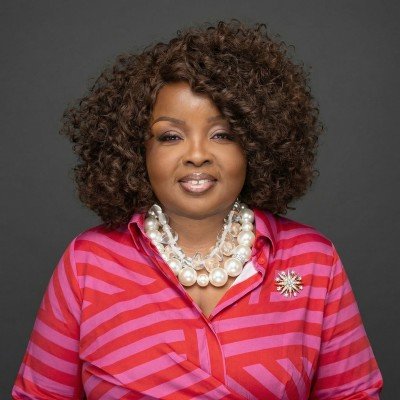
For Towanda R. Livingston, wellness is about having a choice. After more than three decades of advancing economic inclusion, she sees access to capital as a health intervention.
By Dr. Odessa Lacsina | The State of Women Institute
30+ YEARS OF ECONOMIC INCLUSION · $1+ TRILLION DIRECTED TO SMALL, LOCAL & CERTIFIED BUSINESSES · FINAL ARCHITECTS OF WELLNESS EDITION · WHH WASHINGTON, D.C. HEADLINER
She walks into a room she was never supposed to be in. Not because she wasn't invited. Because somewhere along the way, a version of her — the girl from North (“Norf”) Philadelphia, raised by a teenage mother, shadowed by a drug-addicted father, told by the world she would never be anything — that girl still lives inside her.
And every time Towanda R. Livingston picks up a microphone, steps onto a panel, or stewards hundreds of millions of dollars toward small, local and other certified businesses that the system had already written off, she is answering that girl.
She doesn't erase her. She apologizes to her. And then she walks in anyway.
This is the final installment of The State of Women Institute's Architects of Wellness series — a campaign built around a simple but radical idea: the women healing our communities don't always carry stethoscopes. Sometimes they carry spreadsheets. Sometimes they carry conviction. And sometimes, like Towanda, they carry both.
On October 7, some of the most influential leaders in women's health will convene at the National Union Building in Washington, D.C., for the Women's Health Horizons Summit — a gathering of investors, innovators, clinicians and policymakers who have come to answer one urgent question: How do we turn women's health ambition into system-wide progress?
The State of Women Institute will be there. And we are bringing this story with us.
Because if you want to understand what it actually takes to move the needle on women's health — not just in hospitals and research centers, but in communities, households and the economic foundations that hold them together — you need to understand what Towanda Livingston has spent 30 years building.
The Ministry of Economic Inclusion
The title on Towanda's business card at Constellation Energy — one of the nation's largest clean energy producers and the world's largest power producer — reads Director of Supplier Development and Engagement. But the title she gave herself is the one that tells the real story.
Economic Inclusion Evangelist.
“This didn't come overnight,” she told me when we sat down for this conversation. “As I grew into becoming a kingdom woman, a kingdom entrepreneur focused on building the kingdom, I recognized that folks' ministry comes in different forms. Supplier diversity, responsible sourcing, the EEOC, diversity and inclusion, environmental justice — that initially became my stage in the late 1980s and early 1990s.”
Over the course of a career that has moved from government to the public sector to private enterprise to owning her own economic inclusion consulting firm, Towanda has built, transformed and scaled programs that redirect capital toward the people who need it most.
Thus far in her career, Towanda has driven more than a trillion dollars — and still counting — to small, local and other certified businesses.
Over a trillion dollars purchased with small, local and other certified businesses.
Read that again. Not as a budget line. As a health intervention.
Towanda is also an author. Her book, Grit, Grind and Grace: Activate It!, is exactly what the title promises — a manual for women who are tired of waiting for permission and ready to move. It sits on shelves not as inspirational platitudes but as a practical tool, written by a woman who has lived every word of it.
When she told me during our interview that she was still the poor girl from North Philly, she meant it. And she wrote the book anyway.
“Helping people who can't afford to dream — afford to dream. And making those dreams become possible.”
Because that is exactly what it is.
Every dollar directed to a woman-owned business in an underserved community is a prescription. It is prenatal care that gets scheduled. It is fresh food that appears where a desert existed. It is a mother who can take a day off when she is sick. It is a daughter who sees a model of what is possible.
Towanda understood this long before the research caught up.
“Wellness to me is equivalent to wealth. Not because wealth is money — but because wealth gives you a choice. And wellness is being able to make decisions on abundance and not scarcity.”
The Business Case for Caring
One of the questions I asked Towanda was one I hear constantly in health equity work: How do you get corporate leaders to move beyond the checkbox? How do you take inclusion from a line item in an annual report to something that is genuinely woven into an organization's DNA?
Her answer was neither idealistic nor cynical. It was both practical and profound.
“People are going to move by the carrot or the whip,” she said plainly. “Either you hire leaders who are incentivized to not only do things right but do the right thing when no one is watching — or you hire folks that are going to have you out of business shortly because they'll be unethical.”
But she didn't stop there. She went further.
“Once a corporation sees itself as part of the community — that's when the investments come. I'm going to draw my employees from here. I'm going to have a physical building there. So how do we get them to care? You have to quantify it. Then you humanize those numbers through storytelling.”
“Care comes with a price tag. The feel-good is the donation. The care comes when you provide the donation, the education, the training — and make sure that asset continues to bring value to them.”
This distinction matters enormously — and I know it because I have seen the alternative.
Years ago, as an NIH Fogarty International Fellow, I traveled to Kenya to work in a community hospital. The facility received donated medical equipment from well-meaning organizations. Cutting-edge machines sat in a small rural lab. And when I asked the staff how one particular machine worked, they told me the truth: They didn't know.
They had run out of the reagent needed to calibrate it. But they kept running tests anyway, because they didn't want to tell the patients who had waited for hours that the machine wasn't reliable.
They were giving people numbers on a piece of paper that meant nothing.
That is the feel-good without the care. That is the donation without the infrastructure. And in both healthcare and economic inclusion, it is what Towanda has spent her career refusing to do.
“If I'm going to give you this equipment,” she said, “before I leave, I'm going to train you. I'm going to train the trainer. We're going to set up a supply chain so you always have what you need. That's care. That's the difference between a moment and a movement.”
The Poor Girl From North Philly
I asked Towanda when she last felt like the most uncomfortable person in the room.
She didn't hesitate.
“In my subconscious mind, I'm still that poor girl from North Philly. Born to a single mom and drug-addicted biological father. Folks who told you that you will never be nothing. That you're only good for having babies.”
She paused.
“I'm still her. And I apologize to her often — because I let the labels other people put a limit on me and handcuffed God's possibilities in my life.”
She described sitting at a Juneteenth wealth conference this past summer, surrounded by people and resources and power, and still feeling that girl surface. The one who wasn't supposed to be there.
But here is what Towanda does with that feeling. She doesn't suppress it. She prays into it.
“Before I take a mic, before I say a word, God and I have a self-talk. I say, let your message come out of my mouth. Not what I want to say — but what somebody in there needs to hear. And then I walk into that room worthy. Because He has crowned me worthy.”
“Instead of being a thermometer — going up and down with the atmospheric temperature — you're going to be the thermostat. Because you're going to change the energy in the room.”
This is the woman who will take the main stage in Washington on October 7.
Not as a panelist filling a diversity slot, but as a valued voice with the power, expertise and lived perspective to inspire change, challenge thinking and create lasting impact.
Not as a footnote to someone else's agenda. As a headliner. As the argument that the WHH summit has been building toward: You cannot transform women's health without transforming women's economic reality.
If Washington is serious about that conversation, Towanda R. Livingston is bringing one of the clearest lived perspectives on what that connection looks like.
She is not showing up to perform wellness or check a diversity box. Not simply accepting a seat at a table to take up space.
She is showing up to challenge what is, shape what comes next and turn access into action — opening doors, creating opportunity and driving meaningful, lasting impact.
She is walking in because her mentors, network, people who poured into her, supporters and life helped build her into someone who changes the temperature of every room she enters.
The Woman Who Spoke Life
I asked Towanda about a woman she has admired from a distance — someone who shaped her without fully knowing it.
She named Jackie Lopez, founder and CEO of Premier Enterprise Solutions.
“I believe in speaking people's names in rooms they've never entered,” Towanda said. “Because it gives others access to them.”
She met Jackie around 2008 or 2009 at a Women Business Owners Expo in Maryland. Towanda was the organizer. Jackie was the MC. And in the middle of everything — the events, the panels, the networking — Jackie walked up to a woman she had never met and began speaking life into her.
Towanda was being attacked at the time. Spiritually. Physically. Emotionally. Mentally.
She was losing confidence even as the work around her was creating massive impact.
After the event, Jackie sent her a book with a handwritten message inside that shut down every doubt. Every imposter thought. Every version of the North Philly girl who wasn't supposed to be there.
“She walks into rooms like she owns them,” Towanda told me, her voice shifting into something close to reverence. “And by the time she leaves, she owns them. She is a force that multiplies. Never divides. Only multiplies.”
She paused, then smiled.
“I tell her: when I grow up, I want to be just like you.”
Jackie Lopez. A name being spoken into this room, this article, this stage — by a woman who knows firsthand what a single act of generosity can unlock in another woman's life.
Where Economics and Health Equity Meet
The Women's Health Horizons Summit in Washington will convene this city's most powerful voices in health innovation, investment, research and policy. They will discuss funding gaps and research deserts and clinical trials. They will debate AI bias and access and what equitable care actually means.
All of that matters. All of it is necessary.
But what Towanda's story demands we also say — loudly, in that room, on that policy stage — is this:
You cannot close the women's health gap without closing the women's economic gap. They are not parallel problems. They are the same wound.
At The State of Women Institute, we organize our work around three pillars: Mental Health and Wellness, Maternal Health Equity and Preventive Wellness. And for years we have known — through research, through community listening, through our own lived experience — that none of these pillars stand without an economic foundation beneath them.
Mental Health and Wellness
Economic exclusion is a mental health crisis.
The psychological toll of being locked out of capital, of being told your dreams are too expensive, of surviving poverty while watching wealth accumulate in other ZIP codes — this is trauma.
Towanda's work redirecting hundreds of millions of dollars toward underserved communities is mental health intervention.
Maternal Health Equity
The communities with the highest maternal mortality rates are not random. They are the communities where economic disinvestment has been deliberate and sustained. Where hospitals have closed. Where there are food deserts. Where women work two jobs and still can't afford prenatal care.
Every dollar Towanda directs toward a woman-owned business in one of these communities is a maternal health investment for that woman, her business and employees, her family, and our collective communities overall.
Preventive Wellness
Prevention requires choice. Choice requires resources. Resources require economic inclusion.
A woman who cannot afford to miss work cannot make her screening appointment. A community without a grocery store cannot eat preventively. A neighborhood without capital cannot maintain its own health infrastructure.
Towanda's work is upstream prevention that no clinical intervention can replicate.
“Broken women marry broken men who have broken children that form broken communities. Each individual has to play a role — because wellness is participatory.”
She said this quietly. Almost like she was stating the obvious.
To her, it is.
By Inspiration or Desperation
At the end of our conversation, I asked Towanda for a quote. Something that tied her up in a nice little bow. Something she returns to when she needs to find herself again.
She didn't reach for someone else's words.
She gave me her own.
“Either by inspiration or desperation — you will be pushed into your purpose.”
She called it a Towandaism.
I call it a diagnosis. And a prescription. And a prophecy all at once.
Because whether it was the poverty she was born into or the wealth conferences she now walks into as a force of nature — every moment pushed Towanda R. Livingston toward exactly where she was supposed to be.
On October 7, she will be in Washington, D.C., in a room full of people who fund and build and regulate and deliver the next era of women's health.
And she will walk in — as she always does — not as a guest.
As a thermostat.
The temperature in that room is about to change.
About This Series
Architects of Wellness is The State of Women Institute's flagship editorial series profiling women whose work heals communities in ways that defy traditional definitions of health. This is the series' final edition.
The State of Women Institute is excited to be at the Women's Health Horizons Washington, D.C. Summit on October 7, at the National Union Building, 918 F St NW, Washington, D.C.
At The State of Women Institute, we focus on the issues that shape women’s health and well-being every day — from mental health and wellness to maternal health equity and preventive wellness. Through research, innovation and community engagement, we work to help create healthier, more equitable communities for women around the world.
The State of Women Institute · thestateofwomen.org · @thestateofwomen