

Girl summit to focus on child nuptials

kathmandupost.ekantipur.com - Mar 21, 2016- The Girl Child Summit begins on Wednesday with focus on combating child marriage, contributing to the government’s move to end child-, early- and forceful marriages by 2030.
The Ministry of Women Children and Social Welfare, with support from UNICEF and the DFID, is hosting the summit in Kathmandu, where around 60 children from Nepal’s 15 districts where child marriage is prevalent will present their views on the practice.
Morang, Saptari, Udayapur, Makwanpur, Rautahat, Kapilvastu, Rupandehi, Nawalparasi, Kalikot, Banke, Dailekh, Surkhet, Bajhang, Baitadi and Doti are the 15 districts with high prevalence of child marriage. The 60 children who will attend the summit have already held district consultations and pre-event workshops.
“Experience tells us that formulating law alone is not enough to wipe out this harmful practice. We can do it only by changing the social perception and we hope this summit will go a long way in helping us fulfill our commitment to ending child marriage by 2030,” said Shankar Prasad Pathak, acting secretary at the ministry.
Want to receive earlybird invitations to our global events, custom-tailored content we think you'll love, and get exclusive access to "The World Women Report"?

Woman President Shows Malawi the Way

Malawi’s President Joyce Banda took office during a difficult time economically and politically, in addition to being first woman to be head of state in southern Africa. She is a true leader, for her country as well as for women: Banda has appointed women to key positions since taking power, and even before taking office she spearheaded efforts such as founding National Association for Business Women.
She sat down with IPS News to discuss the link between women's empowerment and sustainable development, health care and education for women and girls, upcoming legislation that will empower and protect women, and much more.
ipsnews.net - Malawi’s President Joyce Banda knows a thing or two about women’s empowerment. After all she is the first female southern African head of state.
But she has not had it easy. Banda had a tough job fixing a sputtering economy after taking over from her predecessor Bingu wa Mutharika who died in office on April 5, 2012. In 2011 the country witnessed nationwide protests against Mutharika and the failing economy. The United Kingdom, Malawi’s largest donor, had suspended $550 million in aid after Mutharika expelled its ambassador for calling him an autocrat.
But she did succeed. Since taking office she has implemented of a number of austerity measures, which included selling the country’s presidential jet for $15 million and taking a 30 percent cut in her salary. She also embarked on a range of reforms that not everyone has agreed with. The most controversial has been cultivating closer ties with international financial institutions like the International Monetary Fund, which is known for its heavy-handed austerity plans.
But in June, the World Bank said the country’s economy was recovering, with manufacturing expected to grow 6 percent and agriculture 5.7 percent.
In September 2012, the International Bar Association’s Human Rights Institute reported that since Mutharika’s increasingly autocratic rule ended, respect for democracy and human rights has returned to the country under Banda’s presidency.
Read more, including excerpts from the interview, here.

UN: Empowering Women Helps the World

The Women’s Empowerment Principles, a joint initiative of the UN Global Compact and UN Women, are a set of standards aiming to set a foundation of equality and to advocate for workplace rights for women. In this post by the UN Global Compact, learn more about the principles and how empowering women to participate fully—both economically and professionally—helps raise the standard for business and society.
Article by UN Global Compact
In collaboration with UN Women, the UN Global Compact is a strategic policy initiative for businesses that are committed to aligning their operations and strategies with 10 universally accepted principles in the areas of human rights, labor, environment and anti-corruption. By doing so, business, as a primary driver of globalization, can help ensure that markets, commerce, technology and finance advance in ways that benefit economies and societies everywhere.
A key component to achieving several initiatives for 2015 is the empowerment of women in communities and in the workplace.

Women's Empowerment Principles are a set of principles for business offering guidance on how to empower women in the workplace, marketplace and community. They are the result of a collaboration between the United Nations Entity for Gender Equality and the Empowerment of Women (UN Women) and the United Nations Global Compact.
The Women's Empowerment Principles are: 1. Leadership promotes gender equality 2. Equal opportunity, inclusion and nondiscrimination 3. Health, safety and freedom from violence 4. Education and training 5. Enterprise development, supply chain and marketing practices 6. Community leadership and engagement 7. Transparency, measuring and reporting
The Women's Empowerment Principles—Equality Means Business is a joint initiative of UN Women and the UN Global Compact. The Principles outline seven steps for business on how to empower women in the workplace, marketplace and community. The Principles highlight that empowering women to participate fully in economic life across all sectors and throughout all levels of economic activity is essential to build strong economies; establish more stable and just societies; achieve internationally agreed goals for development, sustainability and human rights; improve quality of life for women, men, families and communities; and propel business' operations and goals. Learn more at the WEP’s Website. For a full list of companies that have signed the CEO Statement of Support for the WEP’s click here: WEPs Company Database
This year, a number of global milestones—the twentieth anniversary of the Beijing Platform for Action (PfA), the Post-2015 Development Agenda and anticipated Sustainable Development Goals (SDGs)—provide a unique opportunity to ensure that the business community commits, contributes and is a key partner to achieving gender equality.

The all-female patrol stopping South Africa's rhino poachers

Across Africa, rhino poaching is up. However, one brave group of conservationists is winning awards and recognition for their success in protecting the endangered, iconic animals. Patrolling the Balule Nature Reserve in South Africa, the Black Mambas--an all-women group--are not only eliminating poaching across the reserve but are also building trust and making connections between the local community and officials trying to protect the wildlife. Read more about their amazing efforts at the link. theguardian.com - “The Black Mambas are winning the war on poaching,” insists Siphiwe Sithole. “We have absolutely zero tolerance for rhino poaching and the illegal wildlife trade. The poachers will fall – but it will not be with guns and bullets.”
Sithole and Felicia Mogakane are members of South Africa’s Black Mambas, the world’s first all-female anti-poaching unit that has captured the public’s imagination. But it’s their success in reducing rhino deaths and breaking down the barriers between poor communities and elite wildlife reserves that is their most powerful weapon in the war on poaching, and has seen them pick up their second international conservation award this week.
The two women have travelled to London to receive the inaugural Innovation in Conservation award from UK charity Helping Rhinos. The award recognises projects “with an inspiring and innovative approach” that have shown positive results in protecting rhino populations.
Since forming in 2013, the Black Mambas have seen a 76% reduction in snaring and poaching incidents within their area of operation in Balule nature reserve in the country’s north-east. As well as the famous big five of rhino, lion, elephant, buffalo and leopard, the 40,000-hectare private reserve is home to zebra, antelope, wildebeest, cheetah, giraffe, hippos, crocodiles and hundreds of species of trees and birds.
Read more here.

#ShareTheLoad: This award winning campaign video is questioning the issue of gender stereotype in many homes

Even though they are working out of the home in increasing numbers, women in India--like in much of the world--still do the majority of work around the home. A new advertisement for laundry detergent used the ad as an opportunity to challenge India's patriarchal traditions, with a message from a father to his adult daughter recognizing her tireless work and pledging to #ShareTheLoad. Read about it and watch the video below, and click through for more information.venturesafrica.com - “Why is laundry only a mother’s job?” asked Ariel India at the end of their recent campaign launched with the hashtag #ShareTheLoad. Since its launch, the video has garnered over 10 million views, with over 200 thousand shares, and hundreds of comments with varying opinions on Facebook. Clearly, the video has touched a nerve to gain such an enormous amount of attention.
The two minute video details the complexities in the life of women who juggle being wives, and mothers, while working a job, with no help from their partners, and how parents (fathers) are responsible for passing on these cultural stereotypes from one generation to another.
Sheryl Sandberg, the Chief Operating Officer of Facebook has described the video as one of the most powerful videos she had ever seen. As a big advocate for social change, Sandberg said that the video shows how stereotypes hurt everyone and has failed to evolve overtime due to parental negligence. “When little girls and boys play house they model their parents’ behaviour; this doesn’t just impact their childhood games, it shapes their long-term dreams,” she said in a Facebook post.
Read more here.

Gender Still Matters
Madeleine May Kunin; former governor of Vermont and author of “The New Feminist Agenda, Defining the Next Revolution for Women, Work and Family;” discusses why gender is still a crucial issue—we have come a long way, but we still have a long way to go.
huffingtonpost.com - Gender bias continues to hover over both male and female voters as they assess a woman's credentials for the presidency. Bias is so subtle that even feminists may not find it in themselves. Today, some women pride themselves in believing that we live in a post feminist society, where there is no longer a need to support women, just as some claim that we live in a post racist society. We may be seeing a new phase of liberation where people can proclaim that they do not have to loyal to either gender or race.
Wait a minute. Yes, progress in both racial and gender justice has been enormous. Once upon a time, when I served in the Vermont legislature, married women couldn't have their own names in the telephone book or obtain a mortgage in their own name. Times have changed, but one look at any group photo of the global leaders tells us who rules the world. If it were not for the suits and German Chancellor Angela Merkel's skirt, then they could pass for a men's soccer team.
The number of women in the United States Congress is at a record high at 19.4 percent. We still are obliged to include decimal points to boost the number. We cannot stop promoting (qualified) women in leadership until the number reaches 50 percent, not just because of gender, but because political leadership will look more like American voters. Studies have shown that corporations which have a significant number of women and people of color on their boards did better than all white male boards during the 2008 recession. Diversity in the workplace mirrors diversity in political leadership; it is guaranteed to produce different outcomes in some areas.
Read more here.

Why This Organization Wants to Help Get More Latinas Elected to Office

Especially in an election year, the fight for inclusion and representation is essential. One group, Emily's List, is working hard to get Democratic women elected--and they're looking to be more inclusive of non-white women as well, advocating to get more Latina women elected to office. Learn more about their efforts at the link. latina.com - Latinas are vastly underrepresented in U.S. government, and Emily's List, one of the largest organizations for women in politics, is starting a new initiative to help change that.
“As the nation’s largest resource for women in politics, we understand the power Latinas hold – at the ballot box and on the ballot itself. While Emily’s List has played a role in electing every Democratic Latina currently serving in Congress, we know we need to do more and now is the time,” said Stephanie Schriock, president of Emily’s List, in a press release. “The stakes in this election could not be higher — for Latinas and for all of us. With Donald Trump leading the Republican fight to divide our nation and roll back opportunities for women, Latinas will not sit on the sidelines. Together, we will work to break down barriers, not build walls.”
The group has already established a national Latina Advisory Council, where leading Latinas in politics, business and civil rights services work together to get pro-choice democratic mujeres elected to public office by reaching out to voters.
Read more here.

A Challenge to Emma Watson (and All Feminists): Learn about Challenges for Women with Disabilities

Actress, activist and UN Women Goodwill Ambassador Emma Watson has long had our admiration for her moving speech at UN Headquarters in New York City to launch HeForShe, but it's perhaps even more admirable that she's learning feminism and activism as she goes--just like all of us--and is allowing fans to come with her on the journey. To that end, she announced last month that she will take a year off from acting for "personal development, including learning more about women's issues and advocating for women around the world. Because feminism includes the rights of all women some, like Sarah Blahovec writing for The Huffington Post, are urging Watson and other feminists to learn more about disability rights. Continue reading for more information, and for resources to learn even more.
huffingtonpost.com - Last week, actress and feminist powerhouse Emma Watson made waves in the media after announcing that she would be taking a year off of acting for “personal development” and to promote gender equality around the world. As somebody who grew up during the Harry Potter generation (the books spanned my childhood, and I graduated high school right before the final movie was released), I was one of the many girls that had Hermione Granger as a fictional role model in my life. Emma Watson is now one of the more visible and very admirable young feminist role models due to her work with the United Nations on promoting the HeforShe Campaign. And while she is taking on the challenge of promoting women’s equality around the world, I still see some room for growth in her feminism on something that is missing from most women’s (even intersectional) feminism. While examining intersections of race and class are starting to make a buzz (but still have very, VERY far to go), very few feminists know about the specific obstacles to equality for women with disabilities.
Read more here.

Why Gender Inequality Is More Acute for Women in the South

Not all inequality is created equal. Though a disparity between the sexes is seen throughout the United States and around the world, women in the South have it especially rough. A new report from the Institute for Women’s Policy Research lays out the facts, and they're pretty bleak for Southern states. Adverse workplace environment, lack of representation in state legislatures, even greater than average wage inequality and more left Southern states in the bottom of the rankings when it came to six categories women's welfare.Click through to read more about the report's findings, which are especially important in this election year.
theatlantic.com - The gender pay gap is a worldwide problem, but women in some places have it worse than others. A new report from the Institute for Women’s Policy Research (IWPR) reveals that working women in the South suffer some of the harshest inequalities in the U.S., not only in terms of how much they are paid, but how they are treated in the workforce.
To compare the status of women across the nation, the report grades each state based on six categories: political participation, employment and earnings, work and family, poverty and opportunity, reproductive rights, and health and well-being. Not a single Southern state was given an overall grade higher than a C-. In fact, 10 out of the 14 Southern states received some form of a D grade, as shown in the chart below.
Best and Worst States in the South
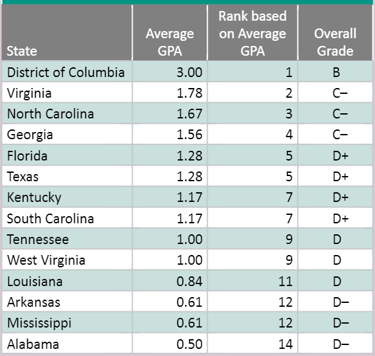
While not all of the report’s findings are this bleak, many of them reveal startling realities about just how divisive the workplace is for women in the South. When it comes to political participation, for instance, only one Southern state—North Carolina—earned above a D grade. Meanwhile, the report concludes that it will take more than 200 years for West Virginia and South Carolina to achieve gender parity in their state legislatures—almost double the time it will take to close the global pay gap.
Read more here.

How the death of two Ugandan mothers is helping entrench the right to health care

Every day, an average of 16 women in Uganda die avoidable deaths during childbirth. And while neighboring Rwanda has decreased similar incidents, Uganda continues to struggle even as it promises free health services to citizens. Resources, salaries and staff training are in short supply, and even without user fees for health services patients are expected to pay out-of-pocket for some services--and are denied or delayed when they can't. It's a recipe that has led to many of the preventable deaths--deaths of infants and mothers that could have been avoided with prompt maternal care. The tragic deaths of two expectant mothers, Sylvia Nalubowa and Jennifer Anguko, are spurring calls for the Ugandan government to take responsibility--and to change the system to ensure meaningful rights to health care for all.
Respecting women's rights as well as the country's constitution and international agreements, the Centre for health, Human Rights and Development argues, includes the right to necessary maternal care.
Click through to follow the progress of this case through Ugandan courts.
venturesafrica.com - When Sylvia Nalubowa went into labour in Uganda’s Mityana district in August 2009, she was taken to a local health centre where she expected to have a normal birth, supervised by a midwife.
After she had delivered her first baby the midwife realised there was a twin on the way. The midwife recommended that Nalubowa be taken to the district hospital where a doctor could handle the second delivery.
But when she arrived at the Mityana District Hospital in Central Uganda, the nurses asked for her maternity kit. This is commonly known as a “mama kit” and contains a plastic sheet, razor blades, cotton wool or gauze pad, soap, gloves, cord ties, and a child health card. All mothers delivering babies in Ugandan hospitals and clinics are expected to bring their own “mama kits” when they go into labour.
But Nalubowa had used her “mama kit” at the first health facility when delivering her first child. The nurses would hear none of her excuses and demanded money to purchase the kit before they could attend to her.
Read more here.

New Film Production Company Focuses on Female Empowerment

An exciting new venture is in the works from leading ladies on screen—and leading female empowerment voices in movies and television. We Can Do It Together is a non-profit production company working with leading voices in the industry—both male and female—to elevate the profiles of women and other marginalized groups in movies and other forms of media. The advisory board includes Jessica Chastain, Queen Latifah, Juliette Binoche, Catherine Hardwicke, and other powerful women in the film and television industries.
The non-profit company will announce its first project at Cannes in May, and we'll be watching with great interest.
The Hollywood Reporter - A new non-profit production company called We Do It Together has been launched with a focus on female empowerment in films, TV and other forms of media.
The new banner comes with a star-studded advisory board that includes Jessica Chastain, Queen Latifah, Juliette Binoche, Freida Pinto, Catherine Hardwicke, Amma Asante, Małgorzata Szumowska, Marielle Heller, Ziyi Zhang, Haifaa Al Mansour, and Katia Lund.
The venture plans to work with male and female internationally acclaimed directors, actors, and producers to develop a slate of gender-led films, and help create opportunities for emerging voices within the industry.
The news of the company's formation comes on the heels of a year focused on the gender disparity in the industry, which led to an investigation by the Equal Employment Opportunity Commission.
Read more here.
Diversity in filmmaking: How ‘Reel Grrls’ empowers young women who have something to say

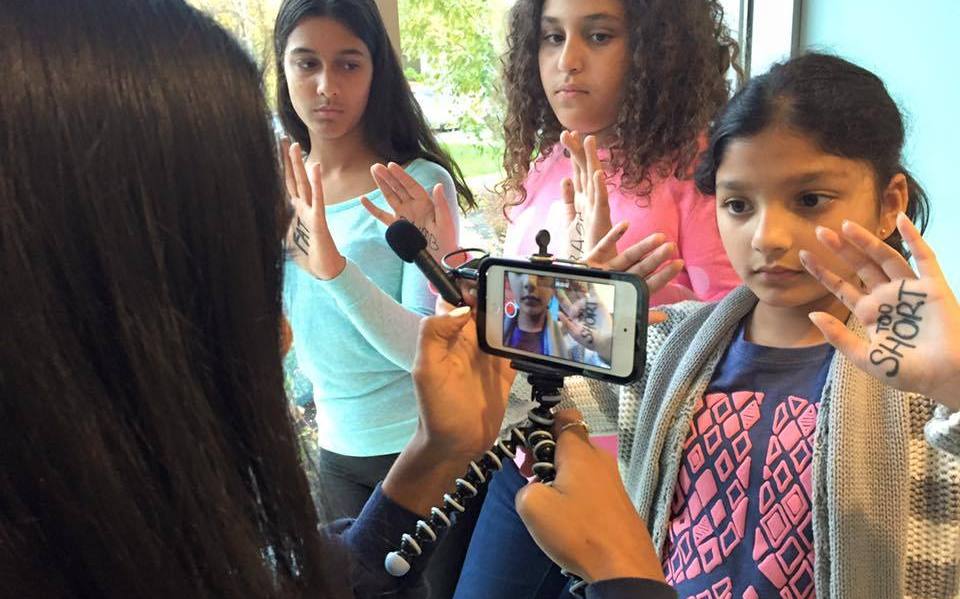
Film making is an ideal medium for telling diverse stories--but the industry continues to be dominated by straight, white men, and many young women and girls hesitate to pursue movie making. One organization has been working for nearly 15 years to combat that. Seattle-based Reel Grrls, which may expand out of the state in the near future, uses volunteer and paid mentors and teachers to show the ropes of film making to girls middle-school-age and up. As the girls grow comfortable with the technology and build confidence, it also battles another long-held bias--that girls and women are not as good with tech as boys and men.
The nonprofit is empowering girls to tell their own stories, insightful works ranging from silly to serious, and is creating a twofold pipeline to improve the situation: More girls behind the camera now means more women behind the camera in the years and generations to come; and with girls and young women telling stories, the media we all consume will start to tell a more diverse--and representative--story.
The organization focuses on educating and empowering girls and LGBT individuals, and works to build a network, making connections in the video and film industries. They teach classes including vlogging, editing, storytelling, sharing strategies and more. Click through to learn more.
geekwire.com - The video recording and editing capabilities of smartphones and tablets have made it easier than ever for would-be filmmakers to create all manner of videos. And yet the world of movie-making is still overwhelmingly dominated by white, straight men.
At least for now.
Seattle’s Reel Grrls is working to empower young women and LBGT youth to find their voice in filmmaking and learn to use everything from simple smartphone technology to high-production cinematic tools.
With the help of Reel Grrls, youth are discovering “my voice is important and I have the skills and technology available to me,” said Malory Graham, who founded the nonprofit in 2001. They realize that they have something essential to say and that no one else can say it as well as they can.
“They’re making their own media,” Graham said. “And that’s going to change the face of the media we see.”
For many, that change would be welcome. Sunday’s Academy Awards drew criticism and boycotts by movie stars upset by the absence of black, Hispanic and other non-white awards nominees. And a university study released last week measured the lack of women, racial minorities and LBGT people in movies, TV and digital series — both behind the camera and in front of it.
Read more here.

Too much good stuff: A list of lists for International Women's Day

There is way too much information about women—the dangers we still face, economic inequality, the huge strides women have made over the years, inspirational stories about everyday women, how to help the women in your life—to cover in one day or even during Women's History Month. It can seem overwhelming. Sometimes, an overview is just the thing needed to find your cause and join the fight. So for a small taste, here are a few lists you might want to peruse by news sources, nonprofits and amazing organizations that join us in our fight for gender equality. Prepare to be stunned, educated and inspired.
5 Ways to Celebrate International Women’s Day 2016
From joining the worldwide conversation to a call for justice to making a Pledge for Parity, The Nobel Women’s Initiative has ways you can celebrate and join in advocating for women right now.
16 Courageous Women Standing Up to Violence
An amazing collection of courageous women addressing violence and its underlying causes, and helping people heal.
5 women you've never heard of who changed the world
OK, so you might have heard of some of these women, but this list of women featured at the World Economic Forum will teach everyone a few new facts, including stories of a politician, an actress, and activists and trailblazers way ahead of their time.
14 Feminist Quotes For Women's History Month 2016
Bustle rounded up some wise words from Malala Yousafzai, Gloria Steinem, Beyoncé and other ladies you may recognize (as well as some voices who might be new to you!), so head over for some inspiration, and share your own favorite women-empowering words with us!
40 New Books for Women’s History Month
The insightful folks at A Mighty Girl have an amazing collection of books about girls and women for young readers--boys as well as girls. Picture books, chapter books, young adult, biographies are all featured. (Adults can probably learn a thing or two as well!)
International Women's Day 2016: 10 best feminist books
Looking for books written primarily for adults? The Independent has you covered with this list of feminist books, from classics to new books. Get reading!
11 Must-Read Biographies About Incredible Women
One more list of books. Because we can't ever get enough of women's stories. This list from The Huffington Post is as diverse as it is intriguing.
In the United States, only 5 percent of work on museum walls is by women. Can you even name five female artists? To highlight this inequity and promote women artists, the National Museum of Women in the Arts launched the social media campaign #5womenartists. If you're falling a little short or even if you're not, check out this article from The Getty profiling five talented women artists.
This is just a beginning—we haven't even covered injustices and violence women face worldwide, women's role in easing global challenges like climate change and hunger, how women's success in the boardroom translates to more powerful companies, and much more—but it's a start. Let us know what inspires you this International Women's Day, come back as we continue the conversation on investing in women, and keep fighting for gender parity!

50 Captivating Photos Of Girls Going To School Around The World

Access to education is a huge issue around the world, particularly for girls--who face obstacles even above their male counterparts through lack of resources, preconceptions about girls, obligations outside of school, stigma against mestruation, and much more. No matter the country, culture, or gender, everyone deserves an education.
Click through to see the photos.
huffingtonpost.com - All children should have the right to get an education -- no matter their gender.
Globally, 65 million girls are not in school. Of the 774 million people who are illiterate around the world, two-thirds are women. There are 33 million fewer girls in primary school than boys.
Why does this matter? Research shows that educating girls can save millions of lives, including the lives of young girls around the world.
The statistics are startling: If every woman around the globe had a primary and secondary education, child deaths would be cut in half, saving 3 million people. A girl with eight years of education is four times less likely to marry as a child. If a girl earned just one extra year of education, she can earn 20 percent more as an adult.
To celebrate International Women's Day on March 8, we've rounded up 50 photos of girls going to school around the world.
The photos feature girls of all ages from China, Palestine, Kenya and more, getting an education. Whether they're walking to school with friends or excited about learning something new in class, these photos are proof that all children should have the right to get an education, no matter their gender.
Want to receive earlybird invitations to our global events, custom-tailored content we think you'll love, and get exclusive access to "The World Women Report"?

8 charts that show why life is still harder and more dangerous for women

While some countries have made great strides in recent decades toward gender equality, we still have a long way to go before reaching true parity. International Women's Day is Tuesday, March 8, and the theme this year is #PledgeForParity. "Worldwide, women continue to contribute to social, economic, cultural and political achievement," the International Women's Day website proclaims. "And we have much to celebrate today. But progress towards gender parity has slowed in many places."
We'd like to pass on this article from The Independent, with five striking graphic representations of areas that still need a lot of work to reach equality, safety, and happiness of all.
independent.co.uk - Women still earn less than men across all sectors and occupations, hold just a fifth of global parliamentary seats and face an estimated 118-year wait for the gender pay gap to finally close.
Those are some of the startling statistics showing how desperately initiatives to improve education, health and quality of life asInternational Women’s Day approaches.
Sexual abuse
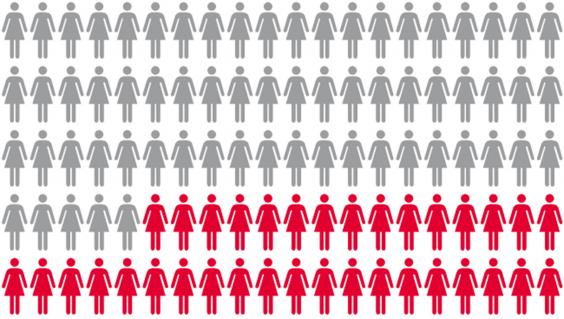
More than a third of women worldwide have experienced physical or sexual violence at some point in their lives.
The most common form is domestic violence or attacks by current or previous partners, which occur most frequently between a woman’s teenage years and menopause.
Additionally, at least 46 countries have no laws protecting women against domestic violence and many nations that do enforce them poorly.
Child sex abuse

An estimated 120 million girls and women under age 20 have been subjected to forced sexual intercourse or other forced sexual acts – around 10 per cent.
A Unicef report found that the violence was a “global reality” across all countries and social groups that could include harassment, rape or sexual exploitation in prostitution or pornography.
Read the rest here.

Cayman stepping up for gender equality

In the Cayman Islands, as in other areas throughout the world, residents and leaders aren't content to honor women only on International Women's Day. Cayman leaders discuss women's empowerment, education and celebration events all month long during Honoring Women Month--including why the story of Malala Yousafzai is so inspirational (the documentary film “He Named Me Malala” will be screened for free on International Women's Day), how gender equality is an issue that affects everyone, and “the importance of involving both men and women in working together to promote equal opportunities for all." caymancompass.com - International Women’s Day is Tuesday, but in the Cayman Islands, women will be celebrated with special events all month.
March is Honoring Women Month in Cayman, and the Family Resource Centre has organized several events around the theme of “Step it up for gender equality.”
The theme is tied to a commitment made by world leaders at the United Nations in 2015 to end discrimination against women by 2030 with “concrete and measurable” actions to kick-start rapid change in their countries.
“It starts with self-evaluating what is happening within our organizations, our community, and seeing whether there are ways that men and women aren’t being treated fairly or equally,” Family Resource Centre program facilitator Charmaine Miller said. “Women’s equality isn’t just a woman’s issue, it’s a human rights issue.”
Read more here.

Brands join the women's empowerment conversation

Doing well while doing good—it’s a recipe more companies are following, and this International Women’s Day is no exception. Interest in feminism has skyrocketed in recent years, and ads are going viral by spreading messages of acceptance and female empowerment. Click through to learn how to optimize content for your brand for release around International Women’s Day, which formats are most memorable and above all how to make your engagement authentic. thedrum.com - The call for greater equality of opportunity for women in all areas of life, from the workplace to politics or the sports field and beyond, is growing louder and will be a defining movement of the 21st century.
Hand-in-hand with the demand for greater equality is a desire for more positive representation of women in media and marketing – 53 percent of women believe that "ad campaigns have a strong influence on how women are perceived in society" (Google Consumer Survey).
Given that marketing has the ability to mold perceptions, challenge received wisdoms and 'nudge' people towards new ways of thinking, there is an opportunity for brands to contribute positively towards the equality debate with relevant initiatives and content.
One focal point for raising awareness is International Women’s Day, almost upon us on Tuesday 8 March. It is celebrated every year and searches for 'women empowerment' peak just after the event. But interest in gender equality stretches far beyond one day of activism; UK searches for 'feminism' grew 27 per cent from 2014 to 2015, with queries such as 'what is a feminist?' and 'what does feminism mean?'
Read more here.

How Our Generation Is Approaching Gender in a Totally New Way
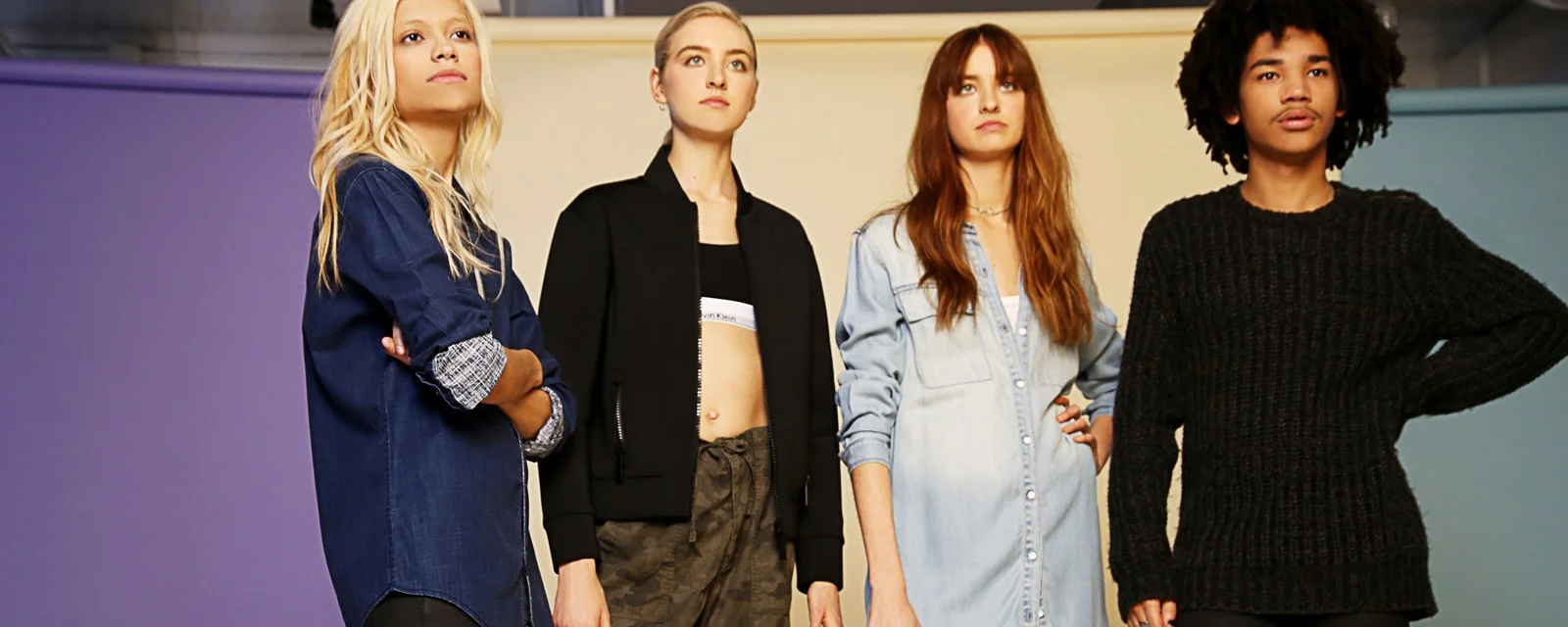
Women are used to fighting assumptions and gender stereotypes—but even the staunchest feminists in their 30s and older might be unfamiliar with some of the terms in the latest discussions about gender and sexuality. Millennials and teens today are eschewing labels and gender restrictions in ways and in numbers that haven't been seen before in the mainstream. They're exploring uncertainty, identity and non-binary genders, they focus on individuality, and their discussions revolve most often around education and acceptance. Click through to read more and to watch an interview by Teen Vogue with some fresh faces from Calvin Klein's ck2 campaign—because accepting one another as we are is empowering to everyone.
teenvogue.com - Teen Vogue caught up with the cool kids of Calvin Klein's ck2 campaign to talk about what it means to live label free. Dancer/rapper Victoria Brito aka Vickatrillion, Kanye muse Luka Sabbat, and twin models Kelsey and Baylee Soles each talk about why gender stereotypes are limiting, proving that you don't have to identify as gender fluid in order to understand gender fluidity.
"As a woman, sometimes they just expect you to dress a certain way and act a certain way, and sometimes you aren't recognized for other things besides femininity," says Kelsey. "Each day I try to be a different character. I'll be really feminine one day, or really masculine another."
In February, Calvin Klein launched fragrance ck2, a sequel to the 1994 unisex classic CK One. CK One was the world's first unisex fragrance, and the original campaign became part of the '90s zeitgeist. Now, the gender-free ck2 is celebrating fluidity and coexistence by embracing how millennials are able to explore their relationships, friendships, and sexualities without judgement or labels.

Winners of the Freedom from Violence Photo Competition in India send a strong message for change

Check out this amazing album from the UN Women Asia & the Pacific Flickr page, highlighting the winners of their UN Women’s Freedom from Violence Photo Competition. Photographers used their skills and time to highlight women's issues, raise awareness, send a powerful message and paint a revealing picture of what women's lives—and rights—mean for them and for the world.
Click through to view the whole gallery and to read stories about the photos. Visit them online to learn more about UN Women Asia & the Pacific.
flickr.com - Tash McCarroll, Akshita Agrawal and Animesh Malakar are the three winners of UN Women’s Freedom from Violence Photo competition.
They won Nikon Cool Pix cameras for their award-winning effort.
Akshita Agrawal recognised women's freedom of choice as central to ensuring their dignity. “A woman who has the freedom to make choices lives a life of dignity and respect,” she said.
Tash McCarroll spent four days on the streets of Mumbai in Dharavi talking to people about women's rights and taking photographs.
She saw UN Women’s Freedom from Violence Photo Competition as "a great opportunity to educate others and advocate about women's rights to different groups of people, both men and women". She believes that campaigns like this contribute to pushing for change.Tash is one of the three winners of UN Women’s Freedom from Violence Photo competition.
Here we feature the three winning pictures as well as the ten runner ups from the Freedom from Violence for Women and Girls Photo Competition.
Through the two-month long photo competition that ran from 9 December 2012 to 10 February 2013, UN Women encouraged young people to show the world what freedom from violence against women meant to them. As part of the UN Secretary General's UNiTE to End Violence against Women and Girls campaign, millions were encouraged to discuss and prevent violence against women through social media and on ground activation

Afghanistan’s First Female Street Artist Has Taken Over Kabul’s Walls To Glorify Its Women

For many, "graffiti" might not evoke the power that some street artists hold to spread hope, awareness and powerful message—and Afghanistan may not bring to mind messages of women's empowerment. However, one street artist—Shamsia Hassani, who lives in Kabul—is changing that. The city's walls are her canvas, and she uses her striking works of art to spread messages of peace, strength, resiliency and hope to her community.
Read more, and see more of her work, in the full article at The Huffington Post.
The Huffington Post - A woman in a purple hijab sits playing the piano, a tear rolling down her cheek. She plays her solitary tune amongst a sea of blue skyscrapers, soaring above the cars that zoom beneath her unnoticed. This subject already wears her contradictions proudly — she is strong, she is vulnerable, she is graceful, creative, separate, sad. And yet, at least it seems, she calls out to no one, content to sit with her feelings and express herself creatively, freely, in peace.
This work of street art was made by Shamsia Hassani, widely known as the first prominent woman street artist in Afghanistan. Hassani was born in 1988 in Tehran to Afghan parents, eventually moving to Kabul to pursue her bachelor’s and master’s degrees in visual art. She currently resides in Kabul, where she turns the city’s walls into colorful canvases that spread a message of peace and hope to her community.
Read more here.